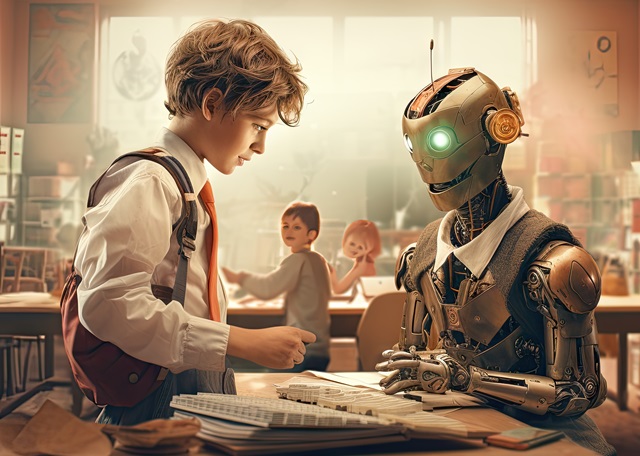
“Whether we like it or not, the AI revolution is coming to education” ~ Salman Khan, Founder of Khan Academy
In August 2024, the Sri Lankan government launched an innovative initiative to introduce artificial intelligence (AI) education into schools. This is part of their wider strategy to equip students for future global trends and strengthen their role in economic growth. the Cabinet of Ministers approved the establishment of ‘Artificial Intelligence Student Societies’ in 100 selected schools nationwide.
This pilot program will begin in selected schools with students from grades 6 to 9, giving them a chance to engage in AI-related studies. The initiative is perceived as a significant step toward preparing young people with the skills needed to thrive in an increasingly tech-centric world. The project’s success will guide its possible expansion to additional schools in the future. It was the government’s view that, by fostering early interest in AI, the program aims to build a generation of technology-savvy youth who can contribute meaningfully to economic development. Furthermore, it was stated that in a high-tech world, providing AI education at the school level will help students pursue advanced studies and careers in technology fields, ultimately supporting the country’s economic growth.
The proposal received Cabinet approval.
Salman Khan, in his book Brave New Words: How AI Will Revolutionize Education (and Why That’s a Good Thing ) highlights the profound impact artificial intelligence could have on the future of education. He discusses how AI can tailor learning experiences to individual needs, make education more inclusive, and improve learning outcomes, benefiting both educators and students alike. Khan argues that incorporating AI into educational systems can solve current issues, reduce disparities, and equip students for a technology-centric future. Ultimately, he sees AI as a tool to enrich learning and bring lasting benefits to society.
Khan says in his book: “ This is where the work now finds us, as artificial intelligence continues to play a transformative role in bridging the global education divide and fostering equal opportunity learning for all”
Advantages
Artificial intelligence (AI) is rapidly transforming education, promising new pathways for personalized learning, operational efficiency, and heightened engagement. As it reshapes the classroom experience, AI introduces unique opportunities for catering to individual student needs and enhancing administrative functions. However, along with these benefits come significant ethical and privacy concerns that demand attention. As schools and universities navigate this technological shift, they face the challenge of balancing innovation with the core values of education. The integration of AI holds the potential to profoundly change how students learn, interact, and prepare for an increasingly automated world.
A major impact of AI in education is its ability to enable personalized learning. With adaptive systems like Smart Sparrow and DreamBox, AI can analyze student performance in real time and adjust content, difficulty, and pacing to suit each learner’s progress. This allows students to engage with materials at a comfortable pace while still meeting learning goals. AI tools also provide direct support, such as virtual tutors in subjects like math and language, which offer instant feedback and guidance, helping students work through challenging concepts on their own. By responding to individual learning styles, these technologies make education more accessible, especially for students with disabilities, learning differences, or language needs, who may otherwise be underserved in traditional classrooms.
AI also enhances efficiency within educational institutions by automating routine administrative tasks. Teachers spend significant time on grading, attendance, and lesson planning, all of which AI can streamline. Tools like Gradescope, which assist with grading by using machine learning, free up teachers’ time to focus on their core role: teaching and engaging with students. Beyond classrooms, AI systems help administrators analyze student data to make better decisions about resource allocation, curriculum adjustments, and support services. These systems can identify students who may be struggling academically, facilitating early interventions to help them succeed. With this approach, AI not only makes institutional processes smoother but also enables proactive support for student success.
AI-driven platforms also contribute to a more engaging classroom experience. Game-based learning tools, like Kahoot!, use AI to adapt activities to each student’s responses, making lessons interactive and enjoyable. Additionally, AI plays a central role in virtual and augmented reality (VR/AR) tools, enabling students to explore subjects such as history, science, and art through immersive experiences. These technologies simulate hands-on learning, which can be more engaging and memorable than traditional instruction. Moreover, AI tools provide teachers with instant insights into student understanding, allowing for real-time adjustments to lessons, which ensures that students are engaged and comprehending the material.
Challenges
Nevertheless, the rise of AI in education brings ethical challenges, particularly in terms of data privacy and algorithmic fairness. AI systems rely on large amounts of data to operate, raising concerns about how student information is collected, stored, and used. Without robust protections, sensitive data could be misused, highlighting the need for strict privacy safeguards. Another concern is that AI algorithms can inadvertently reflect biases present in their training data, potentially disadvantaging marginalized students. Addressing these biases is critical to creating equitable AI systems that benefit all learners. Furthermore, as AI becomes more involved in education, there is a risk of reducing meaningful human interactions, which are essential for students’ social and emotional development. Ensuring that AI complements rather than replaces human interaction is crucial in maintaining a balanced educational experience.
Looking to the future, AI is expected to play an even more integral role in education. Rather than replacing traditional teaching methods, AI is likely to work alongside teachers, who can use AI tools to enrich their instructional methods. AI platforms that adapt to individual learner needs, such as online courses for adult education, are also extending the reach of education beyond the classroom, supporting lifelong learning and professional skill development. In this AI-enhanced environment, teachers’ roles may shift toward mentorship and guidance, focusing on developing students’ creativity, critical thinking, and emotional intelligence—skills that AI alone cannot provide.
Real-world examples of AI in education already demonstrate its significant impact. For instance, Georgia State University has implemented AI systems that monitor student progress, allowing for timely interventions and improved retention rates. Internationally, AI is helping address educational needs in various regions, such as language support for non-native speakers and remote learning tools in underserved communities. These examples illustrate the diverse applications of AI in creating more inclusive and effective learning environments worldwide.
Artificial intelligence is transforming education by enabling personalized learning, optimizing administrative functions, and enhancing student engagement. While AI’s potential is vast, it also presents ethical challenges, especially concerning privacy, bias, and the balance between technology and human connection. The future of AI in education will depend on addressing these challenges and ensuring that technology remains a tool to support, not replace, the human elements of learning. If implemented thoughtfully, AI can help create a future in which technology and human skills coexist to empower students in a world that is constantly evolving.
Although the potential benefits of AI in Sri Lanka’s education system are considerable, there are several challenges that must be addressed for its successful implementation. One of the primary concerns is ensuring equitable access to technology. Not all students in Sri Lanka have access to high-speed internet or modern computing devices, especially in rural or underserved areas. For AI to be effective in these areas, the government must invest in infrastructure and ensure that all students, regardless of their socio-economic background, can access the necessary technology to benefit from AI-powered tools.
Another key challenge is providing adequate training for educators. Teachers must be equipped with the skills to effectively use AI technologies in the classroom. Professional development programs should be established to help teachers integrate AI into their teaching practices, enabling them to harness the full potential of these tools to enhance student learning. Without proper training, teachers may struggle to incorporate AI into their lessons, which could limit the effectiveness of these technologies.
Additionally, ethical concerns around data privacy and AI bias must be carefully considered. AI systems rely on large amounts of student data, which must be handled responsibly to protect students’ privacy. Data security measures must be put in place to ensure that sensitive information is not compromised. Furthermore, AI systems must be designed to be transparent and free from bias. Bias in AI algorithms could lead to unfair treatment of students based on factors such as gender, socio-economic status, or ethnicity, which could exacerbate existing inequalities within the education system. It is essential that AI tools are developed and used in a way that promotes fairness and inclusivity.
Education in Sri Lanka
Artificial intelligence (AI) has the potential to transform Sri Lanka’s education system, providing opportunities to improve access, enhance learning outcomes, and optimize administrative tasks. By leveraging AI technologies, Sri Lanka can address existing disparities in education, personalize learning experiences, and ensure that resources are used more efficiently. While integrating AI into the education system presents significant opportunities, it also requires careful consideration of ethical challenges and practical concerns, such as access to technology and teacher training.
AI can revolutionize the learning experience in Sri Lanka by offering personalized education that adapts to the individual needs of students. Given the variation in student abilities and learning styles, AI-powered tools can assess students’ strengths and weaknesses, then tailor lessons accordingly. Adaptive learning platforms allow AI to adjust the content and difficulty level in real-time based on a student’s progress. This would be particularly beneficial in rural areas where resources and teacher availability may be limited. Students who need extra help can receive targeted instruction, while others can be challenged further. The ability of AI to provide personalized support helps ensure that no student is left behind.
In Sri Lanka, AI could help bridge the educational divide between urban and rural students by offering accessible and adaptable learning tools. These technologies could cater to different levels of comprehension and pace, making education more inclusive for students across the country. Furthermore, AI can assist in creating multilingual education systems, offering content in Sinhala, Tamil, and English to accommodate the country’s diverse linguistic landscape. This would ensure that all students, regardless of their language background, can access high-quality educational resources.
One of the key benefits of AI in education is its ability to support teachers by automating time-consuming tasks. In Sri Lanka, where teachers often handle large class sizes, AI can assist in grading, lesson planning, and tracking attendance. Automating these processes would allow teachers to spend more time focusing on teaching and engaging with students. AI-based grading systems, for instance, can quickly evaluate student assignments and exams, saving teachers valuable time and offering immediate feedback to students. Additionally, AI can help create customized lesson plans by analyzing student performance data, enabling teachers to provide more targeted learning materials to support individual student needs.
Language acquisition is another area where AI could have a significant impact. In Sri Lanka, students are required to learn multiple languages, which can be challenging for many. AI-based platforms like Duolingo can aid students in learning languages more effectively by offering interactive lessons and instant feedback. These tools use machine learning to adapt to each student’s learning pace, providing exercises tailored to areas of difficulty. AI can also support real-time grammar corrections, vocabulary-building exercises, and even speech recognition tools, making language learning more accessible and engaging. This technology would allow students to improve their proficiency in English, Sinhala, Tamil, or any other language they are learning.
AI can also play a vital role in improving the educational system by providing data-driven insights that help educational authorities make informed decisions. By analyzing data on student performance across regions, subjects, and schools, AI can identify trends, highlight areas in need of improvement, and inform decisions regarding resource allocation. These insights could allow policymakers to target areas where support is most needed, such as regions with lower performance rates or schools that lack adequate resources. AI can also help monitor students’ progress in real-time, enabling early interventions when students begin to struggle academically. This data-driven approach would allow Sri Lanka to build a more proactive, efficient, and equitable education system.
In addition to supporting general education, AI can be used to enhance vocational and technical training, which is critical for preparing students for the workforce. By incorporating AI-driven simulations into vocational programs, students can gain hands-on experience in areas such as technology, engineering, and agriculture. For instance, students studying agriculture could use AI-powered tools to simulate crop management scenarios and environmental challenges, providing practical learning experiences that are relevant to real-world industries. AI can offer up-to-date, personalized training in these fields, helping students develop job-ready skills and improve their employability.
AI also has the potential to make education more inclusive for students with disabilities. For example, students with visual impairments could benefit from AI technologies such as text-to-speech and speech-to-text software, which would enable them to access textbooks and learning materials. AI can also use image recognition tools to describe visual content in textbooks or online resources, ensuring that visually impaired students can engage with the curriculum. Additionally, AI can provide personalized learning interventions for students with learning disabilities, such as dyslexia or attention disorders, helping them succeed in their studies through tailored support and adaptive learning exercises.
AI can be integrated into the exam and admissions processes to streamline operations and make them more efficient. By automating grading systems, AI can reduce the time it takes to assess student performance, providing quicker and more accurate results. In addition, AI can assist in the college admissions process by analyzing data from standardized tests, academic records, and extracurricular activities to identify the most qualified candidates. This data-driven approach would help ensure that admissions decisions are based on merit and potential, rather than subjective factors, making the process fairer and more transparent.
Artificial intelligence has the potential to significantly improve Sri Lanka’s education system by providing personalized learning experiences, expanding access to high-quality educational resources, and supporting teachers with automation. By integrating AI into classrooms, vocational training programs, and student support services, Sri Lanka can create a more inclusive, efficient, and data-driven education system. However, the successful implementation of AI in education will require careful planning, investment in infrastructure, and ongoing teacher training. If these challenges are addressed, AI could greatly enhance the quality of education in Sri Lanka, making learning more accessible, equitable, and tailored to the needs of individual students.
My Take
Once the pros and cons of applying AI to education in Sri Lanka are discussed, the most critical factor emerges: how to implement this process. Implementing AI in Sri Lanka’s education sector would require a strategic, phased approach that takes into account the country’s political landscape, resource limitations, and educational priorities. The initial step should involve establishing a national framework for AI in education, focusing on ethical standards and responsible use. This framework would set guidelines on how AI can support learning, address educational gaps, and enhance access to quality education, particularly in underserved regions.
Training and capacity-building programs for teachers, school administrators, and policymakers would be crucial. By equipping educators with the knowledge and skills to integrate AI tools effectively, these programs would ensure that AI is used in ways that genuinely benefit students and align with educational goals. Pilot programs could also be launched in select schools, enabling stakeholders to assess AI’s impact on learning outcomes and understand best practices before a broader rollout.
In terms of regulatory structure, Sri Lanka might consider adapting aspects of the European Union’s risk-based AI regulation, which classifies applications based on their risk level and applies stricter oversight to higher-risk use cases. Applied to education, this approach would allow the government to carefully regulate AI tools with significant impacts, such as predictive analytics or adaptive learning systems, while permitting more experimental applications in lower-risk areas. Unlike the EU’s predominantly regulatory approach, however, Sri Lanka could benefit from pairing regulation with incentives to encourage local development and adoption of AI tools that address specific educational needs.
A practical tool for supporting AI in education would be an AI-Education Compliance Framework. This framework would provide ethical and practical guidelines to ensure AI applications are used responsibly, protect student data, and maintain transparency. An AI Education Advisory Board—composed of representatives from government, academia, and civil society—could oversee AI initiatives, ensuring they align with national educational goals and remain responsive to societal and political considerations.
In conclusion, while a regulatory approach similar to the EU’s could serve as a valuable starting point, Sri Lanka’s AI strategy in education would need customization to address the local context and balance regulation with incentives. A phased implementation, guided by an AI-Education Compliance Framework and supported by an AI Education Advisory Board, would help Sri Lanka harness AI’s potential to improve education while managing risks effectively.