The opening days of Operation Epic Fury have delivered a stark and unsettling message about the realities of modern warfare: even the most powerful militaries on earth can exhaust their most sophisticated weapons at an alarming pace. According to analysis cited by Times UK, the United States alone expended more than 5,000 bombs, missiles and interceptors worth up to $16 billion within just four days of launching its campaign against Iran. The scale and intensity of this assault has led analysts to describe it as the most concentrated opening air campaign in modern history, surpassing even the early stages of previous NATO operations.
The initial phase of the conflict was marked by a relentless deployment of high-end precision munitions. American and Israeli forces unleashed long-range missiles and advanced strike systems in an effort to dismantle Iran’s air defences swiftly. This overwhelming firepower enabled coalition forces to establish air superiority early, allowing aircraft to operate closer to targets and transition toward the use of more conventional, lower-cost bombs in subsequent operations.
However, behind this apparent operational success lies a growing strategic concern. Defence analysts warn that while stockpiles of standard bombs remain plentiful, the same cannot be said for the sophisticated systems that underpin modern warfare. These include long-range strike weapons, advanced cruise missiles and air defence interceptors—assets that are not only expensive but also time-consuming to replace. Their rapid depletion in the opening phase has raised alarms about sustainability in a prolonged conflict.
Research from leading think tanks highlights that while many categories of munitions remain in healthy supply, a critical subset is now under significant strain. These strained systems are disproportionately those that enable low-risk, high-precision strikes and provide credible air defence against incoming threats. Without them, the ability to conduct effective long-range operations or defend key infrastructure becomes increasingly limited.
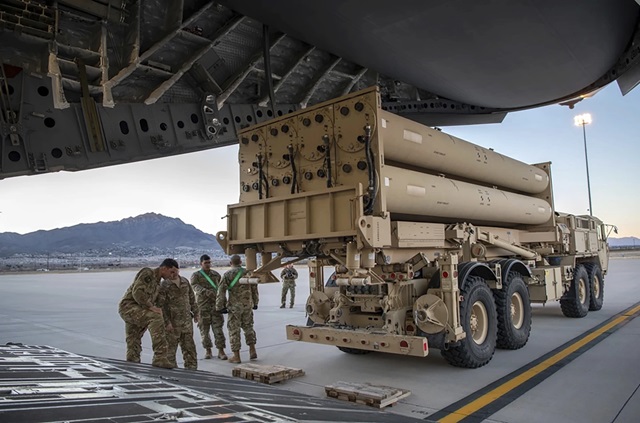
The scale of usage underscores the challenge. In the first week of fighting, the United States is believed to have fired hundreds of Tomahawk cruise missiles along with more than a thousand stand-off munitions designed to strike from a distance. At the same time, Iran’s retaliatory attacks, involving ballistic missiles and drones, forced the heavy use of defensive interceptors such as Patriot and THAAD systems. A notable portion of these already limited inventories was consumed in a matter of days, further tightening supply constraints.
Replenishing these systems is not simply a matter of budget allocation. While the financial cost of replacing the expended munitions is estimated to be between $10 billion and $16 billion, production limitations pose a more serious obstacle. Many of these advanced weapons require complex manufacturing processes and long lead times. In some cases, the number of units planned for production in an entire year falls far short of what has been used in just the opening days of combat.
This disparity between consumption and production has exposed a deeper vulnerability in modern military strategy. Analysts suggest that reliance on precision-guided systems, while tactically effective, may prove difficult to sustain in high-intensity conflicts against capable adversaries. Iran’s approach appears designed to exploit this weakness, launching waves of attacks intended to overwhelm defensive systems and force the rapid depletion of critical resources.
Despite these concerns, some experts caution against overestimating the long-term impact of the initial surge in weapons usage. They argue that the first days of the war represent a peak intensity phase, not a sustainable tempo. Once air superiority is secured, the need for high-end missiles declines significantly, as aircraft can operate with reduced risk and rely more on cheaper, widely available munitions. This shift provides an opportunity for stockpiles to recover over time.
Even so, the opening phase of Operation Epic Fury has already reshaped discussions around military preparedness and logistics. It highlights the importance of not only maintaining sufficient inventories but also ensuring that industrial capacity can meet the demands of modern warfare. For defence planners, the lesson is increasingly clear: technological superiority must be matched by the ability to sustain it over time.
As the conflict continues to evolve, the key question will be whether the United States and its allies can adapt their strategies to balance immediate battlefield effectiveness with long-term resilience. The first four days of the war may ultimately serve as a warning that in an era of high-speed, high-cost warfare, even the most advanced arsenals have their limits.