In a moment fraught with geopolitical tension, Iran now faces a choice eerily reminiscent of Israel’s own secret crossroads in 1967: whether to sprint toward a nuclear weapon as a final act of deterrence — or step back from the brink.
More than half a century ago, as Arab armies surrounded Israel on the eve of the Six-Day War, the Jewish state secretly inched toward assembling a rudimentary atomic device. Hidden deep beneath the Negev desert, scientists worked under intense pressure, believing that a visible nuclear test — even of a crude prototype — might stave off national annihilation. Victory in the war made the weapon unnecessary, but the blueprint for a future doctrine had been laid.
Today, Iran is confronting a similar dilemma. After months of military escalation with Israel, a dramatically weakened regional position, and increasingly hostile rhetoric from both sides, Tehran appears closer than ever to the nuclear threshold. Analysts suggest that the Islamic Republic is undergoing an intense internal debate over whether to move forward with a weapon — or use the threat of one as leverage.
“Iran is now in the midst of a long-running, serious internal debate. It’s the do-or-die moment,” said Vali Nasr, a former senior adviser to the U.S. State Department. “It’s also paradoxical that Israel is pushing Iran to make that same decision that they made.”
Historical Rhymes, Modern Stakes
The comparison is more than academic. In both cases, an embattled state found itself isolated and under existential threat. Israel in 1967, a fledgling nation haunted by the memory of the Holocaust, operated a clandestine nuclear program centered at the Dimona facility. Iran today, with much of its conventional deterrence dismantled and proxy forces weakened, holds a rapidly growing stockpile of highly enriched uranium — estimated at 400 kg enriched to 60%, perilously close to weapons-grade.
“Israel built a nuclear capability in secret, relying on opacity and last-resort logic,” said Avner Cohen, a prominent historian of Israel’s nuclear program. “Iran wanted very much to be another Israel — to follow in Israel’s path. But the world has been much more forgiving of Israel and far less of Iran.”
The parallels are striking. Like Israel, Iran has cultivated technical expertise without overtly crossing the threshold. Former Iranian nuclear chief Ali-Akbar Salehi once likened the country’s capabilities to a fully built car, with all necessary parts — including “the engine and gearbox” — already manufactured, if not yet assembled.
Iran’s leadership continues to deny it seeks a bomb. But ambiguity has replaced clarity. In April 2024, as conflict with Israel intensified, senior adviser Kamal Kharrazi stated that if Iran faced an existential threat, “naturally we [would] have to change our doctrine.”
The Shadow of Dimona and the “Samson Option”
In 1967, Israel went so far as to assemble a crude nuclear device and deliver it to the army, ready to be detonated in the desert as a warning if the war turned catastrophic. The episode, long shrouded in secrecy, became part of what scholars call the “Samson Option” — a doctrine of final deterrence by destruction.
That secretive approach was later codified in a 1969 deal with the U.S., in which Washington tacitly accepted Israel’s nuclear status in exchange for continued ambiguity. Israel never declared its arsenal, but global estimates place it at roughly 100 warheads.
Iran, by contrast, is a signatory to the Nuclear Non-Proliferation Treaty (NPT) and has long claimed it seeks nuclear energy, not weapons. However, its construction of clandestine facilities in Natanz and Fordow, revealed by whistleblowers and intelligence agencies, has undermined that narrative.
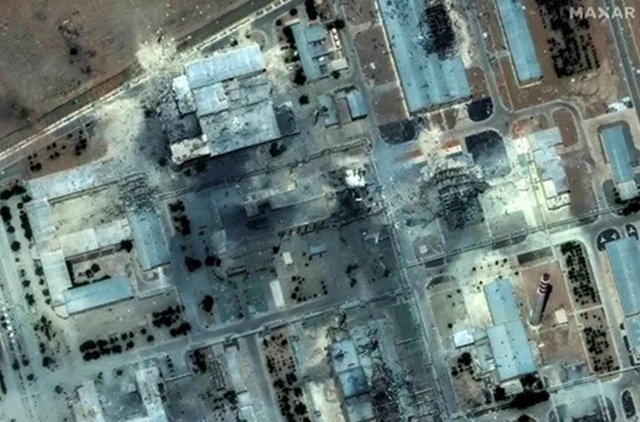
The 2025 Israeli airstrikes on those sites — following precedents in Iraq (1981) and Syria (2007) — have crippled large parts of Iran’s nuclear and military infrastructure. The so-called “ring of fire” Iran once used to encircle Israel with proxy militias has largely been neutralized.
A Strategic Crossroads
“The nucleus of Israel’s approach to proliferation has always been: exhaust all other means — and then strike,” said Uzi Arad, former Mossad research chief. That doctrine, he noted, is now playing out once again over Iranian skies.
And yet, Iran still has options. Nasr warns that while the temptation to weaponize is rising, diplomatic off-ramps remain. “The only way to divert the trajectory that Iran is on is to put a deal on the table that is compelling and resilient enough to influence the internal debate in Tehran.”
That window, however, may be closing. The same ambiguity that once served as strategic insulation for Israel is now a source of peril for Iran. The world’s willingness to tolerate a new, undeclared nuclear power — especially one that has endured years of sanctions and scrutiny — remains deeply uncertain.
Much like in 1967, the decision may come not with a formal order, but under the pressure of war, survival, and a desperate search for deterrence.