


The arrival of Taliban representatives in Brussels this week unfolded against a strikingly different event taking place hundreds of kilometers away in Paris. While European officials met with envoys of Afghanistan’s ruling Islamist regime to discuss migration issues, France was honoring one of the most revered figures of its modern history: historian and resistance hero Marc Bloch.
The juxtaposition of those events forms the centerpiece of commentary and reporting published by El País, which examined the symbolism and political significance of the European Union’s decision to engage with representatives of the Taliban government.
According to the report, EU officials hosted Taliban representatives in Brussels as part of discussions focused on migration and the potential return of Afghan nationals accused of serious crimes. The meeting reflected a broader shift in European migration policy, one that increasingly emphasizes practical arrangements with third countries as governments seek to manage migration pressures across the continent.
The discussions involved representatives from 15 EU member states, although Spain did not participate. European officials described the gathering as an opportunity for technical-level contacts between member states and Afghan representatives. The broader objective, according to the report, was to encourage authorities in Kabul to accept the forced return of Afghan nationals from Europe.
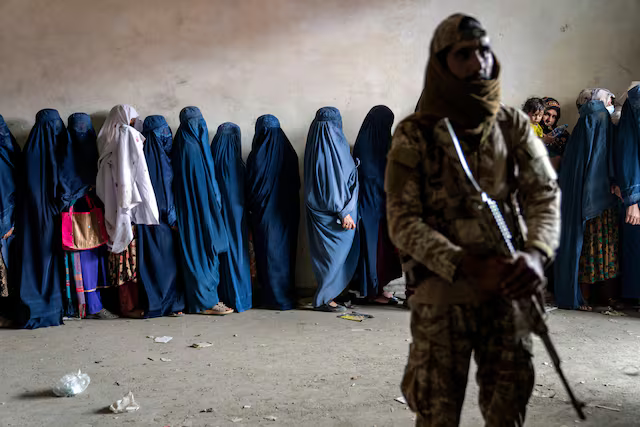
The meeting has attracted attention because it involved direct engagement with a government that remains internationally controversial since the Taliban returned to power in Afghanistan in 2021. The regime has faced sustained criticism over its treatment of women and restrictions on fundamental rights.
The timing of the Brussels meeting coincided with France’s decision to induct Marc Bloch into the Panthéon, one of the highest honors granted by the French state. Bloch, a pioneering historian and co-founder of the Annales School, transformed historical scholarship by focusing on everyday life and social structures rather than solely on political leaders and military events.
His life extended beyond academia. During World War II, Bloch joined the French Resistance after being excluded from public life because he was Jewish. He was eventually arrested by members of the Vichy regime, tortured by the Gestapo and executed in June 1944. His body was later discovered in a field near Lyon.
El País drew attention to Bloch’s intellectual legacy, particularly his influential work La sociedad feudal (Feudal Society), first published in 1939. The book examined the foundations of medieval European society and explored the development of legal traditions that would later shape concepts of rights, obligations and governance across Europe.
According to the report, Bloch argued that despite the inequalities of feudal society, it contributed to the emergence of principles that would become central to European political development, including the concept that rulers were bound by obligations and that societies should be governed through legal frameworks rather than arbitrary power.
These historical references gained renewed relevance as European leaders continue to confront increasingly contentious debates over migration. Since the Taliban’s return to power, between 100,000 and 115,000 Afghan citizens have sought asylum in the European Union annually, according to figures cited by El País. Afghans remain one of the nationalities most frequently granted protection within the bloc, particularly in France, Austria, Sweden and Germany.
Germany has emerged as one of the strongest advocates for arrangements that would facilitate the return of certain Afghan nationals. The German government has acknowledged holding contacts with Taliban authorities and is reportedly preparing regular charter flights alongside deportations carried out through standard commercial routes.
The Brussels meeting is part of a broader transformation in European migration policy. El País noted that recent measures have included new legislation allowing the creation of deportation centers in third countries and agreements with external partners tasked with controlling migration routes.
Among the examples cited was cooperation between the European Union and Libya’s coast guard. Humanitarian organizations have previously raised concerns about such arrangements, particularly after allegations involving actions by Libyan authorities against rescue vessels operating in the Mediterranean.
The discussions surrounding Afghanistan have intensified because they involve a country that many European governments continue to regard as politically unstable and deeply problematic regarding human rights. Nevertheless, migration concerns have increasingly pushed policymakers toward engagement with authorities who exercise control on the ground.
Supporters of these contacts characterize them as practical efforts to address migration management and deportation procedures. Critics, as reflected in the arguments highlighted by El País, contend that such engagement risks granting legitimacy to authorities whose policies remain the subject of international scrutiny.
The debate now unfolding in Brussels extends beyond a single diplomatic meeting. It touches on questions that have become central to Europe’s political future: how governments manage migration, how they engage with controversial regimes and how they reconcile immediate policy objectives with the principles that have shaped the European Union’s identity.
As discussions continue and migration remains at the forefront of political agendas across the continent, the Brussels meeting with Taliban representatives has become a focal point in a wider conversation about the direction of European policy and the choices facing its institutions.










