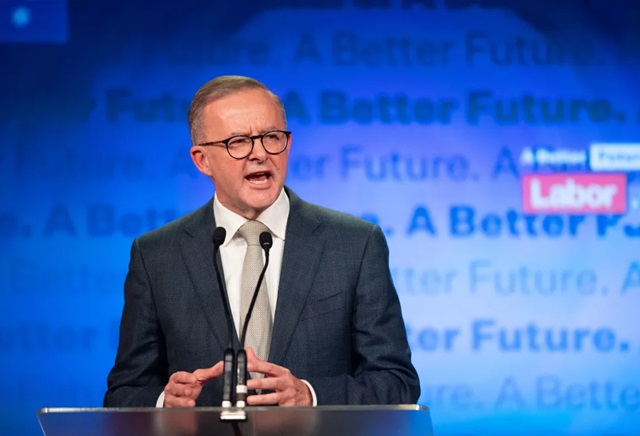
Australia announced on Tuesday the expulsion of Iran’s ambassador, marking the first time since World War II that the country has taken such a measure against a foreign envoy. Prime Minister Anthony Albanese said intelligence agencies had reached the “deeply disturbing conclusion” that Tehran was behind at least two antisemitic arson attacks in Melbourne and Sydney, describing the incidents as deliberate acts of aggression against Australia’s social fabric.
According to the findings, Iranian operatives directed the torching of a kosher café in Sydney’s Bondi suburb in October 2024 and a major arson attack on the Adass Israel Synagogue in Melbourne two months later. While no injuries were reported in either attack, Albanese said the intent was clear: to undermine social cohesion and inflame divisions within the Australian community. “These were extraordinary and dangerous acts of aggression orchestrated by a foreign nation on Australian soil,” he said.
The government has declared Ambassador Ahmad Sadeghi “persona non grata,” ordering him and three other Iranian officials to leave the country within seven days. In a reciprocal move, Australia has withdrawn its own ambassador from Tehran and suspended operations at its embassy, which first opened in 1968. All Australian diplomatic staff are now safe in a third country, officials confirmed. Foreign Minister Penny Wong described the expulsion as unprecedented in the post-war period, stressing that while diplomatic channels would remain open, the government’s capacity to assist Australians in Iran was now “extremely limited.” She warned Australians against traveling to Iran and urged citizens currently there to leave immediately if safe to do so.
The Albanese government also announced plans to formally list Iran’s Islamic Revolutionary Guard Corps (IRGC) as a terrorist organisation, following revelations by the Australian Security Intelligence Organisation (ASIO). Michael Burgess, ASIO’s director-general, said investigators had painstakingly uncovered a “web of proxies” used by the IRGC to conceal its role in the attacks. While Iran’s embassy in Canberra and its diplomats were not implicated in the operations, Burgess said intelligence pointed to the Guard directing at least two and “likely more” antisemitic assaults on Jewish interests across the country.
Tehran has rejected the accusations, with Iran’s foreign ministry vowing a “reciprocal reaction” to what it called unjustified diplomatic measures. Nonetheless, the revelations have sent shockwaves through Australia’s Jewish community. Daniel Aghion, president of the Executive Council of Australian Jewry, said the findings may bring some relief but would also deepen fears. “There will be great anxiety that we have been targeted in such a callous and calculated way, by a ruthless and violent foreign force, because of who we are,” he said.
The synagogue fire in Melbourne, which destroyed much of the building, had already been classified as a likely terrorist incident by police and stood out as one of the most destructive antisemitic acts seen in Australia in decades. Together with the Bondi café attack, the incidents formed part of a broader rise in antisemitic violence that followed Hamas’s October 7, 2023, assault on Israel and the ensuing conflict in Gaza.
While experts noted that fallout from the expulsions may be limited given the lack of deep diplomatic or defense ties between the two countries, the decision was nonetheless described as a significant escalation. Counterterrorism specialist Levi West from the Australian National University said Canberra’s move sent a powerful message but was unlikely to generate major regional consequences. Meanwhile, Israel’s embassy in Australia welcomed the announcement to designate the IRGC as a terrorist organisation, calling it an “important step” that it had long advocated.