A major investigation has uncovered that Saifuzzaman Chowdhury, Bangladesh’s former land minister, and his family secretly acquired nearly 500 properties worldwide over the past three decades, raising serious concerns over corruption and illicit wealth accumulation during the long rule of former Prime Minister Sheikh Hasina.
According to an explosive Financial Times (FT) investigation, Chowdhury and his close family members purchased at least 482 properties overseas—including 315 in the UK, 142 in Dubai, and 22 in the U.S.—with a combined estimated value of $295 million. These properties range from luxury apartments in Dubai’s prestigious Burj Khalifa district and Palm Jumeirah to buy-to-let flats in London’s commuter belt and even undeveloped land in Florida. The findings come as Bangladesh’s interim government, led by Nobel laureate Muhammad Yunus, launches an aggressive campaign to recover billions allegedly siphoned from the country’s banks during Sheikh Hasina’s 15-year tenure.
An Empire Built in the Shadows
The Financial Times’ investigation, based on leaked and official documents, reveals that Chowdhury’s real estate empire expanded significantly while he served in the government of Sheikh Hasina. In 2023, he officially declared assets worth just $2.3 million, claiming he had no foreign income. However, the scale of his property portfolio tells a different story.
One of Chowdhury’s earliest overseas purchases was a half-acre plot in Florida, acquired two decades ago for $48,000. Since then, his real estate holdings have grown into a global network of assets. His Dubai investments alone include 98 fully documented properties worth $28 million, with an additional 39 properties lacking complete records.
Meanwhile, in the UK, Chowdhury’s property empire includes multiple flats in commuter hubs like Slough, a location attractive for rental investments due to its proximity to London. In the U.S., he owns properties in New York, Florida, and New Jersey, with some transactions involving mortgages, possibly to avoid scrutiny over large cash purchases.
Corruption Allegations and the Hunt for Missing Billions
Chowdhury is among several high-profile figures accused of embezzling money from Bangladesh’s banks and moving it abroad through complex financial networks. The Bangladesh Bank governor, Ahsan Mansur, estimates that at least $16 billion was stolen from the country’s banking system by individuals linked to Sheikh Hasina’s Awami League party.
Muhammad Yunus, who now leads Bangladesh’s interim government, has vowed to recover the stolen funds. Speaking to the Financial Times, Yunus described the situation as “highway robbery,” stating:
“This is people’s money that in broad daylight they have taken away because they had the state machinery in their hands.”
Chowdhury’s family was also closely linked to the Awami League’s control over Bangladesh’s banking sector. His father, Akhtaruzzaman Chowdhury, was one of the founding board members of United Commercial Bank (UCB), one of Bangladesh’s largest private banks. He was accused of being involved in two violent incidents tied to the bank, including a fatal shooting in 1993 and a 1999 armed takeover of UCB’s board of directors.
Following Sheikh Hasina’s return to power in 2009, the Chowdhury family consolidated their control over UCB, using it as a financial tool. Investigators now believe billions were funneled out of Bangladesh through manipulated loans and bank fraud, benefiting political elites and their associates.
The International Investigation: Can the Money Be Recovered?
The interim government has begun taking legal action to recover stolen assets. International efforts have included:
- Engaging Deloitte, EY, and KPMG to audit Bangladeshi banks and track missing funds.
- Working with the U.S. Treasury to file legal assistance requests in the U.S., UK, and Dubai.
- Launching joint investigative teams to trace the assets of at least 10 prominent Bangladeshi families, including Sheikh Hasina’s.
However, recovering stolen wealth will not be easy. Previous global cases—such as efforts to reclaim Philippines dictator Ferdinand Marcos’ fortune or Ukraine’s post-Yanukovych corruption crackdown—have shown that legal, bureaucratic, and political obstacles often slow down asset recovery efforts.
The UK’s Role: How Did Chowdhury Avoid Scrutiny?
The scale of Chowdhury’s property empire has raised serious questions about the UK’s ability to prevent illicit financial flows. London, already under fire for hosting “dirty money” from foreign elites, is now facing pressure to examine how politically exposed persons (PEPs) like Chowdhury were able to acquire so many assets.
The Financial Times found that many of Chowdhury’s UK properties were purchased using mortgages from Market Financial Solutions (MFS), a lender owned by British businessman Paresh Raja. Documents show that 291 out of 495 financial charges related to Chowdhury’s companies came from MFS-related entities.
Transparency International’s Ben Cowdock criticized the UK’s lax approach, stating:
“Understanding a potential client’s source of wealth is a vital part of the private sector’s role as a first line of defense against money laundering.”
The Fallout: A Reckoning for Bangladesh’s Business and Political Elite
The Financial Times’ investigation also highlights other Bangladeshi elites accused of moving illicit wealth abroad. Among them are:
- Ahmed Akbar Sobhan (Chairman, Bashundhara Group) – Suspected of owning at least 26 UK properties worth $65 million.
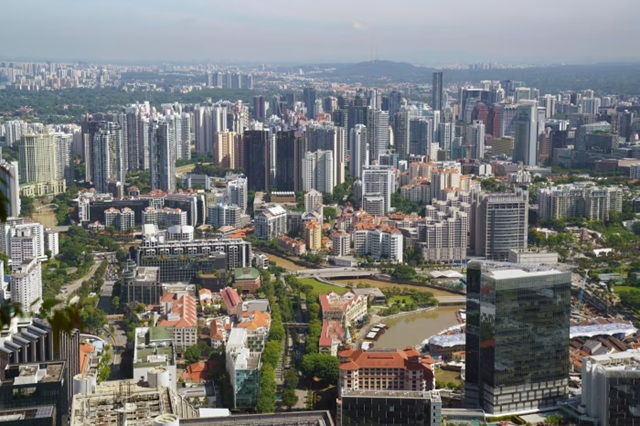
- Saiful Alam (Chairman, S Alam Group) – Owns a $21.9 million mansion in Singapore, along with $469 million in commercial real estate, including hotels.
Both figures deny any wrongdoing, but they are among those under intense investigation by Bangladesh’s Anti-Corruption Commission.
What’s Next?
As Bangladesh works to recover billions in looted wealth, the government faces significant challenges, including:
- Legal hurdles in foreign jurisdictions, especially in Dubai, a known hub for offshore wealth.
- Resistance from Sheikh Hasina’s political allies, many of whom still hold powerful positions in Bangladesh’s judiciary and law enforcement.
- Ensuring transparency in the asset recovery process, to rebuild trust in Bangladesh’s financial institutions.
Despite the obstacles, Muhammad Yunus remains determined, stating:
“If my money is stolen and deposited in your country, I think there’s an obligation to help us bring it back.”
With international pressure mounting and Bangladesh’s government intensifying its legal efforts, Chowdhury’s secretive empire could soon become the test case for a broader crackdown on corruption and illicit financial flows. Whether the stolen billions can be recovered, however, remains an open question.