Bill Gates appeared before a congressional committee in Washington on Wednesday and delivered his most detailed public account yet of his relationship with convicted sex offender Jeffrey Epstein, telling lawmakers that he had no knowledge of Epstein’s criminal activities and that the financier later attempted to use information about Gates’s extramarital affairs to pressure him.
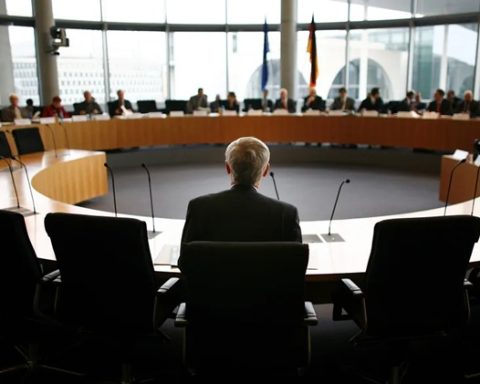
The closed-door testimony before the House Oversight Committee placed one of the world’s most recognizable business figures at the center of an expanding congressional inquiry into Epstein’s network, contacts, and influence. Gates, who appeared voluntarily, sought to draw a clear distinction between his interactions with Epstein and the crimes that made the financier one of the most notorious figures in recent American history.
According to opening remarks distributed to the media before questioning began, Gates told lawmakers that he never witnessed any indication that Epstein was engaged in criminal conduct. He also stated that he never visited Epstein’s private islands in the U.S. Virgin Islands, locations that became synonymous with a decades-long sex trafficking operation involving minors.
Gates further testified that he never traveled to Epstein’s ranch in Arizona or his residence in Palm Beach, Florida, where the financier cultivated relationships with a number of prominent figures over the years, including future U.S. President Donald Trump.
“I never victimized anyone,” Gates told the committee, according to the text of his statement. He said that while Epstein may have attempted to establish a closer personal relationship, he never encouraged or reciprocated those efforts.
The most striking element of Gates’s testimony concerned his claim that Epstein possessed sensitive information about his private life and later attempted to use it as leverage. Gates acknowledged that Epstein had obtained information regarding his marital infidelities, revelations that he said caused pain for his family but were unrelated to his interactions with the financier.
“Those extramarital relationships had no connection whatsoever to my interactions with Epstein,” Gates said, according to his prepared remarks.
The testimony offered a detailed chronology of a relationship that Gates described as a “serious error in judgment.” According to the Microsoft co-founder, his interactions with Epstein took place between 2011 and 2014, years after Epstein had already been convicted in Florida in the first of two criminal cases involving the sexual abuse and trafficking of minors.
Gates said his initial contact with Epstein came when the financier expressed interest in helping raise money for a global health initiative. At the time, Gates told lawmakers, he was aware that Epstein had experienced legal problems but did not fully understand the extent of the crimes for which he had been investigated and convicted.
“I remember knowing that Epstein had legal troubles in the past,” Gates said. “But I did not fully understand the scope of the crimes he had committed.”
Looking back, Gates said he regretted not subjecting Epstein to greater scrutiny. He characterized their interactions as limited and testified that all contact between them ended permanently in December 2014.
According to Gates’s account, it was around that time that Epstein attempted to use information about his personal life to pressure him into maintaining contact. Gates said the effort failed and that their relationship came to an end.
The testimony comes as Congress intensifies its investigation into records related to Epstein and the extensive network of associates, acquaintances, and institutions connected to him over the years. The House Oversight Committee has become the focal point of that effort after Congress overwhelmingly approved legislation last year requiring the Department of Justice to release files connected to the case.
The release of those records has become a contentious issue. The Trump administration had repeatedly pledged to make the files public, but lawmakers and victims’ advocates have argued that the disclosures have fallen short of what was promised and what the law requires.
The first major release of documents began shortly before Christmas but was criticized for being incomplete. Two additional disclosures followed, generating further frustration among victims and their representatives, who argued that important records remained undisclosed and that insufficient care had been taken to protect the privacy of individuals who did not wish to be publicly identified.
Millions of documents are still believed to remain unreleased, ensuring that the investigation continues to draw attention from lawmakers, victims, legal experts, and the public.
Gates became the 15th witness called before the committee and one of the highest-profile figures to testify. Previous witnesses have included former President Bill Clinton and former Attorney General Pam Bondi, who was later dismissed by Trump amid controversy surrounding the handling of the Epstein case.
Additional testimony is expected in the months ahead. Among those reportedly being considered as future witnesses are attorney Alan Dershowitz, who represented and maintained a personal relationship with Epstein, and Todd Blanche, who succeeded Bondi as head of the Justice Department.
The hearing itself was conducted without restrictions on the subjects lawmakers could raise. However, CNN reported that at one point during the proceedings, one of Gates’s attorneys informed committee members that his client would not answer questions regarding other alleged affairs unrelated to Epstein.
Questions about Gates’s personal life have resurfaced repeatedly as scrutiny of his relationship with Epstein has intensified. A recent report by The Wall Street Journal alleged that Gates had been linked to numerous suspected extramarital relationships and described an extensive public relations operation designed to protect and manage the billionaire’s public image.
The renewed attention has coincided with ongoing efforts by Gates and his foundation to address questions about past contacts with Epstein. Earlier this year, the Gates Foundation acknowledged that a small number of its employees had met with Epstein after he suggested he could help secure substantial philanthropic funding for global health initiatives.
According to the foundation, those discussions never advanced beyond preliminary conversations and did not result in any realized project.
As lawmakers continue to examine the vast body of records connected to Epstein, Gates’s testimony adds another chapter to a long-running investigation that continues to uncover new details about the financier’s connections to powerful figures. For the House Oversight Committee, the appearance of one of the world’s most influential philanthropists marked a significant moment in an inquiry that remains far from complete, with millions of documents still awaiting public disclosure and additional witnesses expected to testify in the months ahead.