by Durga
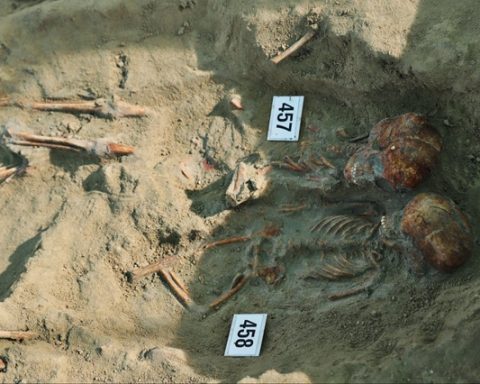
No doubt, no one can hide criminal history in Sri Lanka where a number of untold stories remain buried beneath its soil. Beyond political atrocities and wartime massacres, the island harbours an even older and graver enigma—plagues that annihilated vast swathes of its population and left behind countless bodies whose final resting places remain a subject of eerie speculation. The recent mass grave unearthing in the port of Colombo rekindles forgotten anxieties, gesturing towards a lost and undocumented past, a past steeped in death and erasure, where pandemics swept through the land leaving behind skeletal echoes of lives long lost. If plague chronicles are to be unearthed with forensic precision, then where are those mass graves? Have they been callously repurposed under modern infrastructure, or do they still lie beneath centuries-old shrines, fields, or colonial edifices, waiting to whisper their long-forgotten tales?
Sri Lanka, once an isle of paradisiacal allure, has been ravaged repeatedly by virulent scourges that decimated entire communities. The earliest recorded epidemic, an apocalyptic wave of smallpox in the third century under King Sri Sangabo, allegedly reduced the island’s populace by half. What mass burial sites hold the remains of these victims, considering the rudimentary medical understanding of the time? Were their corpses flung into the rivers, buried in impromptu ditches, or left for scavengers in the unforgiving tropical heat? The silence of historical records is deafening. The chroniclers, obsessed with dynastic struggles, speak in broad strokes of a civilisation nearly undone by disease, yet make no mention of the logistics of death. The vast ruins of Anuradhapura and Polonnaruwa, relics of fallen civilisations, may well be built upon plague pits of forgotten victims.
As centuries passed, the island’s woes only intensified. The arrival of foreign powers ushered in new vectors of disease. The Portuguese, Dutch, and British not only imposed their imperialist will upon the land but also introduced fresh pestilences, turning their military conquests into biological ones. The Portuguese-era epidemic of 1582 wiped out the royal family of Karalliyadde Bandara in Trincomalee, leaving the Kandyan throne precariously unoccupied. But where were these victims interred? Colonial accounts are conveniently sparse, fixating instead on political ramifications rather than humanitarian devastation. In 1648, the Jesuit priest Balthasar da Costa wrote of Bharatha fishermen on Mannar Island perishing en masse from smallpox, their lifeless bodies discarded like refuse. Did these dead receive Christian burials, or were they simply entombed within the sands of the northern islets, their skeletal remains still waiting beneath modern-day settlements?
The Dutch, meticulous administrators, recorded smallpox epidemics ravaging the populace throughout the 17th and 18th centuries, with the 1697 outbreak driving King Vimaladharmasooriya to the mountains, abandoning the infected to their fate. The suffering masses were left in forests to die, their cadavers unceremoniously disposed of in mass pits beyond the reach of scavenging animals. By the 1740s, smallpox had struck with such ferocity that entire villages ceased to exist. Governor Loten, in 1754, lamented that neither kin nor kith attended to the dying, leaving their bodies to be burnt or buried in isolation. Were these plague pits ever documented, or did they merely become sites of later settlements, now paved over by the march of history?
The British era witnessed an even more intricate tapestry of plagues, each bringing about mass mortality and yet little clarity on the fate of the dead. The 1819-1820 smallpox epidemic left the Kandyan aristocracy decimated. Many prominent families ceased to exist, their ancestral lines obliterated within weeks. The elite who perished were often granted traditional cremations, but what of the thousands of peasants who succumbed in silence? The colonial government, keen on instituting sanitary measures, must have resorted to mass burials in order to prevent further contagion, yet no official record hints at the locations of these necropolises. Were the bones of the dead unceremoniously mixed with those of fallen warriors from previous insurrections? The Kandyan hinterlands, still dotted with ancient ruins, may yet harbour these lost graves, waiting to be unearthed.
Few epidemics, however, compare to the catastrophe of the 1934-35 malaria epidemic, Sri Lanka’s worst recorded health disaster. Over 1.5 million people—almost half the island’s population—were infected, and at least 80,000 perished in agonising torment. Entire villages were emptied, their huts left abandoned as famine followed disease, claiming yet more lives. The British authorities struggled to manage the crisis, and makeshift burial grounds must have been established to dispose of the sheer volume of corpses. But where? The official narrative remains frustratingly vague. Unlike in the case of European plague pits, which were later rediscovered beneath medieval churches and town squares, Sri Lanka’s mass graves remain elusive. Some argue that these plague dead were interred in jungle clearings that were later repurposed for plantations, roads, or housing schemes. Could modern-day Colombo’s booming skyline stand atop one such unmarked cemetery?
The question of burial sites becomes even more urgent when considering more recent history. In 1914, the Bombay plague infiltrated Colombo, carried by vermin on ships from India. While colonial authorities implemented strict quarantine measures, the spread was inevitable. Mass death followed, and entire communities were left in mourning. But Colombo, a port city constantly transforming under the pressures of modernisation, bears no visible trace of the victims. Were their bodies deposited in secret pits outside the city’s walls? The port of Colombo, where a recent mass grave was unearthed, might be one of these hidden sepulchres. If forensic investigations were to be conducted, would they confirm plague-era burials, or would they reveal something far darker—executions, massacres, politically silenced disappearances?
Sri Lanka’s history, rich in its narrative of conquest, resistance, and survival, is simultaneously one of obliteration and neglect. Unlike the well-documented Black Death cemeteries of Europe or the cholera pits of 19th-century London, the island’s plague graves are spectral absences, erased either by time or deliberate omission. Historical amnesia, whether by accident or design, has left modern Sri Lankans with a fractured understanding of their epidemiological past. Each archaeological discovery of human remains—whether in the highlands, in the north, or in Colombo’s heart—raises the unsettling question: Were these victims of war, or were they casualties of the forgotten plagues that once swept across the land like a biblical reckoning?
The true history of Sri Lanka’s plague victims remains buried, both metaphorically and literally. Mass graves, whether under the dense jungles of the Vanni, beneath colonial fortifications, or hidden beneath modern infrastructure, hold stories yet to be told. But with each uncovered skeleton, each exposed fragment of bone, the silent voices of the past demand answers. Where are the plague dead of Sri Lanka? The question lingers, unanswered, unsettling, and profoundly disturbing.