Chinese mining companies have ramped up their overseas acquisitions to the highest level in over a decade, as they race to lock in critical mineral supplies amid intensifying geopolitical tensions and growing competition from Western rivals. According to a report by the Financial Times, Chinese outbound mining deals worth over $100 million surged to their highest number since 2013.
Driven by China’s vast industrial needs and its dominant role in processing critical minerals such as lithium, cobalt, and rare earths, Chinese firms are pushing hard to secure raw material sources abroad. This urgency has been amplified by a tightening geopolitical climate, as countries such as the US, Canada, and Australia grow increasingly wary of Chinese investment in strategic sectors.
“There has been more activity in the past 12 months because Chinese groups believe they have this near-term window… They’re trying to get a lot of M&A done before geopolitics get difficult,” said Michael Scherb, founder of private equity firm Appian Capital Advisory, speaking to the Financial Times.
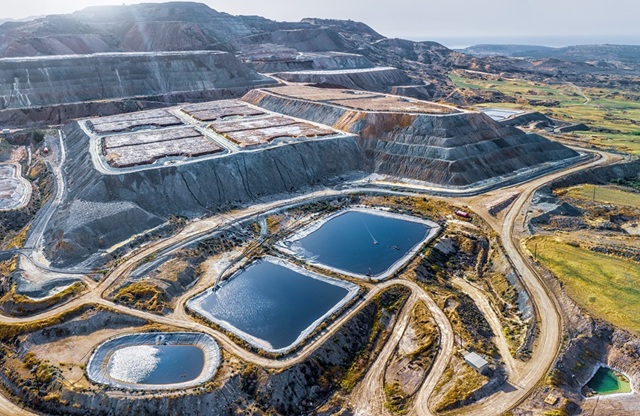
Notable recent deals include Zijin Mining’s planned $1.2 billion acquisition of a gold mine in Kazakhstan and Baiyin Nonferrous Group’s $420 million purchase of the Mineração Vale Verde copper and gold mine in Brazil from Appian.
Separate data from the Griffith Asia Institute also confirmed that 2024 marked the most active year for Chinese outbound mining investments and construction since at least 2013.
Experts say the wave of investment aligns with China’s broader industrial policy pivot toward high-tech sectors—especially electric vehicle batteries, semiconductors, and renewable energy—where critical minerals play a foundational role. Christoph Nedopil of the Griffith Asia Institute noted that while Belt and Road infrastructure investments have trended smaller, Chinese mining investments remain large and increasingly strategic.
Despite dominating global processing capacity, China must still import much of the raw material it refines. As Western nations attempt to diversify away from Chinese-controlled supply chains, Beijing is doubling down on securing upstream assets.
“Every time someone gets close to mining lithium, the Chinese come running with a cheque book,” said John Meyer, an analyst at SP Angel, highlighting China’s aggressive posture in blocking Western access to certain critical materials.
Benchmark Mineral Intelligence’s Adam Webb added that countries such as Canada and Australia have grown “increasingly wary” of Chinese buyers due to the strategic value of these resources. In response, Chinese companies are becoming more sophisticated in their approach, competing with one another in asset sales and often showing a greater appetite for long-term risks and less traditional jurisdictions.
Chinese groups such as CMOC, MMG, and Zijin Mining lead the pack, supported by state-owned banks issuing billions in loans for mining projects in emerging markets. These financial packages often come with fewer conditions than Western alternatives, making them attractive to resource-rich developing countries.
In Africa, China is strategically capitalizing on rising resource nationalism. Timothy Foden, a lawyer at Boies Schiller Flexner with extensive experience in African resource arbitration, told the Financial Times that military-led governments in nations like Mali are seizing Western assets and demanding higher royalties—conditions Chinese companies are often more willing to accept in exchange for control.
With global demand for critical minerals expected to rise for years, analysts predict continued Chinese dealmaking, especially in regions less accessible to Western capital.
“In the next few years, we are likely to continue to see a healthy level of dealmaking activity from Chinese mining companies,” said Richard Horrocks-Taylor, global head of metals and mining at Standard Chartered.