China has the power to “easily” end the war in Ukraine if it chose to do so, the European Union’s top foreign policy official Kaja Kallas has said, underscoring growing concerns about Beijing’s role in enabling Russia’s military campaign.
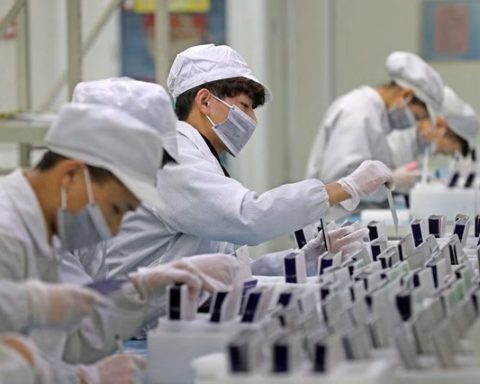
Speaking at a NATO gathering of defence ministers in Brussels on Friday, Kallas – the former Estonian prime minister recently appointed as the EU’s foreign policy chief – claimed that Moscow’s war effort heavily depends on support from China. “It is clear that if China would really be against this war they could easily stop this,” Kallas told BBC Radio 4, adding that around 80 per cent of the dual-use goods used by Russia’s military are sourced from China.
Her comments come amid a visible shift in international dynamics following President Donald Trump’s return to office. Kallas noted that while trade wars create global instability, Trump’s confrontational tariff policies had ironically elevated Europe’s “political power” and its image as a reliable defence and security partner. “There are no winners in trade wars,” she said, “but Europe is now seen as credible and reliable.”
According to The Times UK, Kallas’s statements reflect mounting unease among European leaders over China’s indirect contribution to the war, with Chinese companies reportedly providing satellite access and technology used in Russian drone operations. Ukrainian President Volodymyr Zelensky has also recently claimed that Chinese nationals have been captured fighting alongside Russian forces.
The remarks were made during a meeting of the Ukraine Defence Contact Group, chaired by UK Defence Secretary John Healey alongside his German counterpart, Boris Pistorius. For the first time since the forum’s inception in 2022, the United States did not send a physical representative. Instead, U.S. Defence Secretary Pete Hegseth appeared via video link, a move one official downplayed as a “diary issue,” though widely seen as another sign of Washington’s strategic pivot away from European security under the Trump administration.
Further stirring speculation of U.S. disengagement, the Kremlin confirmed that Trump’s envoy, Steve Witkoff, is currently on his third visit to Russia, amid efforts to broker a ceasefire.
Healey used the occasion to announce a new £450 million UK-led military aid package for Ukraine, including £350 million in British funding and additional contributions from Norway through the International Fund for Ukraine. “Our job as defence ministers is to get urgent military aid into the hands of Ukrainian warfighters,” Healey said. “All military aid now will help Ukraine in the fight today and help secure a durable peace tomorrow.”
While international support for Kyiv remains strong, the absence of the U.S. from in-person negotiations signals a potential turning point. Meetings of the defence group were previously chaired by the U.S. until Trump returned to the presidency in January, after which Healey assumed the role in February.
As the war grinds on, discussions have also begun about establishing a future international deterrence force inside Ukraine. Britain and France recently co-chaired a meeting of the so-called “coalition of the willing” to explore the concept, though Kallas admitted the precise role of such a force—whether peacekeeping, monitoring, or deterrence—remains undefined.
Meanwhile, in a rare move, Admiral Sir Tony Radakin, the UK’s chief of the defence staff, made a confidential visit to Beijing earlier this week. He met with Chinese military officials and addressed future commanders, marking the first such engagement in over a decade—a sign that Western powers may be looking for more direct dialogue with China amid rising tensions.