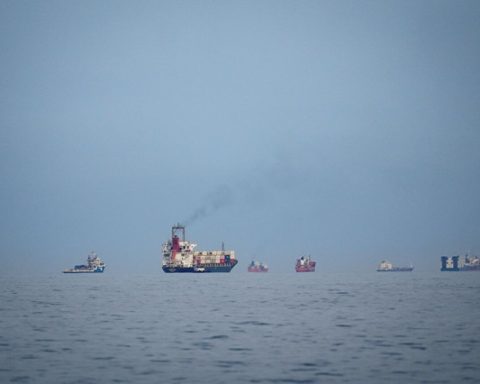
China’s coastguard said Monday it had taken “necessary measures” to expel Philippine vessels from waters near Scarborough Shoal, as Manila accused two Chinese ships of colliding during the operation, leaving one heavily damaged.
Gan Yu, a spokesperson for the China Coast Guard, said Philippine coastguard and government ships “ignored repeated warnings” and “insistently intruded” into the waterway. He described the Chinese actions — including tracking, monitoring, intercepting, and blocking — as “professional, standardised, legitimate and legal.”
“Huangyan Island is an inherent part of China’s territory,” Gan said, using the Chinese name for the shoal, adding that Beijing would “continue law enforcement activities to safeguard national territorial sovereignty and maritime rights and interests.”
Collision Allegation Disputed
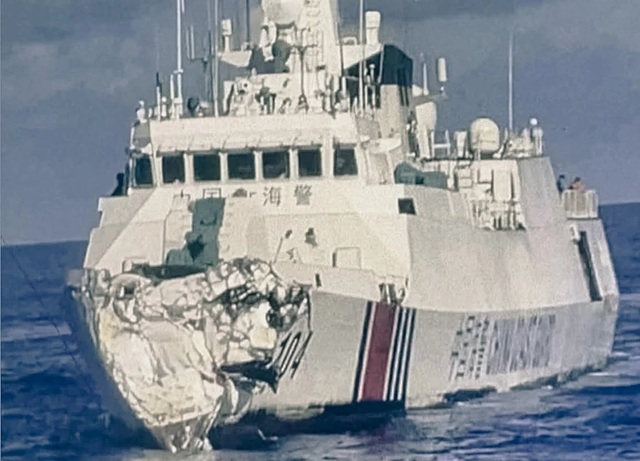
Footage released by the Philippine Coast Guard showed a Chinese ship with hull number 3104 firing water cannons at smaller Philippine vessels before colliding with a larger Chinese ship numbered 164. The impact was followed by a loud bang.
Philippine officials said the collision occurred about 10 nautical miles east of Scarborough Shoal between a smaller Chinese coastguard vessel and a larger PLA Navy ship, causing “substantial damage” to the coastguard ship’s forecastle.
The Chinese statement did not acknowledge any collision. The Philippine Coast Guard said it “immediately offered support, including assistance with man-overboard recovery and medical aid” to any injured Chinese crew members.
Strategic Flashpoint
Scarborough Shoal — known in the Philippines as Bajo de Masinloc — is a triangular cluster of rocks and reefs rich in marine resources. It lies within Manila’s 200-nautical-mile exclusive economic zone but has been under Chinese control since 2012. Both sides claim historical fishing rights in the area, which is also frequented by Vietnamese vessels.
Confrontations in the shoal and other disputed areas of the South China Sea have grown more frequent since 2022. Monday’s incident coincided with Manila’s “Kadiwa Operation,” launched in May to encourage more Filipino fishermen to operate in the West Philippine Sea, Manila’s term for its EEZ.
Diplomatic and Regional Tensions
Philippine President Ferdinand Marcos Jr. vowed to maintain a presence at Scarborough Shoal to “defend national territory,” while stressing Manila did not seek confrontation but had been forced to strengthen defenses.
Marcos also said the Philippines would work to finalise the long-delayed South China Sea code of conduct when it hosts the ASEAN summit next year. The proposed framework, in discussion for over two decades, still faces disagreements over enforcement, geographic scope, legal authority, and the role of external powers.
Beijing claims sovereignty over most of the South China Sea, including Scarborough Shoal, a position disputed by ASEAN members Malaysia, the Philippines, Vietnam, and Brunei. The area is among the world’s busiest shipping lanes and a focal point of US-China strategic rivalry.