The gradual repair of ties between China and India has opened diplomatic and economic channels that were largely closed after the deadly 2020 border clashes. Yet improved government-to-government relations have not translated into greater acceptance among the Indian public, according to two Chinese researchers, who argue that Beijing urgently needs to rethink how it communicates with India.
In a June paper published in International Communications, a journal of the state-run China International Communication Group, Zhou Qingan, dean of Tsinghua University’s school of journalism, and Li Yiming, a research assistant at the school, said Beijing’s efforts to influence perceptions in India remained constrained by an overreliance on official channels and a lack of long-term planning. Their assessment was reported by the South China Morning Post (SCMP).
The researchers argued that Beijing needed to find common ground by expanding its bottom-up strategies “as a matter of urgency”. Improved propaganda efforts in India, they said, would support China’s strategic interests in the Global South.
Their criticism focused on what they described as a fundamental weakness in China’s existing communication strategy. Beijing’s official approach, they said, remained “weak and lacks long-term planning”, while the cultivation of non-governmental opinion leaders was “severely inadequate”. Much of the content produced by China’s media system was centred on policy promotion and had failed to resonate with the broader Indian public.
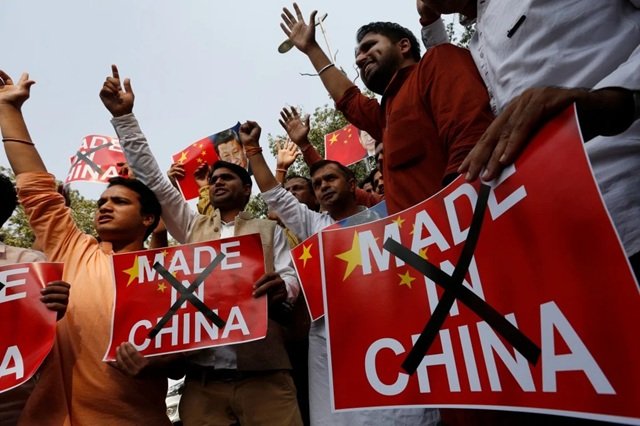
The problem, according to Zhou and Li, goes beyond the mechanics of media outreach. They described a “massive cognitive gap between the two populations”, with stereotypes continuing to shape perceptions on both sides. They pointed to widespread anti-India sentiment on Chinese social media, alongside the widespread perception among Indian youth that China represented a major security threat.
That divide presents a particular challenge for Beijing because of the scale and complexity of India’s media environment. The country has some 140,000 print publications and 900 TV channels operating in 189 languages, according to the researchers. Deep regional divisions and a growing appetite for nationalistic content further complicate efforts by China to establish a consistent narrative.
The deterioration in media relations has also left China with fewer direct channels through which to engage Indian audiences. No Chinese state media reporters are currently stationed in India following a series of visa denials and mutual expulsions in 2023, probably for the first time since diplomatic ties were normalised in the late 1980s. The restrictions formed part of the wider diplomatic fallout from the deadly 2020 Galwan Valley border clash.
The communications gap has persisted even as the broader relationship has begun to recover. Ties started to thaw in 2024, with New Delhi once again issuing tourist visas to Chinese citizens. Direct commercial flights have also been restored, while high-level diplomatic and economic engagements have increased.
Last year, during Indian Prime Minister Narendra Modi’s first visit to China in seven years, President Xi Jinping said that border issues should not be the defining factor in the countries’ relationship. The statement reflected a broader effort to prevent the territorial dispute from determining every aspect of bilateral relations.
The two governments have also moved towards repairing media links. In June, China and India stepped up talks on restoring reciprocal journalist visas, with Beijing pressing New Delhi for approvals ahead of a potential visit by Xi later this year, the SCMP reported.
India’s Foreign Secretary Vikram Misri started an official visit to China on July 27, during which he discussed political, people-to-people and academic exchanges with senior officials, including vice-foreign minister Hua Chunying and Sun Haiyan, deputy head of the Communist Party’s International Department.
Economic and geopolitical considerations have added momentum to the rapprochement. President Donald Trump’s tariff policy, including potential US levies on imports of Indian-made generic medicines, has pushed New Delhi towards improving ties with Beijing. Yet the thaw has not eliminated the sources of mutual distrust.
Chinese access to the Indian market remains limited, while China’s long-standing close ties with Pakistan continue to irritate New Delhi. The combination of unresolved strategic concerns, economic restrictions and competing national narratives means that diplomatic engagement alone cannot easily bridge the divide identified by the Tsinghua researchers.
Their proposed response is therefore centred on sustained people-to-people engagement rather than communication conducted solely through government institutions. Beijing, they argued, should expand exchanges between ordinary citizens and focus its messaging on issues that affect both societies.
“Communication should prioritise shared social issues – such as youth unemployment and unbalanced urban-rural development – fostering mutual empathy rooted in common livelihood concerns,” they wrote.
They also called for partnerships with moderate Indian media outlets, the cultivation of local opinion leaders and improvements in the quality of content distributed through social media platforms. Such measures, they argued, would allow China to engage audiences through voices and institutions that are closer to Indian society rather than relying principally on official Chinese messaging.
The researchers also proposed a multi-departmental communication and emergency response system. Its purpose would be to streamline agenda-setting, information release and public opinion monitoring, ensuring “a quick response during major China-related events and seizing the public opinion high ground”.
Underlying their recommendations is an effort to frame China-India relations within a wider Global South identity. China, they argued, should develop narratives that emphasise the two countries’ shared position as leaders of the Global South, while attempting to reassure Indians about the implications of China’s growing influence.
“It is crucial to help the Indian public recognise that China’s rise does not harm India’s interests,” Zhou and Li wrote. They also cautioned Beijing against “forcing smaller South Asian nations into an ‘either-or’ dilemma between the two powers”.
The argument reflects the central difficulty confronting the relationship as diplomatic contacts resume: restoring official communication may be considerably easier than rebuilding public confidence. Flights, visas, diplomatic visits and discussions over journalists can reopen channels between governments, but the Tsinghua researchers contend that a deeper change will require Beijing to engage Indian society more directly.
For China, their assessment suggests that influence cannot be built solely through formal diplomacy or policy-focused media. In a relationship marked by the legacy of the 2020 border conflict, competing strategic interests and entrenched public perceptions, the challenge is not simply to communicate more, but to find forms of engagement that can reach audiences beyond the state-to-state relationship.