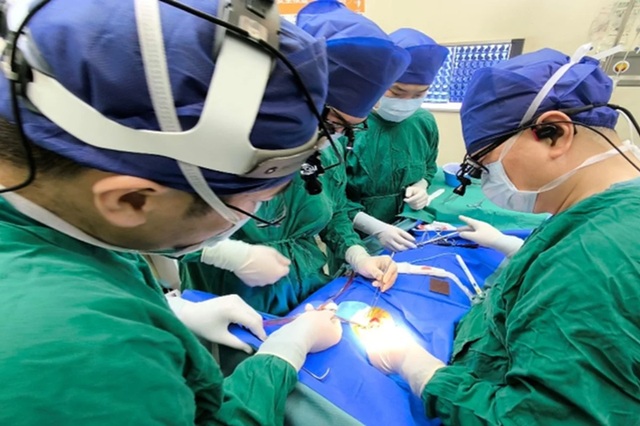
A team of Chinese surgeons has successfully saved the life of a man whose head was nearly severed in a freak accident involving a robotic arm. The rare and complex operation was performed at Shanghai Changzheng Hospital, affiliated with the Naval Medical University, and is being hailed as an unprecedented medical achievement.
The accident occurred on May 31, when the patient was struck by a robotic arm, suffering catastrophic injuries that instantly caused paralysis and cardiac arrest. His cervical vertebrae were completely severed, and crucial blood vessels were damaged, leaving him at risk of massive blood loss. Despite the severity of the trauma, his spinal cord remained intact, offering a slim chance of survival.
Dr. Chen Huajiang, director of the hospital’s cervical spine surgery department, said the case was unlike anything seen before.
“We have looked through much literature at home and abroad, but have never come across a case of such severe cervical vertebra separation, let alone one that survived after treatment,” Chen said.
The patient faced multiple life-threatening complications, including blocked vertebral arteries, dangerously low blood pressure, and the risk of fatal bleeding if blood clots dislodged. “If a clot had loosened during surgery, bleeding could have reached up to two litres within seconds,” Chen explained.
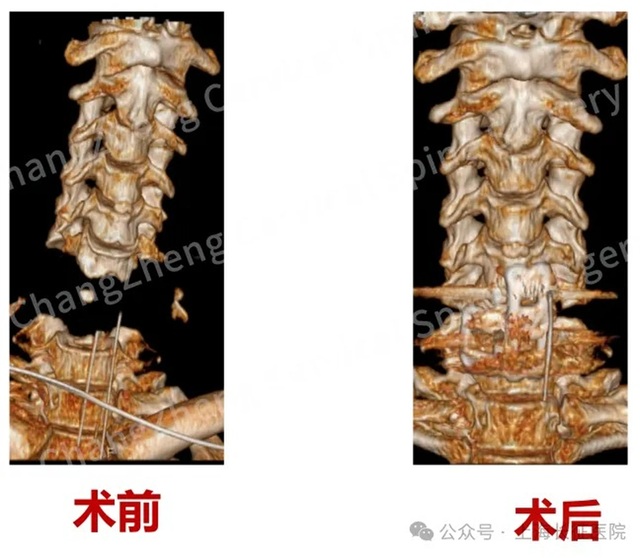
Despite limited imaging options and the extreme fragility of the patient’s condition, a multidisciplinary team of orthopaedic, anaesthesia, and critical care experts devised an emergency surgical plan.
On June 18, after three hours in the operating theatre, surgeons successfully removed blood clots, realigned the displaced cervical vertebrae, and fixed them in place using stabilising plates. For added stability, Chen introduced two auxiliary plates — a technique reportedly used for the first time in such a severe case.
The surgery carried immense risks, including infection, circulatory collapse, and irreversible brain damage. “Although it seemed like we were just moving bones, surrounding blood vessels and nerves were also being tugged,” Chen said, stressing that even the smallest misstep could have been fatal.
Remarkably, the patient regained consciousness shortly after the procedure. His vital signs have since stabilised, and he is now able to sit upright with assistance and move his arms and shoulders — progress doctors describe as “extraordinary” given the extent of his injuries.
The case is being considered a milestone in spinal trauma surgery, with Chen and his team noting that it may offer new insights into treating catastrophic cervical injuries.