A classified CIA analysis delivered to White House policymakers, as described by multiple individuals familiar with the document and reported in part by the Washington Post, concludes that Iran could endure the current U.S. blockade in the Gulf of Oman for roughly three to four months before facing severe economic strain. The assessment complicates President Donald Trump’s repeated assertions that the campaign has already brought Iran to the brink of collapse and raises broader questions about the effectiveness of maritime containment strategies in modern hybrid warfare.
The intelligence community’s findings, according to officials who spoke on condition of anonymity, present a more resilient picture of Iran’s capacity to absorb sustained economic and military pressure. While acknowledging that the blockade is disrupting trade and restricting new oil shipments, the analysis suggests that Iran retains significant operational flexibility, particularly through pre-existing oil cargoes already in transit and adaptive export mechanisms.
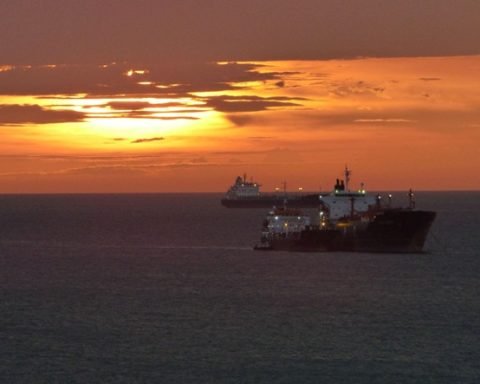
The Washington Post, which reviewed satellite imagery, shipping data, and intelligence-linked reporting, found that Tehran has continued to move oil through complex maritime workarounds despite intensified U.S. enforcement. Since the blockade began, at least 13 tankers have engaged in covert ship-to-ship transfers thousands of miles away near Indonesia’s Riau Archipelago, a long-established transit zone for disguised crude shipments heading toward Asian markets.
These transfers represent a continuation of a parallel oil economy that has developed over years of sanctions pressure. While the blockade appears to have significantly reduced new exports leaving the Persian Gulf, shipments already at sea are being rerouted through intermediary vessels before reaching final destinations, primarily in China. According to shipping intelligence firms cited in the Washington Post analysis, these ongoing transfers have allowed Iran to preserve a crucial revenue stream even as direct export channels are constrained.
Satellite imagery from mid-April showed multiple coordinated offloads involving Iranian-flagged tankers and vessels operating under ambiguous ownership structures. In several cases, laden tankers pulled alongside empty ships in open waters, transferring cargo before continuing on diverging routes. Analysts estimate that roughly 22 million barrels of Iranian crude were moved through these exchanges, worth more than $2 billion at current market prices.
The Riau Archipelago, positioned along key maritime routes between the Middle East and East Asia, has become a central hub for these operations. Maritime intelligence experts told the Washington Post that the region’s geography and heavy commercial traffic make it particularly suited for concealment, allowing vessels to blend into dense shipping lanes while disabling or manipulating tracking systems to avoid detection.
China remains the dominant buyer of Iranian crude, purchasing more than 90 percent of exports at discounted rates that still account for a significant portion of Iran’s government revenue. This sustained demand, combined with the use of covert shipping routes, has helped Tehran mitigate the immediate economic impact of the blockade.
At the same time, the intelligence assessment underscores that Iran’s military capabilities remain far from neutralised. Officials familiar with the analysis said Tehran retains approximately 75 percent of its prewar mobile missile launchers and around 70 percent of its missile stockpiles. Despite weeks of U.S. and Israeli strikes, Iran is believed to have restored access to underground storage facilities, repaired damaged systems, and in some cases completed near-finished missile assembly lines.
Publicly, however, U.S. officials have painted a far more decisive picture. President Trump has described Iranian missile forces as largely “decimated,” while Defense Secretary Pete Hegseth and other senior officials have characterised the campaign as an overwhelming success. Trump has repeatedly highlighted the naval blockade as an impenetrable barrier, claiming it has effectively sealed off Iranian maritime activity.
“The Navy has been incredible. The job they did … it’s like a wall of steel,” Trump said in recent remarks, framing the operation as a demonstration of uncontested maritime dominance. Treasury Secretary Scott Bessent has similarly argued that Iran’s economy is collapsing under the pressure of sanctions and restricted oil exports, describing the combined measures as part of a broader campaign dubbed “Economic Fury.”
Yet intelligence officials cited by the Washington Post offer a more cautious interpretation. A senior intelligence official acknowledged that the blockade is inflicting “real, compounding damage” on Iran’s economy but noted that military degradation has not translated into systemic collapse. Another U.S. official went further, suggesting that Iran’s leadership may be more capable of enduring long-term economic pressure than the CIA assessment itself assumes.
According to that view, Tehran’s governing elite has become increasingly convinced it can outlast U.S. political will while maintaining internal control. Historical precedent, the official noted, shows that similarly isolated regimes have survived for years under embargoes and limited warfare conditions without conceding core strategic objectives.
The economic dimension of the conflict remains central to both sides’ strategies. Iran has reportedly adjusted its oil logistics by storing crude on tanker ships and moderating production rates to preserve infrastructure under blockade conditions. Some analysts believe Tehran may also attempt to expand overland smuggling routes through Central Asia, although such methods would lack the capacity of maritime exports.
The Washington Post reported that intelligence officials are also monitoring changes in shipping behavior, including rerouting patterns that avoid high-visibility chokepoints such as the Strait of Malacca. Instead, some vessels have been observed taking longer southern routes via the Lombok Strait, suggesting a deliberate adaptation to surveillance pressure.
Beyond oil, the intelligence assessment highlights Iran’s continued reliance on a large arsenal of drones and ballistic missiles, which remain central to its regional deterrence strategy. Analysts warn that lower-cost drone systems, in particular, could play a decisive role in future maritime disruption scenarios. Even a single successful drone strike on a commercial vessel in strategic waterways like the Strait of Hormuz could have disproportionate economic consequences by destabilising insurance markets and deterring shipping activity.
In early reporting referenced by the Washington Post, U.S. intelligence had already assessed that more than half of Iran’s missile launchers remained operational and that thousands of one-way attack drones were still available for deployment. These systems have been used in retaliatory strikes across the region, including against U.S. military infrastructure, with some attacks causing greater damage than publicly acknowledged.
Despite these capabilities, analysts such as Danny Citrinowicz of the Institute for National Security Studies argue that even prolonged blockade conditions may not force Iran to capitulate. Instead, they suggest the conflict could produce a strategic stalemate, where neither side achieves its core objectives but both incur significant costs.
The emerging picture, as described in intelligence assessments and regional analysis, is one of endurance rather than immediate resolution. Iran’s ability to sustain economic activity through covert oil transfers, combined with its retained military capacity, suggests that the blockade may function more as a pressure mechanism than a decisive instrument of collapse.
As negotiations continue and military operations fluctuate between escalation and pause, the underlying tension remains unresolved: whether sustained economic and maritime pressure can fundamentally alter Iran’s strategic calculus, or whether, as some officials now fear, the confrontation is evolving into a prolonged contest of endurance with no clear endpoint.