


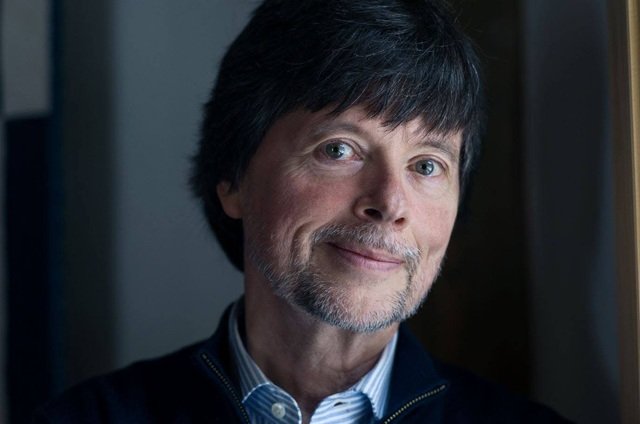
From a converted barn in New Hampshire, with an American flag draped behind him, Ken Burns looks back across nearly five decades of documenting the United States. The filmmaker, widely known as “America’s history teacher,” has spent much of his career examining the events, people, and conflicts that shaped the nation. His latest project turns to one of the country’s defining moments: the American Revolution, the struggle that began 250 years ago when 13 colonies broke away from the British monarchy and formed the United States.
In an interview with Die Zeit, Burns describes the revolution not as a simple story of national birth, but as a complicated historical process marked by ambition, violence, exclusion, and competing visions of the future. His six-part documentary series, “The American Revolution,” explores the conflict behind the creation of the United States and the unresolved questions that continue to shape how Americans understand their past.
At 72, Burns has directed more than 30 documentaries for the non-commercial broadcaster PBS. Over his career, he says he has become increasingly focused on recognizing the contradictions within American history rather than reducing figures and events to simple symbols.
One example, he explains, is George Washington, the military commander of the revolutionary forces and the first president of the United States. Washington’s leadership helped establish the country and set a precedent for peaceful transfers of power, but he also enslaved 577 people. Burns argues that these opposing realities cannot be separated from the historical figure himself.
Removing Washington from the national story would mean losing an essential part of understanding the country’s development, Burns says, while presenting him only as a heroic symbol would also distort history. For him, the challenge is to examine the full complexity of the past.
That approach is central to his portrayal of the American Revolution. Burns says Americans have long accepted the violence of later conflicts, including the Civil War and wars of the 20th century, but have often treated the revolution itself as an almost graceful and bloodless founding moment.
He attributes this partly to the power of national mythology. The American founding story, he says, has become surrounded by sentimentality and commercial celebration, making many people reluctant to question it. Yet, he argues, the contradictions are precisely what make history meaningful and worth examining.
The debate over how the United States remembers its origins has become particularly visible during the country’s 250th anniversary. Burns notes that some political movements prefer a more celebratory interpretation of the nation’s founding, while his documentary presents a broader account that includes competing loyalties and conflicts among Americans themselves.
During screenings of his film, Burns tells audiences that many people assume they would have been supporters of independence in 1776. But a significant portion of the population supported remaining under British rule. These people, known as Loyalists, opposed breaking away from the monarchy and were sometimes violently targeted by revolutionaries.
The division of American society, Burns says, did not begin with the modern political era. He points to earlier periods of intense conflict, including the Civil War, Reconstruction, and the Vietnam War, arguing that national divisions have repeatedly shaped the country’s history.
He also challenges the idea that democracy was the original objective of the revolution. According to Burns, the movement was initially led by a group of white men with property who sought to govern themselves. The broader democratic consequences emerged later, partly because revolutionary leaders needed support from ordinary people to defeat the British military.
The expansion of democratic rights happened gradually and unevenly. Enslaved Black Americans were excluded from the freedoms discussed in the founding documents, and slavery continued for decades after independence. Women gained the right to vote more than a century later, while recognition of Indigenous Americans as citizens came later still.
Burns places particular emphasis on the experiences of Indigenous communities in understanding the revolution. His documentary begins with members of the Haudenosaunee, or Iroquois Confederacy, whose political and diplomatic systems existed long before the United States was founded. The Confederacy had relationships with major European powers and influenced figures such as Benjamin Franklin.
The filmmaker argues that while school lessons often emphasize taxation and representation as causes of the revolution, another major factor was control of Indigenous land. Washington and Franklin were among those who invested in land speculation, while waves of settlers from Europe arrived seeking opportunities on territory that Indigenous communities already inhabited.
The treatment of slavery and Indigenous displacement remains part of America’s ongoing historical debate. Burns says the country has repeatedly confronted issues of racism and inequality, but progress has often been followed by periods of retreat. He argues that a deeper understanding of history requires moving beyond simple categories and recognizing competing experiences.
For Burns, that does not mean finding a compromise on every issue. He states that slavery cannot be viewed positively, while historical questions more broadly require evidence, research, and multiple perspectives. His role, he says, is to bring together historians and provide audiences with the information needed to make their own judgments.
In his editing room, Burns keeps a sign reading “It’s complicated” as a reminder that historical storytelling must remain faithful to facts. If new evidence changes the understanding of an event, he says, the responsibility is to revise the work, even if it disrupts an existing narrative.
The filmmaker ends his documentary with the idea that the American Revolution remains unfinished. The war for independence ended, but the process of defining the nation continues. He points to the language of the Declaration of Independence and the Constitution’s promise of a “more perfect union” as evidence of a country still evolving.
Burns says he would like to one day create a documentary about the era of Donald Trump, but believes historical distance is necessary before such a project can be properly understood. For now, he argues that the American experiment should be examined through patience, evidence, and a willingness to confront its complicated origins.









