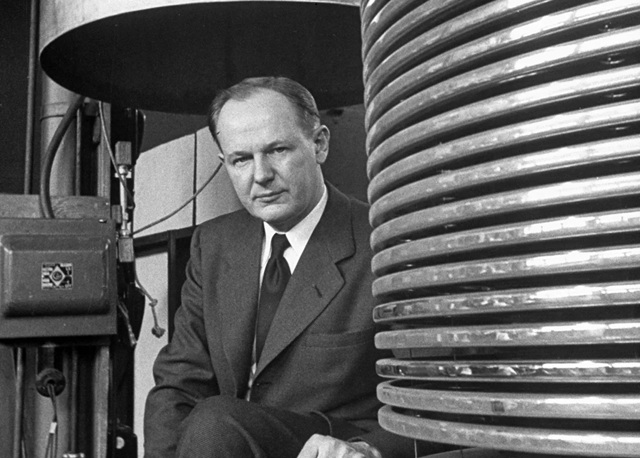
John G. Trump, the influential scientist and engineer, has often been overshadowed by the larger-than-life presence of his nephew, Donald J. Trump, who, following a controversial and turbulent first term, has now ascended to the presidency once again as the 47th President of the United States. This resurgence has not only reinvigorated debates surrounding his political ideology, but it has also given new dimensions to the legacy of his family, particularly the underappreciated contributions of his uncle, John G. Trump, to the realms of science and technology. To fully understand the ripple effects of this historical re-emergence, one must delve deeper into the remarkable but complicated nexus between John G. Trump’s groundbreaking work in high-voltage engineering and the policies and actions of his nephew in the realm of governance.
John G. Trump’s body of work, deeply rooted in his academic brilliance and early forays into high-voltage engineering, resonates far beyond the academic and scientific communities. As a scientist who helped pioneer the use of ionizing radiation in medicine, John G. Trump made significant contributions to cancer treatment, food preservation, and even the preservation of sewage. His work was invaluable during World War II, where he contributed to the development of radar systems and military technology that helped secure an Allied victory. His pioneering methods, which utilized high-voltage X-ray generators to treat deep tumors, laid the foundation for the medical applications of radiation that remain relevant to this day. His role in the post-war period as a key figure in high-voltage engineering further solidified his status as an innovator whose work could be seen in multiple sectors: military, industrial, and medical.
Yet, this discussion must ultimately transition toward the present, with the ascension of Donald J. Trump as the 47th President of the United States. Despite his uncle’s remarkable scientific achievements, Donald Trump’s relationship with science and technology has been contentious at best. Throughout his presidency, Donald Trump was often seen as dismissive of scientific expertise, especially on issues like climate change, environmental policy, and public health. His decisions to roll back environmental regulations, question the findings of climate scientists, and promote fossil fuel interests raised alarms among the scientific community. The stark contrast between the intellectual rigor embodied by John G. Trump and the political pragmatism often employed by his nephew invites deep reflection on the relationship between science, technology, and governance in modern America.
This discrepancy is not simply a matter of personal temperament or preference. It points to a broader cultural and political divide that has emerged in recent decades, one in which the values of expertise and reasoned deliberation have been challenged by populist rhetoric and a deep skepticism of established scientific consensus. The question, then, becomes: how does the return of Donald J. Trump to the presidency shape the future of scientific policy in the United States, and what implications does this have for the legacy of John G. Trump, a figure whose work was fundamentally dedicated to the beneficial application of science for the greater good?
As the 47th President, Donald Trump is now positioned to influence the future direction of scientific research and its role in public life. There is a palpable tension between the powerful force of technological advancement, embodied in the achievements of his uncle, and the anti-science rhetoric that has often dominated his political career. This dynamic creates an inherent conflict: How can a nation that once revered scientific ingenuity and academic excellence—through figures like John G. Trump—move forward when its leadership seems at times to reject the very principles of evidence-based policymaking?
The legacy of John G. Trump as a scientist offers a stark contrast to the modern political climate, which at times questions the validity of scientific evidence, particularly in relation to climate change, the COVID-19 pandemic, and other public health issues. John G. Trump’s contributions were grounded in a deep belief in the power of science to solve real-world problems, and his work in high-voltage engineering, medical radiation, and food preservation demonstrated a profound understanding of how science could elevate human welfare. Meanwhile, his nephew’s relationship with the scientific community has often been one of skepticism, as seen in his dismissive attitude toward climate science and the prioritization of economic growth over environmental concerns.
For instance, during Donald Trump’s first term, his administration’s rollback of environmental regulations was seen by many as a direct attack on scientific recommendations and long-established environmental protections. This includes his decision to withdraw the United States from the Paris Agreement, a global effort to combat climate change. The implications of such actions, particularly in terms of their long-term effects on environmental sustainability and public health, cannot be overstated. Where John G. Trump championed scientific innovation for the public good, his nephew’s policies often appeared to prioritize short-term political gains over long-term scientific and environmental goals.
Nevertheless, the return of Donald J. Trump to the Oval Office presents new challenges, as well as opportunities, for the relationship between science and governance in the U.S. Given the ever-increasing role of science and technology in shaping global economies, geopolitical power dynamics, and the future of human life on this planet, it remains to be seen whether the 47th President will reconcile his past skepticism with the realities of an increasingly interconnected world. Science and technology continue to play a central role in the nation’s economic and military strategies, and to ignore their significance would be to alienate the U.S. from its global competitors, especially as countries like China and Russia increasingly invest in research and innovation.
One of the most intriguing aspects of this development is the potential for the Trump family’s legacy to intersect in meaningful ways with America’s scientific future. While the political rhetoric surrounding President Donald Trump may continue to be divisive, it is possible that his administration—despite its previous dismissals of science—could find ways to harness the power of innovation in ways that echo John G. Trump’s original vision. Whether through reinvestment in military and medical technologies, or by fostering new breakthroughs in energy, health, or food security, there is a potential to channel the enduring legacy of John G. Trump’s high-voltage engineering and radiation applications into new, transformative solutions for the nation and the world.
However, this would require a fundamental shift in the political and ideological dynamics of the Trump administration. The 47th President would need to embrace the lessons of history and recognize the value of scientific inquiry as a cornerstone of policy, not a tool for political leverage. It is a difficult challenge, particularly in an era where the polarization of science has reached unprecedented levels. If Donald Trump can reconcile his political agenda with the progressive potential of scientific development, perhaps we can witness the kind of groundbreaking advances that John G. Trump envisioned throughout his career—advances that could serve not only to enhance military and economic power but also to improve the quality of life for individuals across the globe.
In conclusion, the return of Donald J. Trump to the presidency raises important questions about the trajectory of American science and technology, particularly in the context of his uncle’s significant contributions to these fields. John G. Trump’s legacy as a pioneering scientist provides a compelling case for the crucial intersection of knowledge and policy, urging both skepticism and hope. The scientific community, and the broader public, must remain vigilant in advocating for the responsible application of scientific advancements, while also recognizing the complexities of the political forces at play. Whether or not the 47th President can bridge the gap between his uncle’s intellectual rigor and his own political machinations remains to be seen. Yet, the potential for a future in which science serves as the driving force for social good, as John G. Trump envisioned, is still very much within reach. The question, ultimately, is whether the political will exists to harness it.