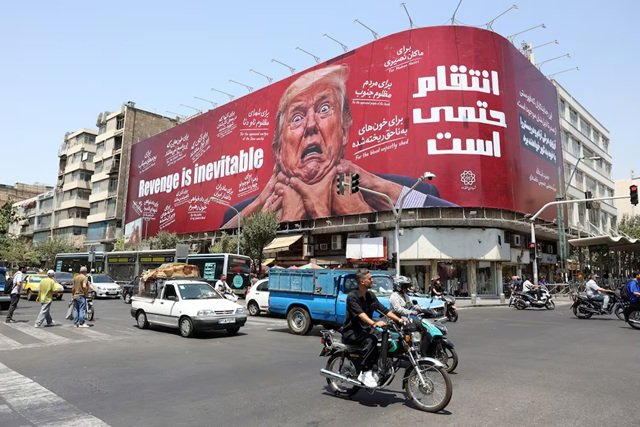
The United States appears to be shifting from the threat of military escalation towards renewed diplomacy with Iran after weeks of strikes failed to achieve Washington’s central objective of compelling Tehran to relinquish its position over the Strait of Hormuz. According to an assessment by The Soufan Center, U.S. policymakers increasingly face a strategic impasse in which additional military pressure is unlikely to deliver the concessions sought by Washington, leaving diplomacy as the most viable pathway despite formidable political and regional obstacles.
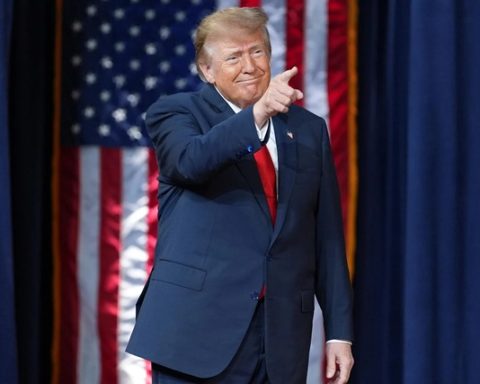
The reassessment comes after U.S. President Donald Trump publicly threatened a “massive escalation” of strikes against Iranian military and civilian-related targets before deciding against expanding the campaign. In support of the earlier threat, the United States deployed a substantial number of additional combat aircraft, including B-1 heavy bombers, to the region, signalling that Washington had prepared options to resume an extensive air campaign comparable to that launched at the beginning of the conflict on February 28.
Yet, despite these preparations, experts cited by The Soufan Center assess that Washington has reached a strategic dead end. They argue that even more intensive military action is unlikely to persuade Iran’s leadership to return to the terms established under the June U.S.-Iran Memorandum of Understanding (MOU), which collapsed in early July following disagreements over the interpretation of navigation rights through the Strait of Hormuz. While the United States maintained that the agreement provided for the unrestricted reopening of the waterway, Tehran insisted it retained authority to regulate maritime traffic through the strategic passage.
The continuing U.S. blockade of Iranian ports is expected to deepen economic pressure on Iran. However, the assessment notes that the Iranian government has consistently demonstrated an ability to absorb economic hardship without altering its principal strategic objectives. Tehran has likewise shown little public indication of softening its position. Speaking on the sidelines of the Shanghai Cooperation Organization foreign ministers’ meeting in Kyrgyzstan, Iranian Foreign Minister Abbas Araghchi reiterated that Iran would not discuss even a temporary truce “unless our demands regarding the Strait of Hormuz are fulfilled.”
That leaves Washington confronting difficult strategic choices. According to the assessment, the Trump administration could ultimately face the prospect of either accepting de facto Iranian control over the Strait of Hormuz alongside continued Iranian nuclear advances or embarking upon a far more ambitious military campaign involving ground operations designed to compel Iranian capitulation or even seek the overthrow of the Islamic Republic. Neither course presently appears acceptable to U.S. policymakers. A major ground invasion lacks both public and congressional support and is expected to result in substantial American casualties, while officials are reportedly unwilling to revise the MOU to accommodate Iran’s position over the Strait.
Military planners have nevertheless explored more limited options. Reports indicate that U.S. military leaders have presented proposals involving the seizure of Iranian islands along the Strait or the country’s oil export facilities on Kharg Island. Other reported plans include deploying U.S. Special Operations Forces to capture strategically significant facilities that would be difficult to eliminate through air strikes alone, including the deeply hardened uranium enrichment site known as Pickaxe Mountain. Press reports also suggest that Special Operations Forces and medical units have been repositioned within the region in preparation for possible operations. However, reported U.S. war games have repeatedly concluded that limited ground interventions would neither collapse the Iranian government nor force it to capitulate.
Against this backdrop, both Washington and Tehran appear to be leaving the door open for de-escalation. Since last week, President Trump has refrained from authorising additional strikes against Iranian strategic targets, and reports indicate that he has decided against returning to the large-scale combat operations previously threatened. The pause has been attributed to concerns over the consumption of U.S. offensive and air defence munitions as well as support for renewed diplomatic engagement.
Diplomatic efforts have simultaneously gathered momentum. Omani officials travelled to Tehran to revive negotiations aimed at securing a compromise that would fully reopen the Strait of Hormuz. Earlier attempts in July to reconcile differing interpretations of Article 5 of the MOU had collapsed after attacks by the Islamic Revolutionary Guard Corps (IRGC) on commercial vessels. Those attacks sought to enforce Iran’s position that ships should avoid U.S.-backed passageways near the Omani coastline and instead navigate closer to Iran’s shores.
According to reports cited in the assessment, the latest Oman-Iran discussions achieved meaningful progress. The reported Omani proposal envisages Iran guaranteeing safe passage for vessels navigating along its coastline, Oman managing shipping routes close to its own coast, and the designation of a new international channel through the centre of the Strait. Uncertainty remains over whether the proposal would allow the U.S. Navy to continue providing protection for vessels using routes other than those nearest the Iranian coastline.
Regional mediation efforts have also widened. Reports indicate that Qatar and Pakistan, encouraged by China, are attempting to organise renewed direct talks between the United States and Iran with the objective of restoring the MOU. Should such negotiations materialise, they would be expected to ease pressure on global energy and commodity markets, where uncertainty surrounding the Strait of Hormuz continues to generate significant concern.
Iran’s willingness to explore diplomacy may reflect multiple pressures. U.S. strikes have inflicted severe damage on parts of the country, particularly along its southern Persian Gulf coastline, while Iranian officials may also be seeking to avoid the consequences of an anticipated multilateral meeting in London designed to build a coalition for protecting maritime traffic through the Strait. According to the assessment, the planned gathering of defence ministers and senior military commanders from Western and regional countries signals growing international resistance to Iranian claims over the waterway and suggests that European reluctance to support the broader U.S. campaign may be diminishing.
Regional governments remain divided over the preferred path forward. Bahrain and Kuwait, backed by the United Arab Emirates (UAE), have reportedly carried out their first retaliatory strikes against Iran since the collapse of the MOU, underscoring a more assertive response to Iranian attacks. Saudi Arabia and Qatar, meanwhile, continue to align with Oman in advocating diplomacy while demonstrating a willingness to respond militarily if confronted with escalating threats.
The regional picture has become even more complicated following renewed activity by the Houthi movement in Yemen. Iran’s support for Houthi efforts to disrupt Saudi shipping through the Bab el-Mandeb Strait, coupled with missile and drone attacks against Saudi refining facilities, prompted Saudi strikes on the Houthi-controlled port of Hodeidah. Reports also indicate that fighting between the Houthis and Saudi-backed Republic of Yemen Government forces may have resumed, reopening a conflict that had been largely dormant since the 2022 ceasefire.
The renewed Yemen conflict risks becoming a further obstacle to any broader settlement between Washington and Tehran. As regional actors seek to secure their own strategic interests, any comprehensive agreement would likely need to accommodate not only U.S. and Iranian demands but also those of Tehran’s non-state allies, including the Houthis. According to The Soufan Center’s assessment, these overlapping interests, combined with entrenched positions on both sides, ensure that although diplomacy has regained prominence, the path to a durable settlement remains fraught with significant political and military challenges.