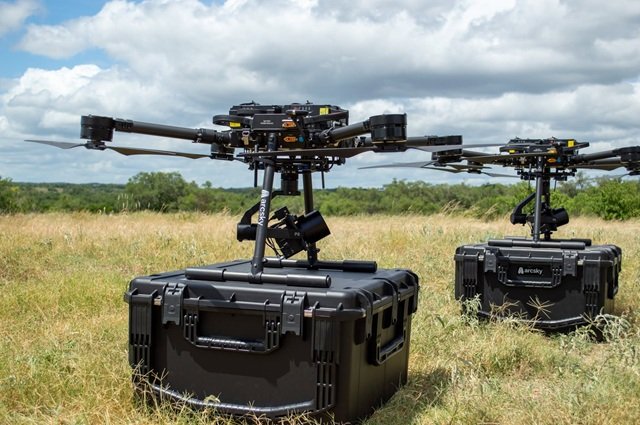
Drone delivery companies and major retailers are preparing for a potential expansion of commercial drone operations in the United States as proposed Federal Aviation Administration rules could remove one of the industry’s biggest obstacles: restrictions requiring operators to keep drones within their direct line of sight.
According to a Reuters report, companies that previously struggled to scale drone delivery programs because of regulatory limits are now looking toward a new phase of growth as federal officials seek to accelerate the deployment of drone technology.
The challenges were highlighted by Beth Flippo, an engineer who moved her family from New Jersey to Ohio in 2021 to lead a pilot grocery delivery program using drones for Kroger. The program lasted only eight months before both sides agreed to suspend it.
“We couldn’t make any money,” Flippo, head of drone company Dexa, told Reuters.
Flippo said the program could not expand because federal rules required workers to be positioned around the area to monitor drones visually. The staffing requirements made the operation too expensive and prevented it from becoming a scalable business.
The situation could change if the FAA adopts proposed rules that would allow certified drone operators to fly beyond the visual line of sight without requiring lengthy waiver approvals. The proposal follows an executive order issued by President Donald Trump’s administration in June 2025 aimed at speeding drone deployment.
US officials have framed drone development as part of a broader competition with China over emerging technology. Transportation Secretary Sean Duffy said in a statement that the United States should lead the development of the technology rather than China.
Dexa is now in discussions with Kroger about restarting the suspended drone delivery program, Flippo told Reuters. A Kroger spokeswoman declined to confirm the discussions. Dexa eventually received an FAA waiver allowing beyond-visual-line-of-sight operations, but the process took four years.
Industry forecasts suggest drone delivery could grow rapidly if regulatory barriers are reduced. Researchers at PwC estimated in 2024 that the US drone market could expand by 65 percent annually through 2034. Globally, drone deliveries are expected to rise from about 13 million this year to more than 800 million by 2034, according to the firm’s projections.
Large retailers are already expanding their programs. Walmart and Amazon launched drone delivery initiatives in 2021 and 2022 respectively, while companies including Papa John’s, Wonder and DoorDash have developed smaller programs through partnerships with drone operators using regulatory waivers.
“We’re at a commercial inflection point,” Heather Rivera, chief business officer at Alphabet’s drone division Wing, told Reuters. Wing, which counts Walmart as its largest client, has been expanding partnerships with retailers and restaurants.
Walmart said drone delivery is mainly focused on urgent and convenience-based purchases, such as allergy medication, pet supplies and forgotten household items. Mike Walden, Walmart’s senior vice president of fulfillment innovation, said customers are notified through the company’s app when items qualify for drone delivery, with orders monitored to ensure they remain within drone weight limits.
Walmart’s drones can carry between three and eight pounds depending on the model. The retailer has completed nearly 2 million drone deliveries, with most occurring this year as the program expanded. Walmart currently operates drones from 70 stores and aims to exceed 270 locations by the end of next year, Walden said.
Amazon has also continued expanding its drone network and recently opened its 10th US delivery network in Baton Rouge, Louisiana. The company says its drones can deliver orders in less than 30 minutes.
Despite growing investment, challenges remain. Communities have raised concerns about noise and privacy, while companies continue working to improve technology and reduce costs. PwC researchers estimated that delivery costs could eventually fall to as low as $2 per order by 2034.
Amazon global head of drone expansion Matt McCardle said the company would not continue investing in the technology if it was not expected to become economically competitive.
Most companies are targeting suburban areas where larger properties, road congestion and population patterns make drone delivery more practical. Walmart has reported drone deliveries completed in under five minutes, while industry executives say speed remains one of the technology’s main advantages.
The FAA proposal, if finalized, could accelerate the industry’s expansion. Drone executives said removing line-of-sight restrictions could create rapid growth, while companies continue competing with China, where the low-altitude economy is projected to become a major sector by 2030.
For companies like Dexa, the removal of regulatory barriers could transform drone delivery from a costly experiment into a commercially viable logistics system. Flippo said that without the current restrictions, one operator earning about $25 an hour could monitor 40 drones simultaneously, enabling significantly more deliveries than traditional driver-based systems.