The United States is reportedly considering a high-stakes covert mission to seize Iran’s enriched uranium, with Delta Force potentially tasked to infiltrate nuclear facilities if intelligence suggests the material has not already been relocated, highlighting the extreme complexity and risk of military options against Tehran’s nuclear program.
Movements in and out of Iran’s Isfahan nuclear facility, where much of the country’s enriched uranium is believed to be stored, are under constant surveillance by American intelligence agencies. Analysts say there may be a narrow window of opportunity for a rapid “snatch raid,” but only if Tehran has not moved its stockpile to a secret location. Former MI6 officer Chris Steele cautioned that the uranium could be dispersed or secured in bunkers, making any operation exceptionally difficult.
The mission, if approved, would likely involve elite U.S. special forces, possibly Delta Force, who may have rehearsed the raid using replicas of the Isfahan facility. An advance team could parachute in under cover of darkness to secure access points, followed by helicopters delivering additional troops and specialists capable of safely handling enriched uranium. Experts warn that any mishap could be catastrophic, and helicopters would need to navigate at extreme altitudes or evade radar to protect the operatives. Initial stages of the raid are believed to resemble the January operation targeting Venezuelan President Nicolás Maduro’s safe house, though Iran’s underground nuclear sites are far more complex.
Entering facilities such as Isfahan, Fordow, and Natanz would present additional challenges. Some entrances may be blocked or reinforced, requiring excavation and protective gear in case of exposure to gaseous uranium. Despite past missile strikes that caused significant damage to Iran’s enrichment infrastructure, the exact locations of remaining uranium remain unknown, even to the International Atomic Energy Agency. Estimates suggest Iran possesses roughly 440 kilograms of uranium enriched to 60 percent, which, if further enriched to weapons-grade levels, could produce around 11 nuclear warheads.
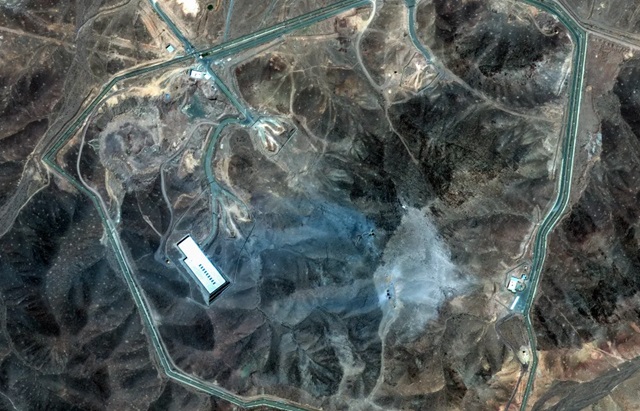
Satellite imagery and intelligence reports indicate that Iran may have been working on a backup facility near Natanz, deep beneath Pickaxe Mountain, which was untouched in previous strikes. U.S. and Israeli forces have reportedly targeted suspected secret sites, including Taleghan 2, a suspected weaponization test location. President Trump confirmed that some sites were “totally obliterated” but suggested the possibility of a future ground operation to secure remaining material.
Experts emphasize that the success of any snatch raid would rely on precise intelligence, timing, and coordination. The uranium could be relocated every 24 hours or stored in underground bunkers, and Iran’s refusal to allow inspections at key facilities complicates operational planning. Any ground mission would be perilous, even with a large U.S.-Israeli joint force defending the perimeter, highlighting the extreme risks involved in attempting to physically seize nuclear material from a sovereign nation.
While air and missile strikes have severely disrupted Iran’s nuclear infrastructure, President Trump has stressed that military options remain open should the situation require direct intervention. The planning and potential execution of a snatch raid underscore the lengths the U.S. is prepared to go to prevent Iran from developing nuclear weapons, but they also illustrate the extraordinary operational challenges and dangers involved.