by Our Correspondent in Hong Kong
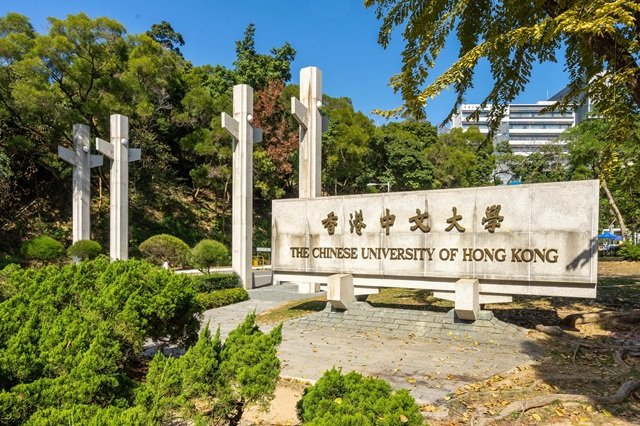
The decision by The Chinese University of Hong Kong (CUHK) to recruit a postdoctoral researcher to examine the legal and political questions surrounding an independent Tamil State in Sri Lanka has opened an unexpected new chapter in the international debate over Tamil Eelam.
The project, conducted through CUHK’s Faculty of Law and under the direction of Professor Alex Green, is being undertaken in collaboration with the Transnational Government of Tamil Eelam. Its stated objective is to examine the “ongoing political and legal discourses” surrounding the development of an independent Tamil State within the Democratic Socialist Republic of Sri Lanka and to assess the legal challenges involved in creating such a state.
That places the separatist project at the centre of an academic investigation into international law, statehood and political community. The significance lies not simply in the subject being studied, but in where the research is being conducted and the institutional framework through which it is being pursued.
Hong Kong is an especially striking setting for such a project. The territory is part of the People’s Republic of China, while mainland China has maintained strong relations with the Government of Sri Lanka. Against that broader geopolitical backdrop, a Hong Kong-based university undertaking research in collaboration with an organisation advocating the establishment of an independent Tamil State introduces a question that extends beyond academia: how might research into the legal foundations of separatist statehood be interpreted within the wider regional politics surrounding Sri Lanka, China and Hong Kong?
The university itself does not present the project as advocacy for the creation of a Tamil State. Instead, the advertised research position describes its purpose as providing an “objective academic assessment” of the legal challenges facing the creation of such a new State. Yet the choice of subject, the collaboration with the Transnational Government of Tamil Eelam and the explicit examination of the development of an independent Tamil State make the project politically significant regardless of its stated academic approach.

The timing adds another dimension. Sri Lanka has become an important partner for China, with Beijing maintaining extensive political and economic engagement with Colombo. Within that environment, research conducted in Hong Kong into the legal possibilities surrounding a separate Tamil State could potentially attract scrutiny over how academic activity intersects with sensitive questions of sovereignty, territorial integrity and international relations.
The project is also built around Professor Green’s award-winning 2024 Cambridge University Press monograph, Statehood as Political Community: International Law and the Emergence of New States. The research therefore appears designed not merely to document the history of the Sri Lankan conflict, but to apply a broader legal framework concerning how new states emerge and what international law permits or restricts.
For Sri Lanka, the issue is particularly sensitive because Tamil Eelam is historically associated with the separatist project that sought to establish an independent Tamil State in the north and east of the country. The new research initiative places that question within an international legal and academic framework, potentially giving renewed intellectual attention to the question of whether an independent Tamil State could be examined as a question of statehood rather than solely as a legacy of armed separatism.