


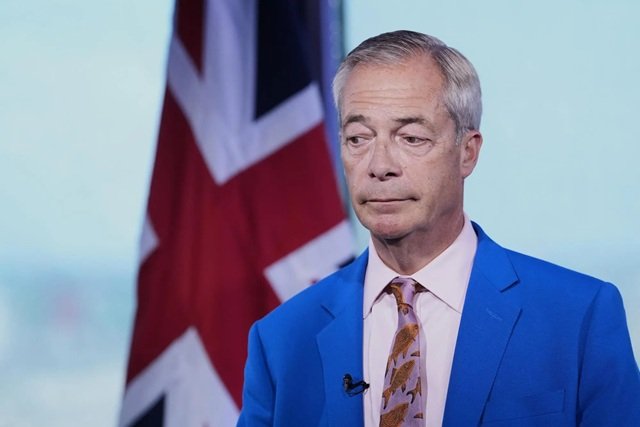
Nigel Farage has built his political career on confrontation, defiance and direct appeals to voters. But on Tuesday, the leader of Reform UK placed his future at the centre of another political gamble, announcing that he would resign as a Member of Parliament and immediately seek re-election in the by-election triggered by his own departure.
In an angry speech delivered in Westminster, Farage accused the political establishment and the media of targeting him through unfair methods. He insisted that his decision was not an admission of wrongdoing but a move to allow voters in his constituency to deliver their own verdict. The people, he argued, should decide his fate rather than journalists, the Labour government or parliamentary authorities.
The dramatic announcement followed days of political pressure after reports raised questions about Farage’s financial relationships and whether he had properly declared certain benefits and donations. The Sunday Times reported on a close personal and financial connection between Farage and George Cottrell, a former associate who served a prison sentence in the United States for fraud-related offences. The report came after earlier concerns over whether significant financial support received by Farage had been correctly disclosed.
The UK Parliament announced that it intended to launch another investigation into the matter. Before any possible action affecting his position as an MP could proceed, Farage chose to leave Parliament voluntarily and force a by-election in his Clacton constituency.
During his speech, Farage rejected claims that he had acted improperly. Instead, he presented the contest as a direct battle between voters and what he described as the establishment. Drawing on the political strategy that helped define his Brexit campaign, he framed the by-election as a referendum-style confrontation in which the public would decide who was right.
“I have never been so angry in my life,” Farage said, accusing critics of attempting to damage him politically. He also raised concerns about media coverage involving his family, claiming that information about his daughter’s location had been published and created security concerns. Farage said he had long faced threats and argued that the state had failed to provide sufficient protection, leaving him to fund his own security arrangements.
He said a £5 million donation from a cryptocurrency entrepreneur had helped cover those costs and described the matter as a private issue. However, questions remained over why such support, along with other benefits, had not been declared when he entered Parliament in July 2024.
Those benefits reportedly included accommodation near Buckingham Palace, financial support for social media services and transport arrangements provided by a wealthy associate. The controversy has placed renewed attention on the contrast between Farage’s political identity as a challenger to elite power and the financial relationships he maintains with wealthy supporters.
Farage’s appeal has long rested on his image as an outsider willing to challenge established parties. He has accused Labour and the Conservatives of operating as a political “uniparty” and built support by focusing on issues including immigration, multiculturalism and climate policy. His supporters have viewed him as a politician prepared to raise questions avoided by mainstream parties.
But the current controversy has threatened one of his most valuable political assets: his outsider image. Critics argue that scrutiny over his financial connections creates tension with his portrayal of himself as a representative of ordinary voters.
Despite the controversy, Farage is expected by many observers to have a strong chance of retaining his seat in Clacton. Conservative Party leader Kemi Badenoch has announced that the Conservatives will not field a candidate there, describing the by-election as a potential waste of public money.
The decision reflects the broader political importance of the contest. Farage won 46.2 per cent of the vote in the general election, giving him a strong base in the constituency. However, his position has become more uncertain as political rivals begin to challenge Reform UK’s momentum.
The party’s popularity has faced pressure from opponents, while former Reform figures including Ben Habib and Rupert Lowe have emerged as critics following internal disputes. Labour and the Conservatives have also identified an opportunity to weaken Farage’s influence.
At the same time, traditional parties have attempted to respond to the issues that helped fuel Reform UK’s rise. Andy Burnham, the Labour politician from Manchester who is expected to succeed Keir Starmer as prime minister in the near future, has acknowledged failures among previous generations of politicians and called for significant changes to the way Britain is governed.
Burnham has argued for shifting power and resources away from London and towards regions that have struggled economically, presenting his own version of anti-establishment politics focused on decentralisation and local decision-making.
The challenge for Farage is that mainstream parties are now adopting some of the themes that helped drive his popularity. The political space he once dominated is becoming more contested as rivals seek to address public frustration with government institutions and regional inequality.
For Farage, the by-election represents more than a contest for a parliamentary seat. It is a test of whether his political brand can survive intense scrutiny and whether his long-running campaign against the establishment still resonates with voters. The outcome will determine whether he emerges strengthened from his latest gamble or faces a defining setback in his pursuit of national power.









