MIT Technology Review reports that generative AI is revolutionizing South Korea’s webcomics industry, opening up new possibilities for established and emerging artists alike. However, it also raises profound questions about the future of creativity and artistic identity, particularly concerning authorship and the role of AI in shaping creative works.
One of South Korea’s most iconic cartoonists, Lee Hyun-se, is at the forefront of this transformation. Known for his seminal 1983 manhwa A Daunting Team, Lee has embraced generative AI as a means of immortality, aiming to keep his characters alive for future generations. “In South Korea, when an author dies, his characters also get buried in his grave,” Lee reflects, contrasting this with the enduring legacies of characters like Superman and Spider-Man. Through AI, Lee hopes to preserve his characters, particularly Kkachi, a fan favorite and a symbol of defiance, for eternity.
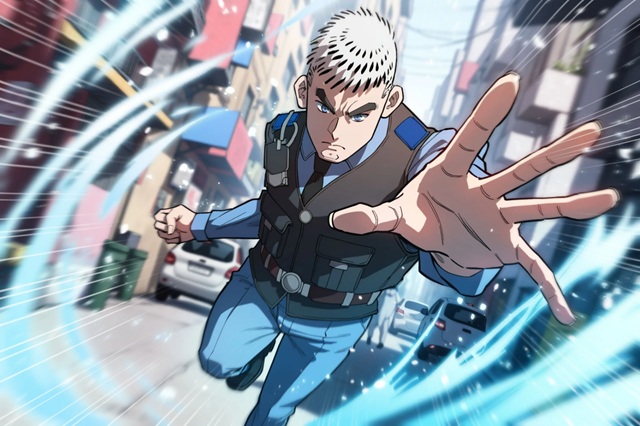
To achieve this, Lee partnered with Jaedam Media, a web comics production company, to create the “Lee Hyun-se AI model.” Using a dataset of 5,000 volumes of his comics, the AI generates illustrations in Lee’s distinct style. The upcoming webcomic, Karon’s Dawn, is Lee’s first AI-assisted project, where students at Sejong University refine AI-generated artwork into a polished final product, under Lee’s direction. Lee envisions a future where an advanced version of the AI model could replicate his creative instincts, offering new works long after his death.
While Lee sees AI as a tool for artistic immortality, many younger artists view it with skepticism. Park So-won, an independent webcomic artist based in Seoul, argues that drawing is the essence of comic creation, something AI cannot replicate. “The crux of a comic, however important the story, is the drawing,” Park says, expressing concern that AI could strip away artistic agency. For Park, AI lacks soul and cannot capture the evolving, personal nature of an artist’s growth.
Yet, not all artists share Park’s perspective. Bae Jin-soo, a successful webcomic writer, sees AI as a potential game-changer. As someone who once struggled with drawing, Bae is excited about the possibility of using AI to handle artwork, allowing him to focus on storytelling. “If AI could handle my artwork, I would create an endless stream of new comics,” Bae says. He envisions AI not only as an artistic tool but also as a creative assistant, enabling him to explore more experimental and original ideas.
Generative AI’s impact is also felt in the broader industry. Startups like Onoma AI have developed tools like TooToon, an AI-powered webcomic generator. TooToon promises to revolutionize the webcomics industry by reducing the time it takes to turn ideas into finished art—from six months to just two weeks. This technology, which allows even those without drawing skills to create comics, is seen by some as a way to democratize creativity. Song Min, CEO of Onoma AI, believes that AI will empower independent artists and disrupt traditional studio systems, where mass production often stifles creativity.
However, this innovation comes with its own set of challenges, particularly in terms of copyright. AI systems like TooToon have been criticized for scraping images from the internet without artists’ consent, sparking lawsuits over copyright infringement. In response, the Korea Copyright Commission issued guidelines to ensure AI developers obtain permission from copyright holders before using their works as training data. South Korea’s government is also considering potential changes to copyright laws to facilitate AI development, though no clear regulations have been established.
As AI continues to transform the creative landscape, it is clear that it holds both exciting possibilities and significant risks. For some, it offers a way to preserve and expand artistic legacies, while for others, it threatens to undermine the very essence of creativity. As the industry navigates this uncharted territory, questions remain about the role of AI in shaping the future of storytelling and whether it can ever truly replace the soul of human art.