The German government has cut its economic growth forecast for 2025 to zero, down from a previously estimated 0.3%, as the country grapples with mounting pressure from U.S. tariffs and a deepening industrial slowdown, according to a report by the Financial Times.
The revision comes as Germany’s export-driven manufacturing sector—long the engine of Europe’s largest economy—continues to suffer under the weight of global trade tensions, particularly those instigated by former U.S. President Donald Trump. Berlin’s latest estimate follows a grim trend: German GDP contracted by 0.2% in 2024 and by 0.3% in 2023, marking the most prolonged economic downturn since the Second World War.
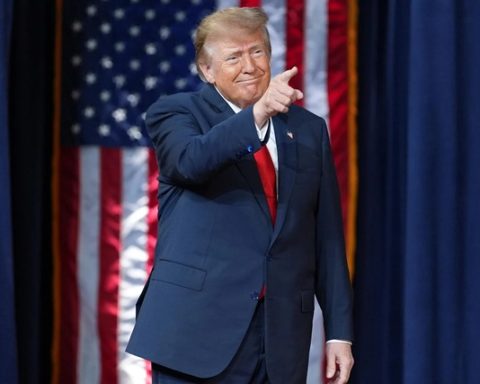
Trump’s recent imposition of sweeping tariffs on the European Union, including a 20% “reciprocal” duty on key goods, has rattled German industry. Although a temporary 90-day pause has reduced EU-wide tariffs to a flat 10% as negotiations continue, the uncertainty remains a major drag on Germany’s export outlook.
“The German economy is preparing for turbulence,” said Clemens Fuest, head of the Munich-based Ifo Institute. He noted a sharp rise in business anxiety, particularly within manufacturing, as reflected in the institute’s latest Business Climate Index.
Adding to the concerns, the International Monetary Fund (IMF) this week also downgraded Germany’s 2025 growth outlook to zero, mirroring the government’s revised forecast.
Friedrich Merz, expected to become Germany’s next chancellor following elections next month, has promised an ambitious economic recovery plan. His proposals include increased debt-financed investment in infrastructure and defence, tax breaks to spur private sector spending, and wide-ranging deregulation to unlock growth. While many economists see these measures as potentially effective over the medium term, they warn that the country’s short-term prospects remain hostage to the unpredictability of international trade policy—especially from Washington.
Trump’s aggressive trade posture has once again become a pivotal concern for European leaders, particularly in Berlin, where policymakers fear further escalation could inflict lasting damage on Germany’s industrial backbone. The automotive, machinery, and electronics sectors—all heavily reliant on U.S. demand—are among the most vulnerable.