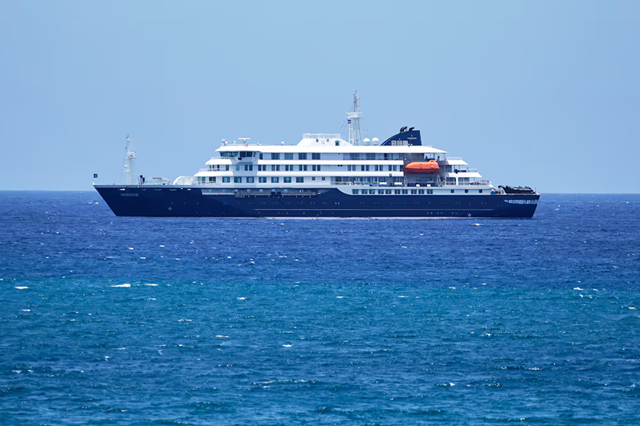
A luxury expedition cruise that began as a high-end journey to the edge of the world has turned into an international public health and diplomatic dilemma, after the World Health Organization (WHO) confirmed a rising cluster of hantavirus cases aboard the MV Hondius, now anchored off the coast of Cabo Verde. The vessel, carrying 147 passengers and crew, is effectively stranded at sea as governments debate whether and where to allow it to dock, amid fears of contagion, logistical paralysis, and political hesitation.
The WHO has confirmed seven affected individuals linked to the outbreak, including three deaths, one patient in critical condition, and three others with mild symptoms. Two cases have been laboratory-confirmed, while the remaining five are classified as suspected infections under ongoing investigation. The onset of illness reportedly occurred between 6 and 28 April 2026, with symptoms escalating rapidly from fever and gastrointestinal distress to severe respiratory complications, acute respiratory distress syndrome, and shock. Health officials describe the situation as dynamic, with further epidemiological and laboratory analysis underway as part of a coordinated international response involving isolation protocols, medical evacuation planning, and case tracing.
The MV Hondius, a Dutch-flagged expedition vessel operated by Oceanwide Expeditions, was originally on a long polar-to-tropical itinerary that began in Ushuaia, Argentina, in March 2026. The voyage, marketed as a premium Antarctic and Atlantic exploration experience, reportedly cost passengers between 17,730 and 28,845 US dollars per ticket. After weeks crossing the Southern Ocean and Atlantic, the ship was due to reach Cabo Verde in early May, but was denied permission to disembark after health authorities raised alarms over the outbreak on board.
The crisis has unfolded through a sequence of escalating medical emergencies. According to passenger reports and official statements, the first known death was a 70-year-old Dutch passenger who died at sea on 11 April. His body remained on board for two weeks before being disembarked at Santa Elena, where his wife, aged 69, also died shortly after arriving on land. While the second death has been linked to hantavirus, the cause of the first remains undetermined. Another passenger fell critically ill on 27 April and was evacuated to Johannesburg for intensive care, while a German passenger died aboard the vessel on 2 May. These incidents have intensified fears that the outbreak may be more widespread than initially understood.
As the ship remains anchored near Praia, the capital of Cabo Verde, authorities have effectively closed the port to general disembarkation, citing health risks and limited preparedness for handling such a situation. However, in a partial reversal, Cabo Verde has offered to facilitate air evacuation for passengers to their respective home countries. The WHO is now coordinating with multiple governments, including Spain and the Netherlands, to establish a safe and controlled transfer of both sick and asymptomatic passengers. One proposed solution involves diverting the ship to the Canary Islands, although no formal agreement has been reached.
The Government of the Canary Islands has expressed reluctance to assume responsibility for the disembarkation without strict conditions. Manuel Domínguez, the regional vice president, stated that while discussions are underway, authorities would prefer alternative ports if possible. He emphasized that any operation conducted in the archipelago would require full guarantees and strict health protocols. Spanish authorities have not yet confirmed whether the ship will be allowed to dock, and Dutch officials have similarly withheld approval, leaving the vessel in an increasingly uncertain legal and logistical limbo.
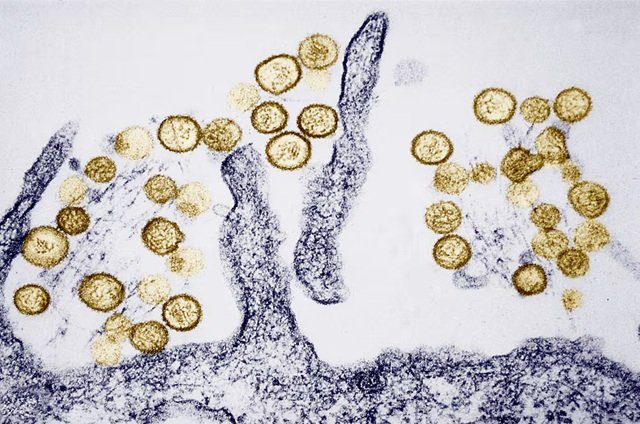
Scientific assessments of the outbreak suggest that while the situation is serious, the overall public health risk remains limited compared to more easily transmitted viruses such as COVID-19. Experts working with the WHO have reiterated that hantavirus is not typically spread between humans, with rare exceptions linked to specific strains such as the Andes virus. That variant, identified in South America in the 1990s, is one of the few known to allow human-to-human transmission under close and prolonged contact. In most cases, hantavirus infection occurs through inhalation of particles contaminated by rodent urine, feces, or saliva.
The disease itself is known for its severity once symptoms progress. Early signs often resemble influenza, but some cases rapidly escalate into severe respiratory failure or hemorrhagic complications. Fatality rates vary significantly depending on the strain, with some forms of hantavirus pulmonary syndrome reaching mortality rates of up to 40 percent. In Argentina, where related strains circulate, average case fatality rates have been estimated at approximately 18.5 percent in recent years. However, European strains tend to be less aggressive and more commonly associated with renal complications rather than pulmonary collapse.
Researchers emphasize that the likely source of infection in the MV Hondius outbreak may not be onboard transmission at all. WHO epidemiologists have suggested that the incubation period, which can range from one to six weeks, indicates passengers may have been exposed prior to boarding the ship, possibly during earlier travel in South America. This theory is supported by the fact that some of the earliest known cases involve passengers who had recently visited regions where hantavirus is endemic among rodent populations.
Public attention has been further fueled by accounts from passengers trapped aboard the vessel. One of the few publicly identified travelers, American influencer Jake Rosemerin, has described a climate of uncertainty and anxiety on board. While emphasizing that the ship maintains strict hygiene protocols and that most passengers remain in good health, he also acknowledged widespread concern over the evolving situation. According to his statements, passengers are currently subject to social distancing measures, mask usage, and restricted movement within the vessel. Those who choose to remain in their cabins are being provided meals by crew members, while communal indoor gatherings have been suspended.
The MV Hondius itself is a purpose-built expedition cruise ship, reinforced for polar navigation and equipped with amenities aimed at long-duration voyages in remote environments. Built in 2019, the vessel features private cabins, dining facilities, and observation lounges designed for wildlife viewing, including penguins and marine life during Antarctic passages. However, these same enclosed comforts have now become part of the problem, as authorities seek to prevent any potential spread within the ship while balancing the welfare of passengers confined for extended periods.
As negotiations continue, the broader geopolitical implications of the standoff are becoming increasingly visible. No country has yet agreed to fully accept responsibility for the ship’s disembarkation, reflecting both medical caution and diplomatic sensitivity. The Netherlands, as the flag state, and Spain, as a potential receiving country through the Canary Islands, remain key actors in ongoing discussions coordinated by the WHO. Meanwhile, Cabo Verde finds itself at the center of a maritime health crisis it did not originate but must help manage.
For now, the MV Hondius remains a vessel suspended between continents and decisions, its passengers caught in a rare convergence of infectious disease risk, international maritime law, and political hesitation. What began as a luxury voyage through some of the world’s most remote waters has become a slow-moving emergency at sea, with no clear timeline for resolution. As health experts continue to trace the origin and scope of the outbreak, the central question remains unresolved: where, and under what conditions, will these 147 people finally be allowed to step on land again.