In a narrative of resistance and uncertainty, Harvard University has emerged from a tense confrontation with the administration of President Donald Trump with a partial legal victory, but without clarity on what comes next. According to reporting by El País, the university’s initial success in court has not ended what faculty members describe as an ongoing struggle over the future direction of American higher education and the role of federal power in shaping it.
At the center of the dispute is Harvard, the wealthiest and one of the most prestigious universities in the United States, which has spent the past 15 months navigating a sustained political and legal challenge from the Trump administration. The conflict intensified as the government advanced demands tied to federal funding, international student admissions, and campus policies related to diversity and political expression. Harvard resisted, refusing to comply with requirements it said would compromise its autonomy, even as it faced the possibility of losing 2.2 billion dollars in federal support.
El País describes how that refusal placed Harvard in a small group of institutions willing to openly oppose the administration at a time when other universities, law firms, and media organizations had accepted government demands. Inside the university, the stakes were understood in stark terms. Faculty members and administrators feared sweeping consequences, including the potential cancellation of international student visas and a forced shift to online teaching similar to the pandemic period. Those scenarios ultimately did not materialize, as court interventions blocked key government measures.
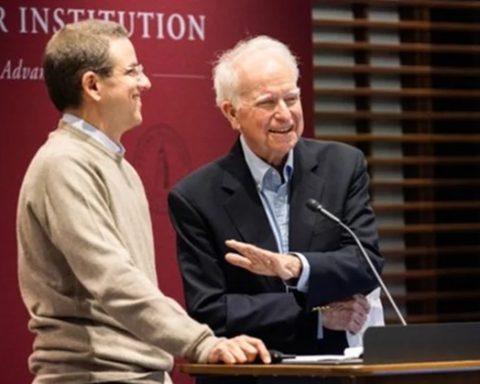
Randall Kennedy, a professor at Harvard Law School, reflects on the broader meaning of the confrontation in remarks cited by El País. Recalling past moments of national crisis, he contrasts them with what he views as an unusual present, arguing that what is at stake is the resilience of democratic institutions and the independence of universities. His comments frame Harvard not only as an academic institution but also as a symbolic battleground in a wider political struggle.
Despite the legal setback, the Trump administration has continued to apply pressure through other channels. In March, the Department of Justice filed a lawsuit alleging that Harvard failed to protect Jewish and Israeli students during protests linked to the war in Gaza following the events of 2023. Earlier, the president announced a separate demand for 1 billion dollars in damages from the university, without providing a detailed justification for the figure. These moves, according to El País, are part of a broader effort that places higher education institutions under sustained scrutiny.
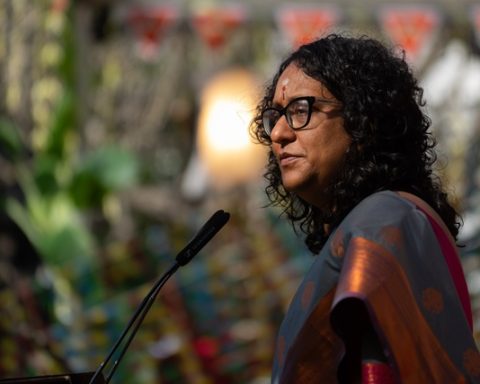
The administration’s approach has also raised questions about consistency and long-term strategy. Steve Levitsky, a Harvard professor and political scientist cited in the report, characterizes the government as fragmented and unpredictable, suggesting that policy decisions appear to shift according to immediate political calculations rather than a coherent plan. This uncertainty has contributed to a climate in which universities are left trying to anticipate future actions without clear guidance.
Within Harvard, the aftermath of the confrontation has been marked by both relief and caution. While the most severe funding threats did not materialize, the university has implemented budget cuts and internal adjustments in anticipation of continued instability. Some departments have reduced costs and staffing, despite Harvard’s substantial financial reserves, which were reported to stand at nearly 57 billion dollars in the previous year.
At the same time, administrators have taken steps that some interpret as attempts to reduce tensions with the White House. These include restructuring academic centers and responding more strictly to student protests, particularly those connected to the Israel-Palestine conflict. Critics within the institution, as quoted by El País, argue that such measures reflect a climate of caution that has influenced internal decision-making.
Voices within the student body remain divided. While many on campus oppose the administration’s stance toward universities, some students argue that criticism of ideological bias within academia is justified. One student, identified under a pseudonym in the report, expressed support for aspects of the government’s critique, suggesting that universities should reconsider how ideological perspectives shape academic environments.
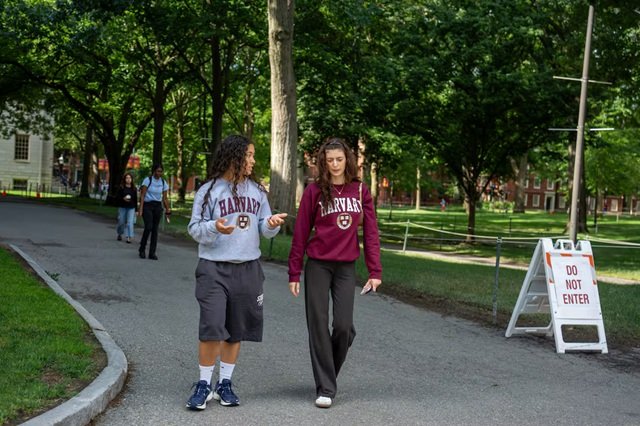
As summer begins, much of the Harvard campus in Cambridge is quieter, but uncertainty persists. Faculty and students anticipate that the next academic year could bring renewed tensions, as legal disputes, political pressure, and institutional responses continue to evolve. El País notes that while the immediate confrontation has not escalated into the most severe predicted outcomes, the broader dispute over the role of universities in American political life remains unresolved, leaving the final direction of the conflict open-ended.