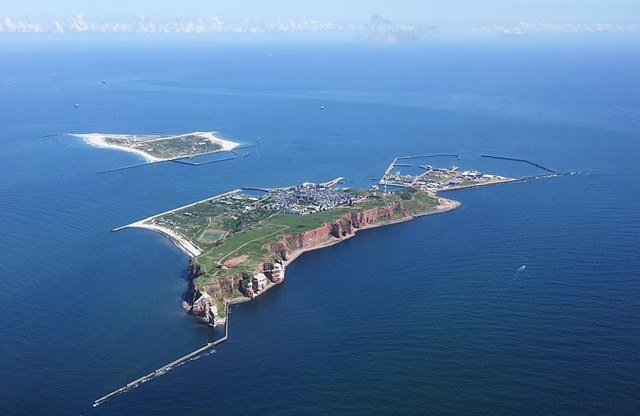
Once a small but strategic British colony, Heligoland played a crucial role in European geopolitics before being forever altered by one of history’s most powerful explosions.
Britain controlled the 1-square-mile island from 1807 to 1890, using it as a naval outpost to monitor German activities in the North Sea. However, in a controversial decision, the British ceded Heligoland to Germany in exchange for Zanzibar—an agreement they would later come to regret.
Nicknamed the “Northern Gibraltar,” Heligoland became a heavily fortified German naval base during both World Wars. In World War I, it was a key stronghold for monitoring British naval movements, and in World War II, it was transformed into a fortress critical to Nazi military operations.
Following Germany’s defeat, the British sought to erase Heligoland’s military significance. In 1947, they carried out Operation Big Bang, detonating a massive stockpile of munitions. The explosion—the largest non-nuclear blast in history—devastated the island, rendering it uninhabitable for years.
Today, Heligoland is a quiet tourist destination, its past largely forgotten. Yet, its history serves as a reminder of shifting global power and the extreme measures nations took to control strategic outposts.