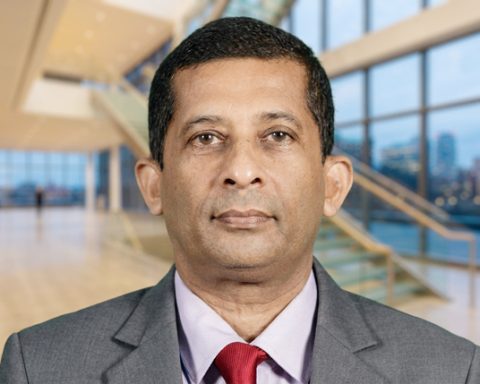
When Mark Carney became Canada’s prime minister, his rise to power was driven by a political backlash against US President Donald Trump’s repeated suggestion that Canada could become the 51st American state. What many Americans dismissed as political theatre was viewed in Ottawa as a serious challenge to the long-standing relationship between the two countries.
According to a report by The Wall Street Journal, Carney’s response was shaped by intelligence briefings and private discussions that convinced him the crisis in US-Canadian relations represented something larger than a temporary dispute. The episode pushed Canada’s new leader to rethink the country’s position in a global system long anchored by American economic and military power.
The Wall Street Journal reported that Trump, in private conversations with former Canadian prime minister Justin Trudeau, had discussed dramatic changes to the relationship between the two countries, including threats involving the long-established border arrangement. During discussions at Mar-a-Lago, Canadian officials attempted to persuade Trump against ideas involving the absorption of Canada into the United States, while Trump advisers debated possible political implications of such a move.
Carney was an unusual figure to lead a political response built around reducing dependence on Washington. A former governor of the Bank of England and former Goldman Sachs executive, he had spent much of his career operating within the global financial system that Trump frequently criticised. He studied at Harvard and Oxford and became the first non-British citizen to lead the Bank of England.
His experience in global finance shaped his views about economic vulnerability. During the European debt crisis, Carney argued that the international financial system had become too dependent on a single point of strength: the US dollar. As Bank of England governor, he proposed the idea of a “synthetic hegemonic currency” that could provide an alternative for middle-sized economies. The proposal received attention from economists but did not gain political momentum.
Years later, as Canadian prime minister, Carney expanded that argument beyond currency markets. He began warning allies that Western security and economic structures had become too reliant on the United States.
Shortly after taking office, Carney broke with tradition by travelling first to France rather than Washington. At the Élysée Palace in Paris, alongside French President Emmanuel Macron, he described Canada as “the most European of non-European countries.” The visit marked the beginning of a diplomatic effort to deepen Canada’s links with European partners.
During private discussions with European leaders, Carney explored cooperation in areas including critical minerals, technology, artificial intelligence and quantum computing. His existing relationships from the financial world helped him connect with figures including Macron, German Chancellor Friedrich Merz and Finnish President Alexander Stubb.
The response in London was more cautious. The Wall Street Journal reported that British officials had previously considered contingency discussions about maintaining intelligence cooperation if the United States withdrew from the Five Eyes intelligence-sharing alliance, but the idea did not advance because Washington provides the majority of intelligence within the partnership.
British Prime Minister Keir Starmer continued to argue that preserving ties with Washington remained essential. Carney, however, increasingly believed that Western countries needed to prepare for a world where American commitment could no longer be assumed.
The issue intensified after renewed US interest in Greenland. According to The Wall Street Journal, European governments viewed Washington’s discussion of acquiring Greenland as a major test of alliance unity. Danish officials treated the possibility seriously, while European leaders gathered in Paris to discuss support for Greenland and Denmark’s sovereignty.
During the same period, Carney travelled to China, where he pursued a new strategic partnership with President Xi Jinping. His government negotiated agreements aimed at improving market access for Canadian exports, including lower agricultural tariffs in exchange for increased acceptance of Chinese electric vehicles.
At the World Economic Forum in Davos, Carney delivered a speech warning Western countries against relying on outdated assumptions about global cooperation. Without directly naming the United States, he argued that countries could not depend on systems where economic integration became a source of vulnerability.
The speech drew attention internationally and reflected a broader debate among Western allies about the future of their relationship with Washington.
European leaders subsequently began discussions on reducing dependence on American technology, defence systems and trade networks. According to The Wall Street Journal, governments examined plans to strengthen independent capabilities in areas including defence, space technology, artificial intelligence, digital infrastructure and secure communications.
The European Union accelerated efforts to develop alternatives to US-based technology platforms, while several countries explored domestic systems for government communications and defence procurement. Canada also moved closer to European initiatives, including participation in a European defence funding programme and cooperation on technology security.
The shift did not represent an immediate break with the United States. European leaders continued efforts to maintain NATO cooperation, with alliance Secretary-General Mark Rutte working to keep Washington engaged. At the same time, allies pursued greater independence to reduce exposure to future political uncertainty.
At the upcoming NATO summit in Ankara, Rutte is expected to highlight increased defence spending by European countries and Canada. The alliance continues to face the challenge of balancing its dependence on American military power with efforts to develop greater strategic autonomy.
Carney’s rise has placed Canada at the centre of that debate. Once viewed primarily as America’s closest neighbour and ally, Canada has become an active participant in discussions about how Western countries should respond to a changing global order.