Despite officially gaining independence from Soviet influence at the end of World War II, Finland remained under covert Russian sway for decades, according to a startling new book by a former Finnish diplomat. Drawing on declassified documents and personal diaries, Venäjää Emme Eristä (“We Will Not Isolate Russia”) by Alpo Rusi outlines how Moscow’s intelligence agencies continued to manipulate Finnish politics long after the collapse of the USSR.
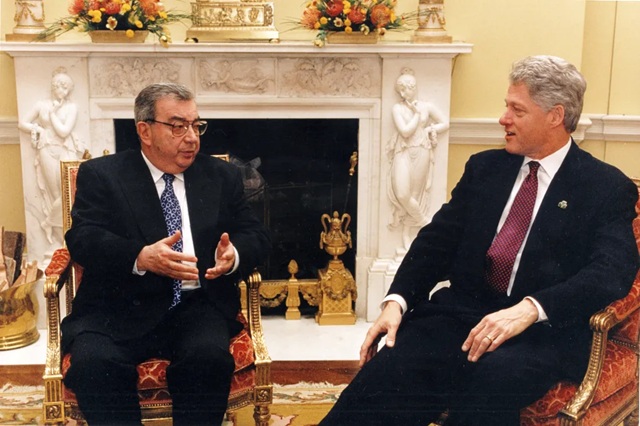
One of the most telling revelations in the book involves a 1995 letter from Yevgeny Primakov, then head of Russia’s SVR foreign intelligence service, to a senior Finnish official. Cloaked in diplomatic niceties, the message expresses concern over Finland’s top counterintelligence officer, Eero Kekomäki, who had aggressively targeted former Soviet spy networks. Primakov hinted that the Finnish president should take action — and within a year, Kekomäki was quietly forced into retirement.
Rusi, who served as chief foreign policy adviser to President Martti Ahtisaari during the 1990s, alleges that the Russian operation reached the upper echelons of Finnish leadership. He claims that successive Finnish presidents — notably Mauno Koivisto and Ahtisaari — maintained clandestine communication channels with Russian intelligence, even after Finland joined the European Union in 1995.
According to Rusi, President Koivisto was so deferential to the Kremlin that he allegedly showed drafts of letters to the KGB before sending them to the White House. Ahtisaari, his successor, is said to have revived backdoor communications with the SVR through his chief of staff, Jaakko Kalela. In one instance, the Kremlin sent former KGB diplomat Felix Karasev — a mentor to Vladimir Putin — to Finland to pressure Kalela into curbing Kekomäki’s operations.
These covert efforts coincided with Finland’s surprising decision in 1995 not to pursue NATO membership — a decision Rusi suggests was “not without the influence” of Russian intelligence. While he concedes it may have made strategic sense at the time, he asserts that Russian pressure played a role in shaping the decision.
The era, which Rusi calls “post-Finlandisation,” built on a legacy from 1945 to 1991 during which Finland navigated its Cold War neutrality by tacitly allowing Soviet oversight of domestic and foreign policy. During this period, the KGB reportedly had handlers embedded with nearly every key public official.
Rusi argues that even after the Cold War, the Kremlin viewed Finland as a vital outpost for intelligence activity — a Western gateway to post-Soviet Moscow. He claims that Kekomäki’s ouster enabled Russian spies to maintain influence in Finnish politics, business, and organized crime through figures like Seppo Nevala, Kekomäki’s politically compliant replacement.
Rusi’s conclusions are shaped not only by state archives but also by his own experiences. After falling out with Ahtisaari during Kosovo peace talks in 1999, Rusi himself was accused — falsely, according to Finnish courts — of spying for East Germany’s Stasi. He has since dedicated his post-political life to uncovering Soviet and Russian intelligence footprints in Finnish society.
His campaign now calls for greater transparency, including the release of official lists of suspected KGB and Stasi contacts in Finland. If Rusi’s account is accurate, the full story of Finland’s post-war independence may be far more complex — and compromised — than previously understood.