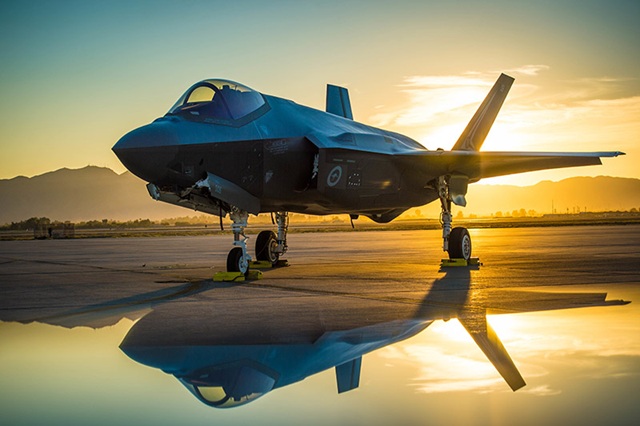
India has reportedly turned down a U.S. offer to purchase F-35 stealth fighter jets, signaling a preference for joint defense development over high-profile acquisitions. According to a Bloomberg report citing unnamed officials, the offer was made by U.S. President Donald Trump during Indian Prime Minister Narendra Modi’s visit to the White House in February 2025.
While Washington hoped to secure a major arms deal with New Delhi, Indian officials made it clear that the country is “not keen” on acquiring the fifth-generation aircraft. Instead, India is focusing on collaborative projects involving co-design and local manufacturing — an approach it sees as more strategically beneficial and aligned with its push for defense self-reliance.
The Indian Ministry of External Affairs downplayed the Bloomberg report, saying no formal discussions on the F-35 have taken place. “The India-US joint statement following the meeting of the prime minister with the U.S. president on 13 February 2025 mentions that the U.S. will undertake a review of its policy on releasing fifth-generation fighters (such as the F-35) and undersea systems to India,” the minister of state for foreign affairs stated in parliament on Friday. “No formal discussions have been held as yet on this issue.”
The proposed sale was seen in part as a U.S. attempt to offset its $41.18 billion trade deficit with India. However, trade tensions escalated this week as Washington imposed 25% tariffs on Indian imports after the two countries failed to finalize a trade agreement by the August 1 deadline. Trump also posted on his Truth Social platform that India would face an additional, undisclosed penalty for continuing defense and trade cooperation with Russia.
During Modi’s February trip to Washington, Trump had publicly expressed his intent to boost arms exports to India. “We’ll be increasing military sales to India by many billions of dollars,” he said. “We’re also paving the way to ultimately provide India with the F-35 stealth fighters.” U.S. Vice President J.D. Vance reiterated the offer during his April visit to India, claiming the F-35 could significantly enhance the Indian Air Force’s capabilities.
However, India’s defense establishment appears to be weighing its options more cautiously. Both the F-35 and Russia’s Su-57 were showcased at the Aero India air show earlier this year in Bangalore. Defense analysts note that the Russian aircraft may have an edge, offering a lower price point and potential for technology transfer — a crucial factor for India, which has traditionally relied on Russian defense platforms and is keen to boost domestic manufacturing under its “Make in India” initiative.
While India remains a key strategic partner for the United States in the Indo-Pacific region, its reluctance to sign onto high-value arms purchases without domestic industrial involvement suggests a more self-directed approach to defense modernization. The F-35 deal, at least for now, appears off the table.