


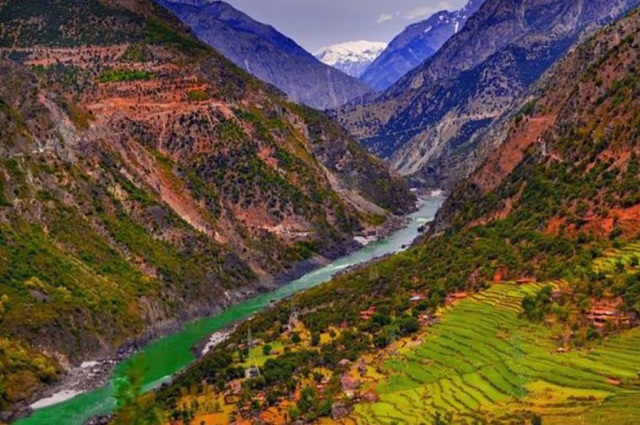
In a dramatic shift in regional relations, India has suspended the historic Indus Waters Treaty with Pakistan, a move that could have profound consequences for Pakistan’s agriculture and energy sectors. The decision was made by the Indian Cabinet Committee on Security, which is responsible for the country’s top national security decisions, and comes in the wake of a deadly attack on tourists in the Kashmir region that New Delhi has linked to cross-border elements.
The Indus Waters Treaty, brokered by the World Bank and signed in 1960, governs the use of water from six rivers in the Indus Basin, crucial for both India and Pakistan. Under the agreement, Pakistan receives approximately 80% of the water supply from these rivers, vital for its agriculture, hydropower plants, and the livelihoods of millions of citizens.
The suspension, approved just a day after the Pahalgam attack, which claimed the lives of 26 people, including a foreign national, has sent shockwaves through the region. Indian authorities have linked the attack to cross-border terrorism, raising tensions with Pakistan.
A Threat to Pakistan’s Lifeblood
The suspension of the treaty effectively removes the limits on India’s control over the distribution of water from the Indus Basin rivers, a move seen by many as an economic and existential blow to Pakistan. Water from these rivers is vital to more than 140 million people in Pakistan, and its interruption could have devastating effects on the nation’s food and energy security.
Reports indicate that the Indian government’s decision could severely disrupt Pakistan’s agricultural output, which is heavily dependent on water from the Indus River system for irrigation. Business Today, an Indian economic magazine, described the timing of the move as strategically aimed at crippling Pakistan’s most vulnerable sectors — agriculture, food, water, and energy security. The magazine warned that the move could spark widespread food insecurity, leading to unrest in Pakistani cities, migration from rural areas, and significant strain on the country’s electricity grid, which relies heavily on water-powered energy sources.
The suspension could also have significant diplomatic and economic consequences. Pakistan’s electricity supply — which powers its industries and households — is at risk, as many of the country’s hydropower plants depend on the water flowing from the Indus Basin.
Escalating Diplomatic Tensions
The decision to suspend the treaty has not yet been officially commented on by Pakistani authorities, though analysts are bracing for a potential diplomatic escalation. As nuclear-armed neighbors, India and Pakistan have long had a fraught relationship, and the suspension of the treaty could be viewed as a provocation. The impact on the water supply could exacerbate existing grievances, further destabilizing the region.
International Concerns
The move raises concerns internationally, with some experts fearing that the suspension of such a critical agreement could lead to further instability in a region already burdened by conflict. The Indus Waters Treaty has been hailed as a rare example of successful cooperation between India and Pakistan, helping to avoid full-scale conflict over water resources for more than six decades. The suspension of the treaty now casts doubt on the future of the agreement and the possibility of peaceful collaboration over shared natural resources.
The international community, particularly the World Bank, which played a pivotal role in brokering the original agreement, may come under pressure to intervene and help mediate a resolution between the two nations.
As the situation unfolds, many are watching closely to see if India’s actions will spark a new cycle of conflict or if diplomatic channels will be pursued to de-escalate the crisis and prevent further harm to millions of people who depend on the waters of the Indus Basin.









