


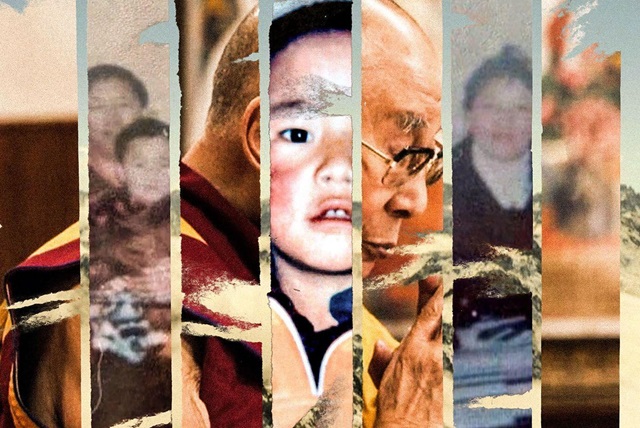
Tibet remains one of the most heavily monitored regions in the world, with a near-total restriction on foreign access and even tighter control over the movement of Tibetans themselves. Since China’s annexation of the region 75 years ago, the struggle to preserve Tibetan culture, language, and religion has persisted under increasing pressure from the central government in Beijing. However, a rare documentary titled Inside China: the Battle for Tibet, produced by a team of journalists, including one known as Chang, provides a harrowing look inside Tibet, revealing the extent of the Chinese government’s efforts to assimilate the Tibetan people.
In an exclusive feature in The Times UK, the documentary details Chang’s undercover journey through Tibet, where the pervasive presence of police checkpoints and high-tech surveillance makes it almost impossible for residents or visitors to go unnoticed. “Monitoring and surveillance is very strict,” Chang says in the film, noting the presence of police posts every 500 meters in Lhasa, the capital, where surveillance cameras watch over every corner, even outside the historic Potala Palace.
While Tibet appears superficially calm, with locals continuing their everyday lives under Chinese rule, there is a significant, disturbing absence in the way Tibetans interact with their heritage. Chang discovers that Tibetans are prohibited from speaking about the Dalai Lama, their spiritual leader, who fled to India in 1959 after a failed uprising. Instead, portraits of President Xi Jinping and former Communist leaders are ubiquitous, reflecting Beijing’s attempts to replace Tibetan national identity with a singular Chinese identity.
This repression extends to Tibet’s monasteries, once centers of resistance to Chinese rule. Chang observes that these sites of worship are under constant surveillance, with facial recognition systems and cameras monitoring every activity. Experts, including cybersecurity analyst Greg Walton, have pointed out that such efforts are specifically targeted at stifling any semblance of Tibetan culture and belief. “Everyday activities like language preservation are being criminalized,” Walton asserts, emphasizing that surveillance is part of a broader strategy of control.
Perhaps the most heartbreaking aspect of Beijing’s long-term strategy is its impact on Tibetan children. According to reports from experts like Gyal Lo, a Tibetan sociologist, up to a million Tibetan children as young as four are now placed in government-run boarding schools where they are taught Mandarin and indoctrinated with Chinese values. This policy is designed to erase Tibetan culture and replace it with a Chinese mindset. Lo warns, “If these schools continue for the next 15 or 20 years, Tibetan national culture and identity will be completely destroyed.”
As The Times reports, the Chinese government has consistently denied any wrongdoing, asserting that Tibetans’ lives have improved under Chinese rule. However, many Tibetans continue to protest in other ways, including through the extreme act of self-immolation. Since 2009, over 160 Tibetans have set themselves on fire as an act of defiance against Beijing’s policies, though international media rarely report on these acts of resistance due to the region’s tight censorship.
As the documentary comes to a close, the question of Tibet’s future remains uncertain, especially as the Dalai Lama’s health continues to decline. The Chinese government has long sought to control the selection of the next Dalai Lama, a policy that was evident in the disappearance of Gedhun Choekyi Nyima, the young boy chosen as the Panchen Lama by the Dalai Lama in 1995. Nyima was taken into custody by the Chinese authorities and has not been seen since, leading some to fear that Beijing’s next move will be to impose its own choice for the 15th Dalai Lama, effectively securing complete control over Tibet.
The documentary not only provides a rare look at life in Tibet under Chinese rule but also highlights the ongoing struggle of Tibetans to preserve their culture, language, and faith against a relentless wave of Chinese assimilation. As this ongoing battle continues, the future of Tibet remains deeply uncertain, with many fearing that once the Dalai Lama passes, Beijing’s influence over the region will be complete.









