

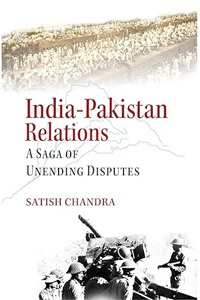
Ambassador Satish Chandra, a 1965-batch Indian Foreign Service officer and current Vice Chairman of the Vivekananda International Foundation in New Delhi, belongs to a generation of diplomats whose professional lives unfolded alongside some of the most decisive moments in South Asia’s political history. Over a career that included serving as India’s Permanent Representative to the United Nations Office at Geneva, High Commissioner to Pakistan, Chairman of the Joint Intelligence Committee, and Deputy National Security Advisor, Chandra was not merely an observer of regional change but an active participant in shaping India’s strategic responses to it. His most recent book, India–Pakistan Relations: A Saga of Unending Disputes, distils decades of diplomatic engagement into a rigorous examination of bilateral tensions. I spoke with him recently in what evolved into an extended conversation—less a formal interview than a sustained exchange—offering rare insights drawn from a life spent navigating moments when political dynamism was not only intense but consequential, and when individual judgement often carried historical weight.
India’s foreign policy, as articulated by Ambassador Satish Chandra, emerges not as an abstract doctrine but as a lived practice shaped by history, geography, and prolonged engagement with the region. Responding to the question of whether India has achieved its ends, he begins by reframing the premise itself. “What are India’s ends?” he asks, before answering with characteristic directness: “Our end is very simple. We want a peaceful, friendly neighbourhood.” This formulation, he suggests, is not unique to India but applies to “many of these countries”, yet India’s conduct, in his view, distinguishes it from other major powers. Across South Asia, he argues, India has “exerted all its efforts with each of its neighbours” to realise this goal, extending economic assistance, political support, and humanitarian help without territorial ambition.
He illustrates this approach through specific examples. India’s role during Sri Lanka’s recent financial crisis is cited as evidence of practical solidarity, as are the lines of credit extended to Bangladesh, which he places at around eight billion dollars over the last decade. Assistance to Sri Lanka, he notes, stands at approximately four billion dollars, with similar patterns visible in Nepal and Bhutan. Even Afghanistan, despite severe constraints on connectivity, has been the beneficiary of sustained Indian engagement. “India has been extremely helpful towards all its neighbours,” he states, emphasising continuity rather than episodic generosity. This continuity, he insists, long predates contemporary policy frameworks and has been visible since the decades following Partition.
At the same time, he is clear that this benign posture is bounded by clearly defined limits. “Our red lines are very simple, which is our national security interests,” he says. As long as these are respected, India is “very happy to build very strong ties cutting across all sectors”, whether in energy, connectivity, or people-to-people relations. When they are crossed, however, India’s response necessarily changes. This balance between openness and restraint forms a recurring theme in his account of Indian policy.
Ambassador Chandra is emphatic in rejecting the notion that India seeks regional dominance. “India perhaps is one of the few countries in the world which has no hegemonistic ambitions,” he says, adding, “We do not covet territory anywhere outside India.” Sovereignty, in his formulation, is non-negotiable, but expansionism is absent. To underline this point, he offers a stark counterfactual: “Just imagine if India were China, what would happen in the neighbourhood. I leave that to your imagination.” The implication, left deliberately unstated, is that India’s size has not translated into coercive behaviour, a fact he considers a significant benefit for neighbouring states.
His reflections take on a more personal register when the discussion turns to Pakistan, a country he repeatedly describes as his “favourite”, not out of sentimentality but due to deep biographical and professional ties. Born in Lahore, he recalls arriving in Delhi in June 1947 at the age of five, as his family relocated in anticipation of the refugee crisis. “To this day, my passport has Lahore, India,” he remarks, highlighting the temporal rupture of Partition. His linguistic and cultural affiliations, including his familiarity with Saraiki and Punjabi, reinforce his sense of shared heritage across the border.
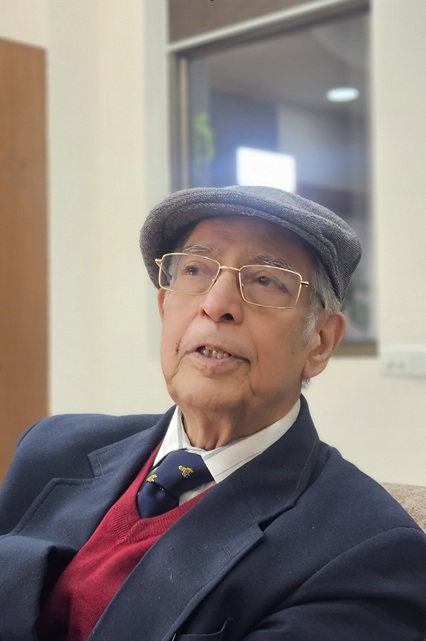
Professionally, Pakistan occupies a central place in his career. He served there at multiple levels: as a young officer in 1969 before the 1971 conflict, later in the Pakistan Division in Delhi, then as Joint Secretary in the late 1980s, and finally as High Commissioner from 1995 to December 1998. These postings, he notes, exposed him to a wide range of issues, from prisoners of war and consular matters to high-level diplomatic negotiations. His long engagement, he argues, lends weight to his critique, which he describes explicitly as criticism of India’s own policies rather than an attack on Pakistan alone.
According to him, India’s approach since Partition has been marked by excessive accommodation. “India has always tried to befriend Pakistan and has been very, very accommodative towards it,” he says, adding that this accommodation has often been “too accommodative, very defensive, and not as aggressive as they should have been”. He contrasts this restraint with how other powers might have behaved in similar circumstances. The Kashmir issue, which he addresses at length, is presented as illustrative rather than exceptional.
He recounts the legal and historical basis of Jammu and Kashmir’s accession to India, emphasising that it followed the established rules governing princely states. “The fact is that the state of Kashmir acceded to India,” he says, noting that it was the ruler’s prerogative, not the religious composition of the population. Prior to Partition, he argues, India showed “zero interest” in securing Kashmir’s accession, a point he supports by citing accounts from V.P. Menon and others involved in the integration of princely states. In contrast, he describes Pakistan’s efforts to pressure rulers along its periphery, including attempts to induce accession through inducements and coercion.
He traces the sequence of events leading up to October 1947, including the standstill agreement, the disruption of supplies, and the initiation of armed incursions into Jammu and Kashmir before accession. According to his account, India’s military intervention occurred only after the Instrument of Accession was signed. He describes the decision to take the matter to the United Nations as a mistake, noting that senior leaders such as Patel opposed it. “It is a sovereign issue,” he argues, and should have been treated as such.
To demonstrate what he considers India’s consistency, he draws a parallel with Junagadh, a princely state that acceded to Pakistan despite having a predominantly Hindu population and no territorial contiguity. In that case, he recalls, India proposed a plebiscite, a principle later endorsed by the United Nations in the Kashmir context. Pakistan’s refusal, he suggests, reflects a broader pattern of rejecting compromise. “Any reasonable proposition made to Pakistan has met with a lack of reason,” he says, characterising this stance as marked by “blind animosity and inveterate hostility”.
For Ambassador Chandra, Kashmir is not the root of India–Pakistan tensions but a symptom. He supports this claim by citing India’s conduct on other issues, notably the Indus Waters Treaty. Negotiated over eight years and concluded in 1960, the treaty allocated roughly 80 per cent of the waters to Pakistan and 20 per cent to India. By most metrics, he argues, India could have claimed a significantly larger share. “India even in the negotiations asked only for what was 25 per cent of the waters,” he notes, presenting this as further evidence of restraint.
The pattern, he continues, extends to the aftermath of the 1971 war. Despite holding over 5,000 square miles of Pakistani territory and 93,000 prisoners of war, India chose not to impose punitive terms. “We could have imposed a Versailles on Pakistan,” he says, but refrained in the hope of fostering long-term reconciliation. Similar restraint, he argues, characterised India’s handling of Pakistan’s pre-Partition debt and numerous other bilateral issues.
His assessment of Pakistan’s internal dynamics is shaped by direct experience. Recalling a conversation in Karachi in September 1971 with a journalist acquaintance, he describes being confronted with an attitude that shocked him. After acknowledging India’s support for the Mukti Bahini, he recounts asking, “Why are you committing genocide in East Pakistan?” The response, he says, revealed a deep-seated hostility towards Bengalis, expressed in dehumanising language. For him, this encounter crystallised what he later came to see as a broader societal problem.
He argues that this hostility is not confined to the military or political elite but permeates civil society through education, media, and public discourse. “They are brainwashed because there is a constant India bashing,” he says, adding that this has persisted for decades. While he distinguishes between individual Pakistanis, whom he describes as hospitable and friendly, and the state’s dominant ideology, he maintains that the latter has hardened over generations.
In recent years, he observes, India’s policy has shifted. Referring to actions such as the surgical strikes after Uri and the Balakot airstrike, he suggests that a “realisation has come late, but it has come” that accommodation alone does not alter Pakistan’s behaviour. This change, he notes, does not negate earlier efforts at engagement, including invitations extended to Pakistani leaders, but reflects altered assumptions about reciprocity.
His reflections broaden further to encompass the role of colonial legacies. He argues that British policy in the final years of Empire was marked by deliberate duplicity, aimed at retaining strategic influence in the north-west of the subcontinent. According to his account, decisions taken by British committees and endorsed by military planners favoured the creation of Pakistan as a pliant state, providing access to the Middle East and acting as a buffer against perceived threats. “Pakistan got a country for free without fighting,” he says, attributing this outcome to political bargains rather than popular demand.
Despite the intensity of his critique, Ambassador Chandra situates India’s broader international posture within a different ethical framework when discussing the Global South. He describes India’s advocacy as rooted in shared historical experience and values. “This idea has been there always,” he says, linking it to the legacy of decolonisation and a sense of responsibility towards other developing societies. The response to the COVID-19 pandemic serves as his principal example. Despite domestic shortages, India supplied vaccines and medicines to over a hundred countries. “There was a sense of commitment to all developing countries who were in huge need,” he recalls.
He points to India’s support for the African Union’s inclusion in the G20 as another expression of this outlook, driven by “empathy for all developing countries”. Drawing on his own diplomatic postings, he recounts how Indian doctors staffed health services across large parts of Africa, often in areas avoided by others. This presence, he suggests, exemplifies a form of engagement grounded in service rather than assertion.
Throughout his reflections, Ambassador Chandra returns to the interplay between principle and pragmatism. India’s conduct, as he presents it, reflects a belief in assistance without coercion, patience without passivity, and sovereignty without expansionism. His account does not claim unbroken success; rather, it acknowledges misjudgements, missed opportunities, and the limits of goodwill. Yet it insists on continuity in intent. “All we want to be sure about is that these red lines should not be crossed,” he says, returning to the formulation with which he began.
In tracing India’s relations with its neighbours, particularly Pakistan, his narrative blends personal memory with institutional history, offering a perspective shaped by proximity rather than distance. It is a view formed not only in conference rooms and negotiating tables, but also in lived encounters that left lasting impressions. Whether discussing the aftermath of Partition, the management of water resources, or the politics of the Global South, his reflections converge on a central claim: that India’s foreign policy has been guided less by ambition than by a persistent, if often frustrated, search for stability and coexistence.