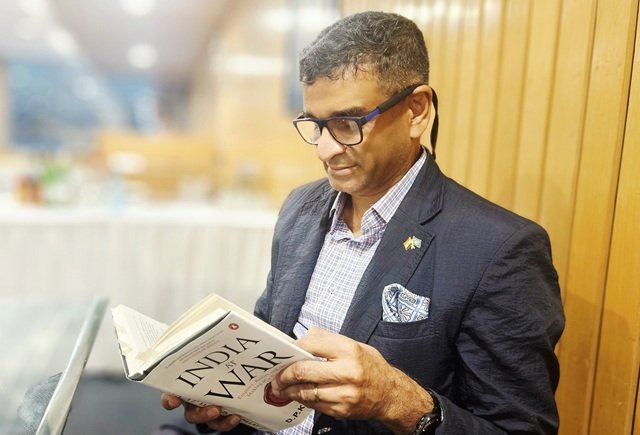
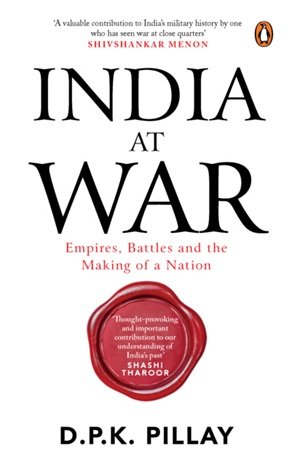
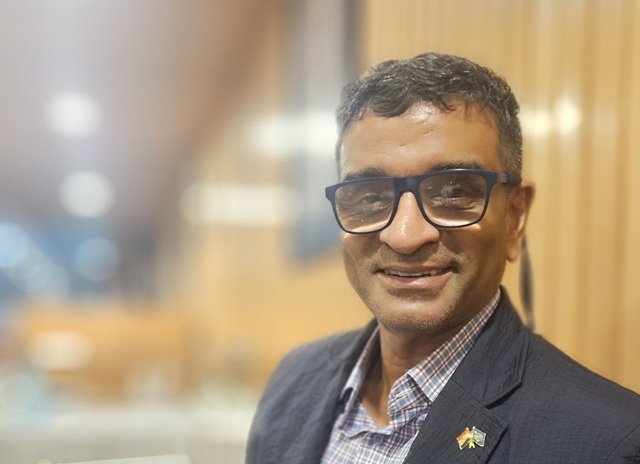
“True victory in any conflict is not found in the destruction of an enemy. It is found in the preservation of life and the healing of a community.” For Colonel D.P.K. Pillay, this is not an abstract principle. It comes from a career that has taken him from combat operations in some of India’s most difficult theatres to the Ministry of Defence, the National Security Council Secretariat and the battle-scarred landscapes of Iraq, Syria and Yemen. Now, with his newly published book, India at War: Empires, Battles and the Making of a Nation, Pillay turns to a much longer battlefield: the history of India itself. Published by Penguin India, the book examines wars, empires, military campaigns and the experiences of Indian soldiers through the larger question of how a civilisation endured repeated upheavals without losing its sense of identity. The book is officially scheduled to be launched in New Delhi in October. I sat down with Pillay in New Delhi last weekend for an extended conversation about the book, his military career and his work as a scholar of national security.
Pillay’s own life gives unusual weight to the questions he raises in the book. A decorated veteran and recipient of the Shaurya Chakra, he was seriously wounded during a counter-insurgency operation in Manipur but continued to help evacuate two wounded children. Years later, he returned to the village and met the family again—an encounter that changed his understanding of victory, reconciliation and the purpose of military power. His career then moved well beyond the battlefield. He worked on military innovation, including the Indian Army’s Project Beta handheld battlefield system, served in the Ministry of Defence and the National Security Council Secretariat, and later worked with the International Committee of the Red Cross in the Middle East and North Africa. He has since combined strategic research, humanitarian work and military history at the Manohar Parrikar Institute for Defence Studies and Analyses.
That range of experience informs the way Pillay speaks about security. He does not see military strength, development and human security as competing priorities. Nor does he regard history as a collection of old victories to be celebrated. In this interview, he argues that India’s security ultimately depends on social cohesion, that military power has meaning only when it protects human life, and that the country’s strategic thinking needs to engage more seriously with its own historical experience. He discusses the changing character of warfare, the dangers of cyber and information warfare, the different security realities of Jammu and Kashmir, the Northeast, Left Wing Extremism and the maritime domain, and the lessons he believes India’s military history holds for present-day statecraft. He also reflects on the Manipur encounter that changed his understanding of service, India’s largely forgotten role in the Korean War and UN peacekeeping, and why he believes retired military officers have a continuing responsibility to contribute to public life without becoming partisan.
Excerpts from the interview:
Question (Q): First of all, congratulations on your new book, India at War: Empires, Battles and the Making of a Nation. It is a timely and ambitious work that traces India’s military journey across millennia while exploring the deeper themes of resilience, sacrifice and civilisational continuity. Before we delve into the book itself, I would like our readers to get to know the man behind it.
You have served as a decorated soldier, a recipient of the Shaurya Chakra, a strategic thinker, a humanitarian adviser with the International Committee of the Red Cross, and now an author. How would you like people to know and remember D.P.K. Pillay—not merely through the positions you have held, but through the values that have guided your life’s journey?
Answer (A): Thank you for the warm reception to the book. Seeing India at War in print has been deeply meaningful to me. As a young boy, books were my escape into other worlds. I was captivated not only by the stories themselves but by the way an author’s words could take me on flights of imagination, plunging me into adventures and lives so remarkably different from my own. I was often inspired to emulate my heroes—sometimes the legendary figures of the Mahabharata, and at other times, the characters charting the seas in Moby-Dick.
I had originally dreamed of joining the Navy, but my eyesight meant I was destined for the Army. I have absolutely no regrets. I have lived a full life and gave everything I could in service to the nation. Now, in my retirement, I realise that in some small way, I have always wanted to do what those early authors did for me: to tell stories that resonate and endure, and to use those words to illuminate the lives, courage, and sacrifices of others.
Regarding your question about how I would like to be remembered: my father taught me when I was young that a person’s life isn’t judged by their bank balance or possessions. We are remembered by our deeds, the people we help, the burdens we lighten, and the small acts of kindness we leave behind. That has stayed with me my whole life.
I want to be remembered as a soldier who understood that we bear arms not to take lives, but to save them. We don’t use power just to have it; we use it to restore peace.
If I am remembered at all, I want it to be as someone who valued compassion as much as courage, and restraint as much as strength. As a soldier, I hope I was a humanitarian first. As a scholar, I hope I preserved the truth of those who sacrificed and were forgotten. And as a writer and storyteller, I hope I used my words to honour them, sharing stories that matter and leaving the world a little better than I found it.
Q: Your military career spans combat operations, national security policy, humanitarian engagement and strategic research. Looking back, which moment changed you the most—not as an officer, but as a human being—and how did that experience redefine your understanding of service and leadership?
A: Indeed, I have had a highly unusual career, where every tenure was fundamentally different. My journey began in 1984, stepping into the National Defence Academy before being commissioned into one of India’s finest battalions, 4 GUARDS. I was immediately thrown into learning how to tackle the intense theatre of mechanised warfare in Rajasthan.
I want to be remembered as a soldier who understood that we bear arms not to take lives, but to save them.
Then, the Soviet Union collapsed. We mothballed our combat vehicles, adapted to an infantry role, and charged headlong into counter-insurgency operations across Kashmir, Punjab, Assam, and Manipur.
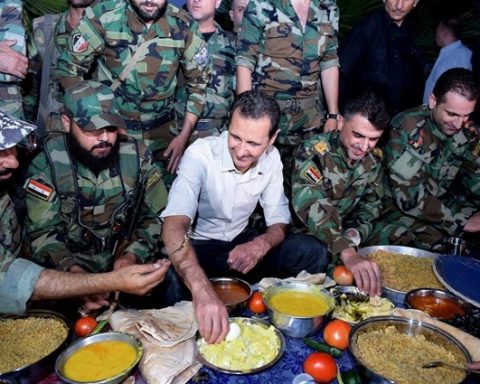
After recuperating from combat wounds, I returned to serve at the same military school where I had once studied. From there, my path shifted again. I went on to develop a hand-held PDA for use by the Infantry called Project Beta. Then I went to serve as the first military officer appointed in the Ministry of Defence, worked within the National Security Council Secretariat, and eventually navigated the battlefields of Iraq, Syria, and Yemen with the ICRC.
Looking back, it would be impossible to identify a single thing that changed me the most. While my parents’ influence and the lessons of my childhood anchored me, stepping into the cosmopolitan environment of the academy, being exposed to a multitude of peers from every corner of the country and being thrown into fierce competition with them profoundly shaped who I became. It would be inaccurate to say I was changed by just one defining moment. Every situation I encountered, every person I served alongside, and every challenge I faced ensured I was never the same person I was the day before.
ach experience ingrained new values in me; every accomplishment and every hardship taught me something new.
While visceral moments of survival taught me profound lessons about sacrifice, no single incident completely defines my journey. When I returned to my school, the responsibility for young, tender minds taught me entirely different lessons. Introducing technology there helped those students achieve hundred per cent distinctions. Later, managing an IT project demonstrated how harnessing technology can directly save lives in combat by minimising both military and civilian casualties.
Through it all, I realised that while circumstances and environments are transient, one’s character must serve as an immovable rudder. To look at it philosophically, true character is not altered by the world around it; it is the anchor that withstands it. It is this unwavering foundation that ultimately stripped away any rigid illusions. I learned that true leadership is never found in the authority to project power, but in the moral courage to protect the vulnerable. Service, at its absolute essence, is not a series of assignments or a singular act. It is an enduring state of being—a lifelong, unconditional defence of human life, transcending all borders and contexts.
Q: One of the most remarkable episodes in your life was your return to the village in Manipur years after a counter-insurgency operation, where you reunited with civilians whose lives had been forever intertwined with yours. What did that experience teach you about trust, reconciliation and the true meaning of victory in conflict?
A: Returning to that village in Manipur years later was, in many ways, more daunting than the operation itself. In combat, the lines are drawn by the mission, but in the aftermath of conflict, the scars run deep, and memory can be unforgiving. I went back not as an officer seeking validation, but as a human being seeking closure. I always used to wonder what happened to the children. In an era before mobile phones and social media made the world smaller, their fate was a silent question I carried with me for years.
When the village headman, Atanbou, finally reached out to me, connecting through General Anil Chauhan, who was then a Brigade Commander, and Brigadier George, I was overwhelmed. I was also, in a small way, apprehensive. A lingering thought crossed my mind: What if they want to finish the job they couldn’t do that day?
But I went. And the moment I arrived, everything changed.
The way the mother embraced me was unbelievable; she held me as if I were her own long-lost son. Her tears mixed with mine as she kissed me with such pure, overwhelming affection. In that embrace, I realised that we don’t need to speak the same language to feel profound love. It stripped everything else away, leaving only the raw, powerful realisation of what it truly means to be human.
True leadership is never found in the authority to project power, but in the moral courage to protect the vulnerable.
In a beautiful twist of fate, I later learned that my father had served in that very same village in 1958, back when it was known as the Naga Hills, a deep, full-circle connection I only discovered when I visited 2 GUARDS, where he had served.
Reconnecting with the villagers, and especially with the families of the two children we evacuated on that fateful day, revealed an unspoken bond forged in the crucible of shared trauma. Seeing those children alive and grown, and witnessing the village at peace and thriving, fundamentally shifted my perspective on the impact of our choices.
That experience taught me that trust cannot be commanded or enforced down the barrel of a gun; it is earned through profound vulnerability and undeniable acts of humanity. Reconciliation does not begin with policies or peace treaties. It begins the moment we look at one another, recognise our shared fragility, and choose empathy over the bitter legacy of violence.
Eventually, that reunion redefined the concept of victory for me. In the military, we often measure victory by ground held, adversaries neutralised, or strategic objectives met. But standing in that village, looking into the eyes of the people whose lives had intersected with mine in such a desperate moment, I realised those traditional metrics are incomplete. True victory in any conflict is not found in the destruction of an enemy. It is found in the preservation of life and the healing of a community. True victory is simply the moment a former battlefield becomes, once again, a place where humanity can progress.
Q: In your academic work, particularly on human security, you have argued that national security is ultimately about protecting people as much as protecting territory. In today’s increasingly complex world, how should India balance military strength with human security, social cohesion and development?
A: This question captures the essence of my life’s work. Moving from the battlefield to national security, and later witnessing and reporting on collapsing societies in Iraq, Syria, and Yemen, taught me one undeniable truth: securing a border is meaningless if you fail to protect the people inside it. Balancing military strength with human security and development isn’t a competition; they must work together as one cohesive ecosystem.
Military strength is essential. It acts as a shield to keep the nation safe from outside threats.
But a shield is useless if the society it protects is crumbling from within due to poverty, lack of education, or inequality. True security means ensuring every citizen has access to food, health, and dignity. The military exists to protect human life, not overshadow it.
In conflict zones, I have seen firsthand what happens when a country tears itself apart. No amount of weapons can save a nation that is at war with itself. For a diverse country like India, our greatest asset is our unity. The “us versus them” mindset is toxic. We must build a society based on trust and shared progress, because a united population is the strongest defence against any threat.
Progress, too, must serve this goal. Whether it is using technology to prevent civilian casualties in combat or using it to help children excel in a military school, advancements must serve the vulnerable. National security isn’t just about asking, “Are we safe from attack?” It is also asking, “Are our people safe from hunger and despair?” Investing in people is the most permanent investment in a nation’s defence.
Ultimately, national security mirrors true leadership. It is not about projecting power; it is about having the courage to protect the vulnerable. To stay strong, every military and strategic decision must be guided by one simple philosophy: the unconditional defence and upliftment of human life.
Q: India today faces a rapidly evolving security environment—from cross-border terrorism and conventional military threats to cyber warfare, artificial intelligence, drones, information warfare and critical infrastructure vulnerabilities. Which emerging threats concern you most, and do you believe India is adequately prepared for the nature of future conflicts?
A: Every era springs its own strategic surprise. From the wheel to the atomic bomb, the nature of warfare has constantly evolved. I agree that we are in a completely different era today, standing on an unprecedented precipice. While conventional threats demand our vigilance, the threats that concern me most no longer mass at our physical borders. They are the invisible domains of cyber and information warfare.
An AI-driven disinformation campaign can paralyse a nation without a single shot being fired. These tools are designed to deliberately tear at our social fabric, weaponising our own people against each other. The orchestrated protests and internal unrest we increasingly witness, stoked by external agencies, are the physical manifestations of this digital poison.
History offers a stark warning about this exact vulnerability. Since the beginning of time, India has been a profound source—a wellspring that shaped global ideas, philosophies, and religions. Yet, because we fractured, this great civilisation was reduced to a mere bystander, a captive supplier of raw materials and men for foreign powers. We were looted. Much like the villagers of Ekachakra in the Mahabharata, who resigned themselves to offering their wealth and people to the demon Bakasura, our disunity allowed colonisers to become the demon we willingly fed. It was our lack of cohesion, and the traitors who collaborated with foreign powers, that made our subjugation possible. Those who betrayed their country failed to realise a fundamental truth: treason buys no peace, only absolute ruin.
Modern adversaries are attempting that exact same subjugation today. They are substituting colonial trading companies with algorithms, drones, and autonomous machines. They know that a fractured nation will collapse from within, leaving the spoils to opportunistic powers.
This is why our preparedness cannot rely solely on acquiring advanced hardware or integrating AI into our command systems. We are crossing a terrifying threshold, on the verge of handing the control of conflict over to machines that think and act independently. In this new era, our ultimate weapon remains what it has always been: our cohesion.
A single twig is easily snapped; a tightly bound bundle is invincible. Against the invisible, intelligent threats of the modern age, our human solidarity is our only shield. If we allow foreign influence to divide us, we will lose the future. United, we remain immovable.
Q: Having studied India’s security challenges from both operational and policy perspectives, how would you assess the distinct security concerns facing different regions of the country—whether Jammu & Kashmir, the Northeast, the maritime domain, or areas affected by Left Wing Extremism? What lessons should policymakers draw from these regional realities?
A: India’s geography is as diverse as its people, and so are the security challenges that define its regions. Having operated across these varied terrains and later studied them from a policy level, the most profound realisation is that a single, rigid security doctrine is a recipe for failure.
Take Left Wing Extremism, for instance. For decades, it stood as our most gruelling internal security challenge, but by early 2026, we witnessed its virtual eradication. The crucial lesson here was that kinetic operations alone could never defeat a movement rooted in socio-economic grievances. The turning point arrived when we aggressively paired the security grid with massive developmental initiatives, building roads, schools, and banking networks in the most remote tribal areas. They say insurgency begins where roads end.
A nation is not truly defeated when it loses a battle; it is defeated when it loses its civilisational identity.
The lesson for policymakers is that state presence must be defined by welfare and infrastructure, not just by soldiers in uniforms and weapons. Security forces created the secure space, but inclusive development is what ultimately won the peace.
Jammu and Kashmir presents a completely different reality. The challenge there evolved from cross-border terrorism into a deeply entrenched proxy war and ideological battle. While the military and security forces have bled to neutralise the physical threats, the enduring lesson is that physical control must translate into psychological integration. With the dismantling of the separatist ecosystem, the focus rightly shifted to grassroots democracy, community trust, and fortifying border infrastructure through initiatives. True security relies on making the local population the primary stakeholders in peace, thereby choking the space for external radicalisation.
In the Northeast, my experiences—especially in Manipur—taught me that the conflict is deeply tied to historical ethnic identities and tribal sensitivities. Unlike LWE, which was driven by socio-economic ideology, or J&K, which has external dimensions, the Northeast requires immense cultural empathy. The lesson here is that policy must focus on political inclusion and conflict resolution, respecting the unique social fabrics of the region. We must bridge the psychological distance just as aggressively as we bridge the physical infrastructure gaps.
Then we have the maritime domain, which is too often overshadowed by our historical focus on continental land borders. With over 7,500 kilometres of coastline and vital sea lanes, the Indian Ocean is our strategic backyard. Yet, it remains vulnerable to asymmetric threats, piracy, smuggling, and great-power competition. The lesson for policymakers is that we must cure our historical “sea blindness”. While land borders can be fenced and guarded by infantry, the maritime domain requires modernised naval capabilities, domain awareness, and strong regional alliances to secure our economic future.
Ultimately, the overarching lesson from all these regional realities is that national security is fundamentally about human geography. The military can contain a threat and create a window of stability, but permanent peace is only achieved when policymakers use that window to deliver justice, dignity, and inclusive progress.
Q: Throughout your career, you have worked on issues ranging from defence policy to military innovation and indigenous capability development. What reforms do you believe are still essential if India is to build a truly self-reliant and technologically advanced defence ecosystem over the coming decades?
A: I’ve survived combat zones, collapsing societies, and government bureaucracy, but fixing the entire defence procurement system in one sitting? Let’s save that battle for after I’ve had a very strong cup of coffee.
Q: In India at War, you write that India’s history is not simply a sequence of wars, but ‘the story of a civilisation that has endured invasions, empires, partitions and wars, yet has never surrendered its identity.’ What inspired you to approach India’s military history through this broader civilisational lens, and what misconceptions does the book seek to challenge?
A: We all, and not just policymakers and military leaders, must stop treating our military history as just a collection of old battle honours or a cause for grievance or jingoism and start treating it as a blueprint for modern statecraft. Those who don’t learn from history are condemned to repeat the same mistakes.
And I realised that for too long, we operated on an inherited narrative that viewed our strategic past through a colonial lens, which often obscured our own indigenous military thought. We never asked, why is this being told to us this way?
To shape a modern strategic culture, the first step is integrating these forgotten lessons directly into professional military education and national security planning. We just apply the lessons from those innocuous decisions that became such a giant problem.
Instead of relying solely on Western strategic thought, our leaders must analyse each issue. Why did we accept the Partition is one for sure, and not just that.
We must learn too from mighty empires of the past: the maritime diplomacy of the Cholas, the asymmetric warfare of the Marathas, or the strategic alliances of the Ahoms. These are not just stories; they are masterclasses in regional influence and resource-efficient combat.
Furthermore, remembering the massive scale of Indian deployments in the World Wars and early UN peacekeeping missions—for example, our success in bringing peace to the Korean Peninsula—fundamentally changes how we view ourselves today. Recognising this legacy shifts our psychological posture from a purely defensive, border-guarding mindset to that of a confident, global security provider that has continued its timeless traditions of peacemaking.
Ultimately, actively using this history means anchoring our future doctrines in our own strategic identity. When leaders understand the true depth of our historical footprint, they make decisions with the confidence of a civilisation that has shaped global security for centuries, rather than a state simply reacting to the strategies of others.
Q: In India at War, you write that India’s history is not simply a sequence of wars, but ‘the story of a civilisation that has endured invasions, empires, partitions and wars, yet has never surrendered its identity.’ What inspired you to approach India’s military history through this broader civilisational lens, and what misconceptions does the book seek to challenge?
A: When you witness nations unravelling in places like Iraq or Yemen, you realise a profound truth: a nation is not truly defeated when it loses a battle; it is defeated when it loses its civilisational identity. That is what inspired the lens for this book. I realised that if you only look at India’s history through the narrow scope of individual wars or dynasties, you miss the greatest victory of all—the survival of the civilisation itself.
For too long, we have relied on an inherited historical narrative, often written by others, that portrays India as a passive theatre of history—a land that was repeatedly conquered, ruled, and shaped by outsiders. The primary misconception I seek to challenge is this narrative of passive subjugation.
For example, America, which erased British rule through a definitive rupture, India’s historical journey has been one of profound endurance and absorption over millennia. I wanted to show that India was never just a victim of history. While borders shifted and empires rose and fell, the core identity of the civilisation acted as an immovable rudder.
Our military history is not just a ledger of who won or lost on a given day; it is the story of how a culture absorbed massive external shocks, adapted its strategic thought, and ultimately endured. We didn’t just survive invasions and partitions; we outlasted them without surrendering who we are. That resilience is the true essence of India’s strategic culture, and it is a narrative we must actively reclaim.
Q: You have successfully combined military service with scholarship, policy research and public engagement. In your view, how important is intellectual inquiry within the armed forces, and should more serving and retired military officers actively contribute to historical research, strategic studies and public debate?
A: Intellectual inquiry is not just an academic exercise; it is an operational necessity. A military that knows how to fight, but lacks the strategic and historical depth to understand why, is fundamentally incomplete.
Serving and retired officers must actively contribute to these fields because they bring something irreplaceable to the table: reality. When practitioners who have witnessed the human cost of conflict engage in public debate, they ground theoretical policy in hard, practical truth. We absolutely need more military professionals writing our history and shaping our strategic culture, rather than leaving it entirely to those who have never stood on a battlefield.
Q: Many senior military leaders choose a quieter life after retirement, whereas you have remained deeply engaged in research, writing and mentoring. What role do you believe retired military officers should play in strengthening strategic thinking, democratic discourse and national resilience without entering partisan politics?
A: Taking off the uniform changes your job description, but it doesn’t end your oath. While a quieter life is a well-earned right for many, I believe veterans carry a unique burden of experience that belongs to the nation, not just to history.
True national resilience isn’t just about military hardware; it is about social cohesion and character. Mentoring the next generation—whether young officers, university students, or policymakers—is how we pass down that “immovable rudder”. It is our duty to teach them that protecting the vulnerable and maintaining our civilisational identity is the core of national strength.
Deep down, our role is to ensure that the hard lessons paid for in blood and sacrifice are not wasted or forgotten in times of peace. Service is a lifelong condition.
Q: Finally, if a young reader—perhaps someone considering a career in public service or the armed forces—were to read India at War fifty years from now, what is the one enduring lesson you would hope they carry with them about India, leadership and service to the nation?
A: If a young person reads India at War fifty years from now, the geopolitical landscape, the technology, and the nature of conflict will likely look entirely different. But I would hope they take away one unchanging truth: the true strength of India lies not in the weapons we wield, but in our civilisational resilience—our ability to endure, absorb, and protect our core humanity despite the chaos of history.
For their own journey in leadership, I hope they learn that while environments and opportunities will constantly shift, their character must be their immovable rudder. True leadership is never about the authority to command or the power to project force. It is the moral courage to place the lives of others above your own and to protect the vulnerable when it is hardest to do so.
Essentially, I want them to understand that service is not defined by the uniform they wear, the office they hold, or the era they live in. It is not a single act or a temporary assignment. It is a lifelong, unconditional defence of human life. If they carry that one philosophy with them, the future of the nation will always be in safe hands.
Q: Colonel Pillay, before we wrap up, let me wish you a very happy birthday in advance. It has been a privilege speaking with you. Finally, is there anything we haven’t discussed that you believe is important for our readers to understand—whether about India at War, India’s strategic future, or the values of service, leadership and nation-building that have guided your own journey?
A: Thank you for the warm wishes, and the privilege has been entirely mine. This has been a deeply reflective and meaningful conversation.
If there is one final thought I would leave with your readers, it is this: we often make the mistake of viewing national security, strategic resilience, and service as the exclusive domains of those who wear a uniform or walk the corridors of power. But they are not.
Service is not a series of assignments or a singular act. It is an enduring state of being—a lifelong, unconditional defence of human life, transcending all borders and contexts
As we discussed, a nation’s ultimate deterrent is its social cohesion, and its greatest victory is its civilisational endurance. That endurance is not forged in war rooms; it is built in classrooms, businesses, neighbourhoods, and everyday interactions. When everyday citizens refuse to accept the rigid, toxic distinctions of “us” versus “them”, when they choose empathy over division, and when they work to uplift the vulnerable in their own communities—they are actively contributing to India’s strategic security.
You do not need a military commission or a combat deployment to live a life of service. The defence of human dignity is a collective, everyday responsibility.
If each of us can make our character our immovable rudder, viewing nation-building as a shared duty rather than a spectator sport, and if we refuse the modern temptation to live two divided lives—one artificially curated for social media as an “influencer” and the other as our true, authentic selves—I have no doubt that India’s future will remain profoundly secure for generations to come.
Yes, I am heading towards my sixtieth milestone—a great landmark, and obviously, the beginning of the last lap of my journey. We are all mortals, after all. But ultimately, live a life where you can always look yourself in the mirror and look an opponent in the eye. Never be afraid, and never be duplicitous—that mask will eventually fall off. Just be yourself. And most importantly, have faith in yourself, and always honour the faith that others have placed in you.