by Our Defence Affairs Editor
“The war has expanded to the Indian Ocean, if not the Indo-Pacific. And the sinking of the Iranian warship, while within the boundaries of what is permissible legally or during conflicts, is certainly not done in an ethical way or it cannot really be called ethical, because this was a largely unarmed ship,” said Nitin Gokhale in an interview with Sri Lanka Guardian. The remarks referred to the recent sinking of the Iranian warship IRIS Dena, which had been navigating the Indian Ocean near Sri Lanka when it was targeted by a United States submarine torpedo. According to Gokhale, while the action may have been legally permissible under international law governing armed conflicts, it lacked ethical justification, particularly since the vessel had been engaged in benign naval exercises and was largely unarmed. He underscored that in wartime operations, legality and morality often diverge, and the United States acted with military pragmatism rather than ethical consideration, executing what they considered a fair target.
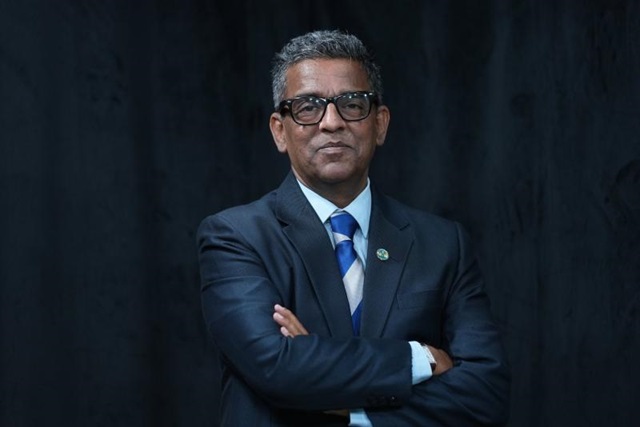
Nitin Anant Gokhale is an Indian journalist, author, and strategic analyst with more than forty years of experience covering defence, intelligence, and international affairs. He began his media career in 1983, initially reporting on sports, before moving to conflict journalism, covering insurgencies in India’s north-eastern states, the 1999 Kargil War, and the Sri Lankan civil war. He served as Security and Strategic Affairs Editor at NDTV for nearly a decade and has founded independent media platforms such as BharatShakti.in and StratNewsGlobal.com, which focus on defence, strategic affairs, and security issues. Gokhale has lectured extensively at premier Indian institutions including the National Defence College, the Defence Services Staff College, and various war colleges of the Indian armed forces. He is also a prolific author, with notable works including R.N. Kao: Gentleman Spymaster, a biography of the founding chief of India’s Research and Analysis Wing, and Manohar Parrikar: Brilliant Mind, Simple Life, a detailed account of the former Defence Minister of India and four-time Chief Minister of Goa. His writing combines rigorous research with insights drawn from decades of direct experience in conflict zones and strategic reporting.
In the interview, Gokhale addressed the question of whether India played any role in the timing of the Israel-United States strikes on Iran, which occurred shortly after Prime Minister Narendra Modi’s visit to Israel. He emphasised that, “I don’t think there was any coordination involving India about the Israel-US attack on Iran. It’s just that the visit was scheduled just before the attack began on Iran. And as you are aware, Prime Ministers of any country do not visit any other country at short notice.” He explained that the trip was pre-arranged and had to proceed because of the depth of the India-Israel relationship, making the timing purely coincidental despite speculation about potential conflict. Gokhale clarified, “It’s just a coincidence. Of course, there was speculation that the war might break out any time, but both sides decided that the visit must go through because of the deep relationship both countries have, India and Israel.”
Regarding the sinking of the Iranian warship, Gokhale stated that while it represented a legal target in the context of armed conflict, it created diplomatic complications for India, given the proximity of Indian naval operations and the involvement of other regional players. He said, “Certainly it is diplomatically awkward for India. But like I said, if a ship is on the high seas, it is open season for everyone. And if there are two antagonists going at each other’s throats, then very little the third party can do anything.” He further noted that even if Indian authorities were aware of the presence of submarines in the area, it would have been impossible to anticipate the precise actions that led to the sinking. “And even if assuming India knew that some submarines are lurking around, would it have known the intention of the submarine that it is going to attack the Iranian ship? Would it have known that this is what the submarine would do and sink or attack the Iranian ship? I doubt it,” he said. He concluded that while questions of India’s diplomatic position were natural, attributing responsibility to India would be unfair.
Gokhale also commented on the role of Sri Lanka following the sinking. He praised the country for its response to the incident, particularly in terms of humanitarian assistance and medical treatment to survivors. “Sri Lanka did very well to assist and render medical treatment to all the survivors of the Iranian boat, which was sunk by the Americans. It has its responsibility in terms of HADR (Humanitarian Assistance and Disaster Relief),” he observed. At the same time, he noted the limitations of Sri Lanka’s military response in the context of an armed conflict between major powers.
The expert further reflected on the implications of the United States’ actions for international maritime norms, stating, “I think the United States has declared Iranian naval vessels legitimate targets by its action, if not by words. And I think the Iranians will do the same thing.” He described a scenario in which conventional rules of engagement and adherence to international conventions, including the Geneva Conventions, are being effectively sidelined by both sides, as attacks extend into areas beyond the immediate conflict zone.
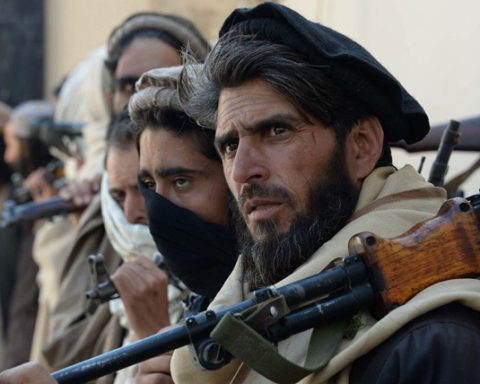
Turning to broader regional dynamics, Gokhale addressed the question of whether ongoing Pakistan-Afghanistan clashes are linked to the crisis in Iran. He emphasised that these conflicts are separate in origin and nature, saying, “The Pakistan-Afghanistan clashes are separate from the Iran-Israel clash. Although, obviously, they are regional neighbours, Iran, Pakistan and Afghanistan. So that’s the only connection really. Otherwise, the reasons and the nature of the conflict between Pakistan and Afghanistan is completely different from the Iran-Israel and US war.” He highlighted that while geographic proximity links the actors, the underlying motivations and dynamics are distinct.
In conclusion, Gokhale commented on the perception of emerging security blocs in South Asia and the Gulf, given recent defence cooperation agreements between Pakistan and Saudi Arabia, and India and the United Arab Emirates. He cautioned against overinterpreting these alignments as direct adversarial blocs. “India also has good ties with Saudi Arabia. And I don’t think these two separate blocks are being formed in the context of India-Pakistan rivalry or contest or animosity,” he said, emphasising the nuanced nature of diplomatic and defence relationships in the region, which are shaped by multiple factors, including economic interests, regional security concerns, and historical ties, rather than by purely zero-sum competition.