


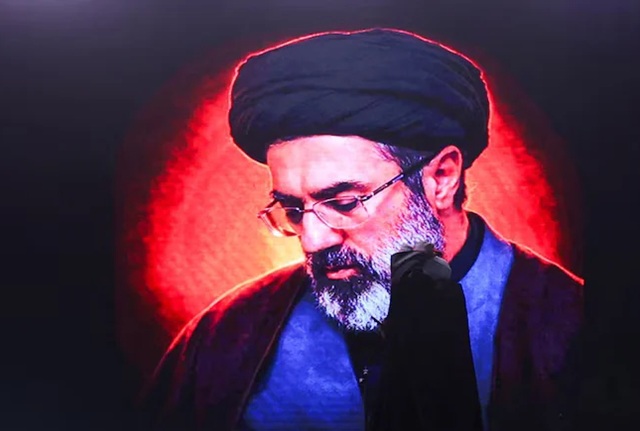
The Supreme Leader of Iran has issued a forceful political message calling for the creation of a new regional order led by Muslim-majority nations, declaring that the era of Western dominance is over and urging unified resistance against foreign influence. In remarks presented as part of a broader ideological and strategic address, he outlined a vision of regional transformation centered on independence from external powers, stronger political coordination, and shared opposition to what he described as decades of intervention by the West.
At the core of the message was a direct rejection of the current global balance of power, particularly the influence of the United States. The leader stated that the international system shaped after the Cold War is undergoing irreversible change and insisted that Muslim nations must seize the moment to redefine their collective future. “The era of American domination is ending,” he declared, framing the present period as a historic turning point in which regional actors must decide whether to remain dependent or pursue strategic independence.
The speech escalated into sharply worded political slogans that have long been associated with Iranian state rhetoric. In a section focused on resistance to foreign influence, the leader repeated: “Death to America,” a phrase frequently used in official gatherings and public demonstrations within Iran. The message was presented not as an isolated slogan but as part of a broader denunciation of what he described as decades of interference, military presence, and political pressure exerted by Washington in the Middle East.
The address also contained direct condemnation of Israel, delivered in similarly uncompromising language. “Death to Israel,” the leader declared, linking the statement to broader claims about regional conflict and foreign-backed policies in the Middle East. The remarks positioned Israel as part of a wider system of geopolitical influence that, according to the speech, has contributed to instability and division across Muslim-majority nations. The phrasing echoed longstanding political slogans used in official Iranian discourse and public demonstrations.
Beyond these statements, the leader called on Muslim-majority countries to move beyond internal divisions and historical rivalries, arguing that fragmentation has weakened the region and allowed external powers to shape its political and economic structures. He urged the formation of a coordinated bloc capable of making independent decisions on security, trade, energy, and infrastructure. According to the message, such unity would be essential to resisting external pressure and establishing a self-reliant regional system.
“We must build a new order in the region,” the speech emphasized, presenting this goal as both urgent and achievable if countries act collectively. The leader described this envisioned order as one in which Muslim nations determine their own policies without reliance on Western institutions or alliances. He stated that economic cooperation would be a key pillar of this transformation, particularly in areas such as energy exports, transportation networks, and financial systems, where shared interests could be leveraged to reduce dependence on external markets.
The message repeatedly returned to the theme of sovereignty, with the leader asserting that political independence remains incomplete as long as regional states are tied to external security arrangements or economic dependencies. He argued that Western powers have historically maintained influence through military bases, financial institutions, and diplomatic pressure, and he called for a restructuring of these relationships in favor of regional self-determination.
In describing the global environment, the leader characterized the current era as one of transition toward a multipolar world. He stated that emerging powers are increasingly challenging traditional centers of influence and that this shift creates an opportunity for Muslim-majority nations to assert greater autonomy. “The world is no longer unipolar,” he said, framing the moment as one in which regional coalitions could gain unprecedented influence if properly organized.
The speech also emphasized ideological unity, urging Muslim nations to recognize shared interests despite political differences. The leader argued that historical divisions have often been amplified by external actors seeking to prevent regional cohesion. He called for a reassessment of diplomatic relationships and encouraged governments in the region to prioritize collective strength over bilateral arrangements with outside powers.
Throughout the address, the tone remained consistently assertive, with repeated references to resistance, independence, and transformation. The leader’s message portrayed the current geopolitical moment as a rare opportunity to reshape long-standing structures of power. He stressed that failure to act collectively would result in continued vulnerability to external influence and ongoing fragmentation within the region.
While the speech did not outline a detailed institutional framework for implementing the proposed regional order, it repeatedly emphasized urgency and unity as central principles. The leader framed the initiative as not merely political but historical in scope, suggesting that the decisions made by Muslim-majority nations in this period would shape the trajectory of the region for decades to come.
The concluding sections of the message returned to its central themes: rejection of Western dominance, denunciation of foreign interference, and a call for coordinated regional action. The repeated slogans “Death to America” and “Death to Israel” were presented as expressions of political stance within this broader framework, reinforcing the confrontational tone that defined the address.
By the end of the message, the vision articulated was clear: a restructured Middle East led by unified Muslim-majority nations, operating independently of Western systems, and defined by a shared political and economic agenda. The leader positioned this as not only a strategic necessity but an inevitable outcome of shifting global power dynamics, urging immediate collective action to bring it into reality.










