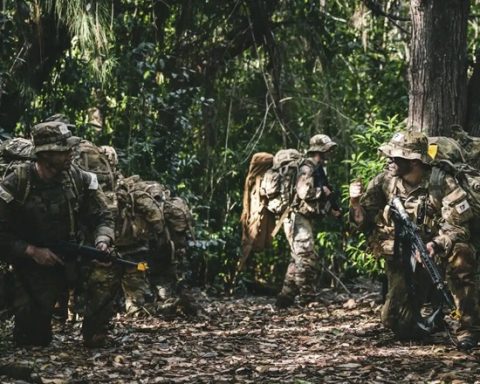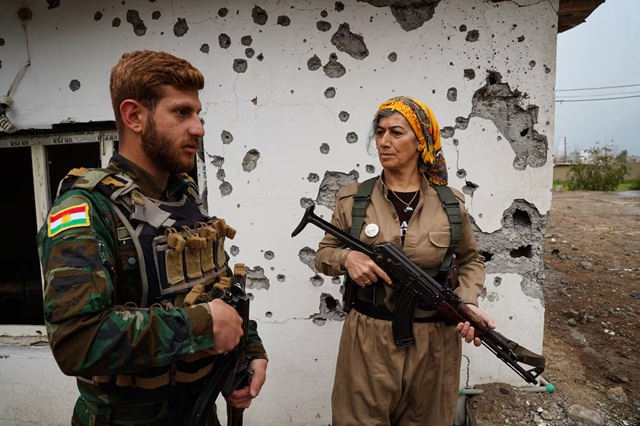
Iran’s Kurdish militias are adopting a patient strategy: they will not move against the Islamic Republic until the regime shows signs of real vulnerability. According to reports highlighted by El Pais, the plan to involve these groups in a U.S.-led offensive has been shelved, leaving Kurdish forces to bide their time while monitoring military operations and waiting for an opening. This pause reflects the complexities of the conflict, including the shifting policies of U.S. President Donald Trump, the reluctance of opposition groups, and regional concerns from Turkey and Iraqi authorities over potential Kurdish separatism.
The history of Kurdish nationalism in Iran is long and fraught with setbacks. The Republic of Mahabad, established in 1946 in northwestern Iran, lasted only ten months before Soviet protection ended, and the central government reasserted control. Political scientist Ali Alfoneh of the Arab Gulf States Institute notes that “whenever the central government in Tehran is weak, centrifugal forces emerge among ethnic and religious minorities in the outlying regions, often with external support.” Kurdish movements continue to draw inspiration from Mahabad, while also serving as a cautionary tale of short-lived independence.
Today, Kurdish political activity continues through groups such as the Democratic Party of Iranian Kurdistan (PDKI) and Komala, which are part of the recently formed Coalition of Political Forces of Iranian Kurdistan. These parties advocate for a secular, democratic Iran with federal structures that would allow regional minorities to govern themselves. However, Tehran labels them as “terrorist” and “separatist,” forcing many leaders and militants into exile. Dlawar Aladdin of the Middle East Research Institute in Erbil emphasizes that repression has intensified since 2022, particularly following the protests sparked by Mahsa Amini’s death in custody, when the Kurdish slogan “Woman, Life, Freedom” gained widespread traction.
Iran’s Kurdish population, estimated at nine to ten million people, lives primarily in Kurdistan, Kermanshah, Ilam, and West Azerbaijan provinces. While cultural and linguistic tolerance exists relative to neighboring states like Turkey, opportunities for political participation are severely limited, as candidates require Guardian Council approval. Kayuan Faramarzi of Komala explains, “In Iran, a Kurdish member of parliament has to be loyal to the regime. In contrast, in Turkey, the voices of Kurdish members of parliament are heard internationally. In Iran, only the mountains listen to us.”
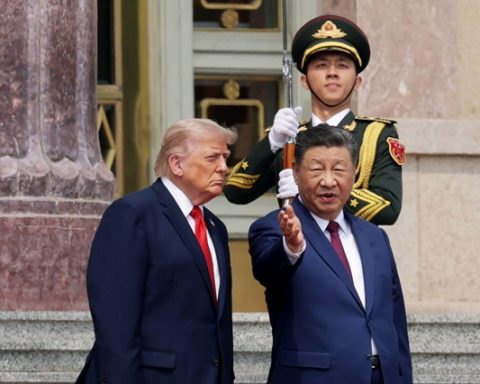
The geopolitical landscape further complicates potential Kurdish involvement. Trump’s administration initially explored using Kurdish militias to open a front in Iran but later shelved the plan, citing the risk of alienating Turkey and the Iranian opposition, who view Kurdish militias as separatists. Ali Vaez of the International Crisis Group notes that “playing the Kurdish card would be counterproductive, as it would alienate both Turkey and Iran, neither of which wants to see a Kurdish separatist entity controlling territory within Iran.” Israeli and American airstrikes against Iranian positions along the border have created some operational openings, yet Kurdish groups remain cautious.
Kurdish militias are also limited in number and capacity. Ziryan Rojhelati of the Rudaw Research Center estimates that fewer than 5,000 armed Kurdish-Iranian fighters could be mobilized, far outmatched by the more than 600,000 troops of the Iranian army and Revolutionary Guard. Leaders like Abdullah Mohtadi of Komala assert that they will not “send our forces to the slaughter.” Current strategy involves waiting for cracks in the regime, particularly in areas where bombings and local insurgencies might weaken Tehran’s control. As Faramarzi notes, “When the government is weak, the people of Kurdistan will step forward, and Komala with them. But it would be good to receive more support from allied forces.”
The Kurdish approach is shaped by decades of historical marginalization, repeated abandonment, and exile. From Mahabad in 1946 to Kurdish militias in Syria, patterns emerge: mobilized in times of crisis, praised for their contributions, and often left behind once strategic stability is negotiated. This cautious stance reflects both pragmatism and survival instincts, as Kurdish forces weigh their next steps against the complex interplay of U.S. strategy, Iranian repression, and regional geopolitics.
The Kurdish-Iranian coalition’s waiting game highlights the enduring fragility of minority movements in Iran. They aim to preserve their forces, maintain readiness, and exploit any opportunity that may arise, but they also confront the reality of being caught between global powers and regional governments that often prioritize broader political objectives over Kurdish aspirations. For now, Iran’s Kurds remain in the shadows, poised to act only when conditions favor meaningful engagement without catastrophic loss.