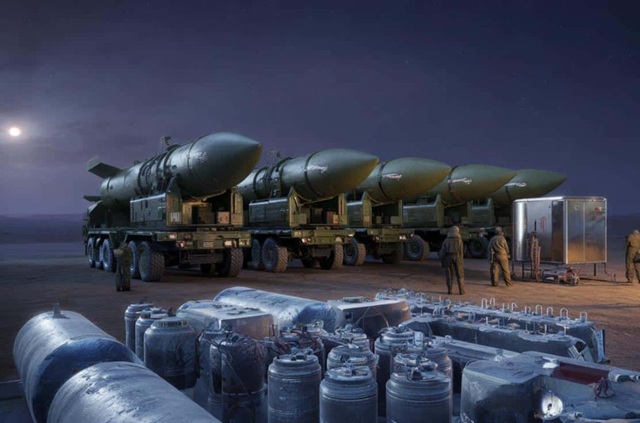
Reports of the IRGC’s secret development of unconventional warheads are raising alarms for regional stability and global security as the war between Iran, the United States, and Israel enters its fourth week. The shadows of chemical and biological warfare are reemerging, with troubling reports suggesting that Iran’s Islamic Revolutionary Guard Corps (IRGC) is actively pursuing missile warheads capable of delivering lethal chemical and biological payloads. If confirmed, this marks a chilling evolution in Iran’s military ambitions and a potential escalation of the ongoing conflict with far-reaching implications.
Multiple security sources indicate that the IRGC has advanced its missile program beyond conventional ballistic technology, exploring warheads designed specifically for chemical or biological agents. While technical details remain classified, experts suggest the program could involve adapting existing missile systems such as Shahab and Fateh or developing entirely new designs optimized for unconventional payloads. This shift in strategic posture comes at a critical moment as regional tensions spike amid ongoing airstrikes, cyber operations, and targeted attacks by US and Israeli forces.
Integrating chemical and biological agents into missile warheads poses significant technical challenges. Chemical agents, including nerve or blister compounds, must survive extreme launch and re-entry conditions while remaining lethal on dispersal. Biological agents such as pathogens and viruses present even greater hurdles, requiring containment during flight and controlled dissemination to achieve the intended effect. Despite these obstacles, the IRGC’s persistence and resourcefulness in military research suggest that such barriers may not be insurmountable.
Experts warn that deployment of these unconventional weapons could have catastrophic consequences. A chemical or biological missile strike in densely populated areas could result in mass casualties, long-term public health crises, and environmental contamination. The ongoing conflict raises concerns that such weapons might be used in retaliation or preemptively, intensifying the humanitarian stakes. The potential that these weapons could be acquired by non-state actors further compounds the threat, providing terrorist organizations with destructive capabilities far beyond conventional arms.
Iran’s existing missile platforms provide a ready vehicle for these unconventional payloads. Analysts suggest that Shahab and Fateh families could be adapted to carry chemical or biological agents, while entirely new missile systems may be under development, complicating detection and countermeasure efforts. The IRGC’s technical expertise and the secrecy surrounding these programs make it difficult for external observers to gauge the readiness or scale of such capabilities.
Command and control considerations add another layer of risk. The IRGC exercises strict oversight of Iran’s missile arsenal, and its ideological orientation and strategic priorities could influence deployment decisions during ongoing hostilities. Experts caution that the perceived deterrence value of chemical or biological weapons may lower the threshold for use, creating a heightened risk of miscalculation, escalation, and unintended humanitarian consequences in the heat of conflict.
The geopolitical ramifications are profound. The introduction of chemical or biological missile warheads into an active conflict zone could destabilize the fragile regional balance of power, prompt a new arms race, and strain diplomatic channels. Gulf nations may feel compelled to accelerate their own defensive capabilities or deepen military alliances, further intensifying regional tensions. On a global scale, proliferation risks and the potential for inadvertent use could provoke urgent international responses, including sanctions, monitoring programs, and preventive operations.
Several analysts highlight the broader strategic stakes. Dr. Sarah Jenson, a Middle East security expert, describes Iran’s pursuit of unconventional warheads as “a dangerous escalation in the regional arms race,” noting that chemical or biological integration “raises the stakes for all involved.” Former U.S. diplomat Ambassador John Fitzgerald warns that the program signals Iran’s willingness to defy international norms, underscoring the need for vigilance and proactive engagement by the global community. Russian arms control expert Dr. Mikhail Aleksandrov observes, “The technical challenges are significant, but Iran’s determination should not be underestimated.”
Reports indicate the IRGC may be developing nerve agents, blister agents, and deadly pathogens for missile payloads. Even partial success in these efforts would represent a serious escalation, expanding Iran’s strategic options in ways conventional ballistic missiles cannot achieve. In the context of ongoing strikes and counterattacks, such capabilities raise the specter of rapid escalation and unpredictable consequences for civilian populations.
The risks extend far beyond Iran’s borders. Chemical or biological missiles could inflict mass casualties, disrupt regional economies, and create long-term environmental hazards. The possibility that non-state actors might acquire or exploit these weapons presents a nightmare scenario for global security, as conventional defenses may prove inadequate against mobile, unconventional threats.
As the war enters its fourth week, international observers are closely monitoring Iran’s missile programs alongside the ongoing US-Israel operations. The convergence of unconventional missile development and active conflict elevates the stakes, making the potential use of chemical or biological warheads not just a theoretical concern but an urgent strategic and humanitarian issue.