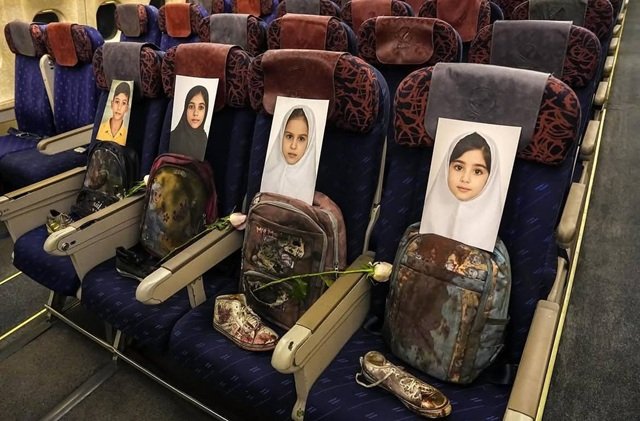
A high-level Iranian delegation has arrived in Islamabad for direct negotiations with the United States, opening the talks with an emotional display of school belongings linked to children killed in reported airstrikes on Minab Elementary School and other sites. Blood-stained school bags and shoes were presented alongside photographs of victims, setting a deeply emotional tone at the start of discussions aimed at addressing escalating conflict and regional tensions.
The US delegation is led by Vice President JD Vance and includes Steve Witkoff, Jared Kushner, and Brad Cooper. The Iranian side is headed by Parliament Speaker Mohammad Baqer Qalibaf and Foreign Minister Seyyed Abbas Araghchi, supported by senior officials from security, diplomacy, finance, and parliament. Pakistani authorities confirmed that the Iranian delegation includes 86 officials, experts, and media personnel, reflecting the scale and seriousness Tehran is attaching to the negotiations.
Iran’s chief negotiator, Mohammad Baqer Qalibaf, brings a long military and aviation background to the talks. He previously served as commander of the IRGC Aerospace Force from 1997 to 2000, during the early development of Iran’s underground missile infrastructure known as “missile cities.” Former IRGC commander Amir Ali Hajizadeh, killed in 2025, once described him as the “mastermind of the missile cities,” referring to the network of underground launch facilities designed to ensure missile readiness under attack conditions and capable of striking targets across the region. His former deputy, Ali Abdollahi, now heads Khatam al-Anbiya, while engineers such as Hassan Tehrani Moghaddam helped shape Iran’s ballistic missile programme.
Qalibaf also holds a pilot licence for the Airbus A321, and has previously flown official delegations, including a notable trip to Beirut during active bombardments in 2024. His involvement in both military command structures and aviation operations has long made him a symbolic figure in Iran’s strategic establishment.
Alongside its security leadership, Iran has sent a powerful economic team to Islamabad, signalling that sanctions relief and financial restructuring will be central to its negotiating position. Tehran is expected to push for full removal of primary and secondary sanctions, continued control over the Strait of Hormuz, release of frozen overseas assets worth tens of billions of dollars, and international funding for rebuilding infrastructure damaged in previous strikes.
The economic delegation includes Central Bank Governor Abdolnaser Hemmati, who has managed Iran’s currency system through multiple rounds of sanctions pressure and financial instability. He is joined by Majid Shakeri, a financial governance analyst focused on designing alternative payment systems to bypass restrictions, and Seyed Mehdi Bani-Taba, a parliamentary researcher specialising in macroeconomic regulation and legal frameworks. Together, they are expected to shape Iran’s financial demands during the talks.
Security arrangements for the trip were unusually strict. Reports indicate that three Iranian aircraft landed in Islamabad, but only one carried senior officials, while the other two were used as decoy flights. The arrangement reflects heightened concern over the safety of the delegation and the sensitivity of the negotiations taking place.
The talks opened under an emotionally charged atmosphere following Iran’s tribute to children killed in the conflict. Officials displayed personal items, including school bags and footwear, as a reminder of civilian casualties, adding further tension to an already fragile diplomatic setting.