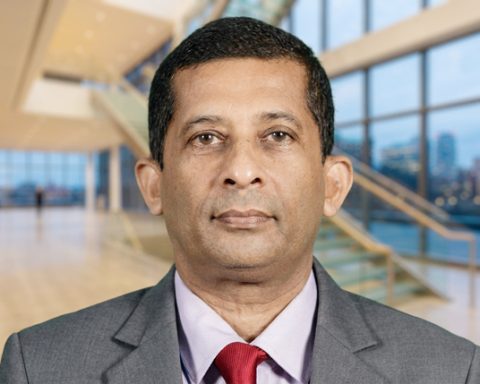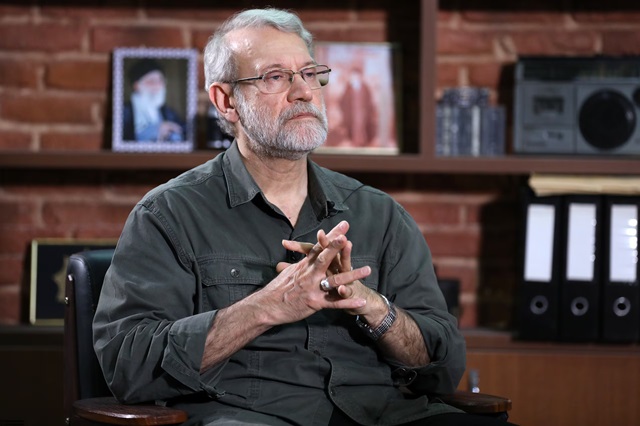
Israel registered another significant military milestone on Tuesday with the assassination of several top Iranian officials, including Ali Larijani, the head of Iran’s Supreme National Security Council, and Gholamreza Soleimani, the head of the Basij militia. According to reporting by Haaretz, these killings mark a continuation of a campaign that has eliminated more than half of Iran’s senior leadership, spanning political, military, and nuclear domains, including the supreme leader and his closest aides since the start of the war in June 2025. The operations are intended to weaken Iran’s capacity to conduct military operations, diminish threats to Israel and Gulf states, and ensure allied freedom of action in the region.
Haaretz notes that while Larijani was not the de facto ruler of Iran, he belonged to a generation of long-serving officials who had managed the country under previous leadership. His death, along with the elimination of other senior figures, leaves the Iranian government in the hands of a younger, less experienced cadre. Mojtaba Khamenei, son of the late supreme leader Ali Khamenei, has been named as his successor, though many Iranians reportedly question his ability to govern effectively. These inexperienced replacements are now tasked with managing ongoing military pressure from Israel and the United States, in a conflict that has already cost Tehran much of its institutional knowledge and operational command.
Despite the blow to leadership, Iran has demonstrated a remarkable degree of resilience. Haaretz emphasizes that the country maintains a sophisticated and hierarchical governance structure, with designated successors for every high-ranking official, and often successors to those successors. The Iranian military and security apparatus continues to function, and Hezbollah’s barrages of rockets in Lebanon indicate that allied coordination has not been significantly disrupted. History, including the continued activity of Hamas in Gaza after losing key leaders, suggests that the death of senior officials alone does not paralyze a state or a militant network.
The broader context of the conflict underscores Israel’s strategic goals. The targeted assassinations are complemented by persistent air raids over Tehran and other Iranian strongholds, aimed at degrading missile launchers, air defenses, and other military infrastructure. Haaretz reports that these operations are intended to systematically weaken Iran’s offensive and defensive capabilities, allowing Israel and its allies to operate with relative freedom while attempting to minimize attacks on their own territory. While the military strikes are being framed as major victories, the long-term outcome depends on Iran’s ability to stabilize its leadership and sustain operations under extraordinary pressure.
Within Israel, the assassinations have been met with fervent rhetoric and public displays. Defense Minister Israel Katz described Larijani’s death with vivid language, claiming he had joined “all the thwarted members of the axis of evil in the depths of hell.” Prime Minister Benjamin Netanyahu, meanwhile, was photographed in his office bunker, juxtaposed with a small Bugs Bunny doll, while proclaiming Israel’s new status as a “formidable, almost global power.” Haaretz highlights that these images, along with carefully staged media moments, are part of an effort to project both military strength and domestic confidence amid ongoing conflict and Netanyahu’s legal troubles.
The war has not been confined to Iran. Israeli military operations have expanded across multiple fronts, including southern Lebanon, the Golan Heights in Syria, Gaza, and the West Bank. In Lebanon, the Israeli Defense Forces have placed the home front on high alert in response to anticipated rocket attacks by Hezbollah, while advancing south of the Litani River. Measures have included the expulsion of civilians from contested areas and threats of annexation, reflecting a broader strategy to extend Israel’s influence and control de facto territory. Haaretz notes that these moves are part of a consistent pattern in which Israel seeks to consolidate strategic gains in contested regions while maintaining pressure on both state and non-state actors.
The complex and multi-front nature of the war highlights the limits of Israel’s tactical successes. While the assassinations and military strikes weaken Iran’s leadership and capabilities, Haaretz points out that they do not eliminate the state’s capacity to fight back. Iran’s regime remains in place, with an operational chain of command and a populace largely subdued through coercive measures. Reports suggest that domestic protests have been effectively suppressed following deadly crackdowns, indicating that the regime retains control despite severe losses among its leaders.
As Israel celebrates its targeted killings and battlefield achievements, the conflict continues to underscore the fragility and resilience inherent on both sides. Haaretz observes that the long-term consequences of removing senior Iranian officials may include further instability and operational inefficiency, but will not necessarily end Iran’s ability to respond. For Israeli policymakers, the challenge remains balancing military pressure with broader strategic objectives, while managing domestic perceptions and the realities of a complex, protracted conflict across multiple theaters.