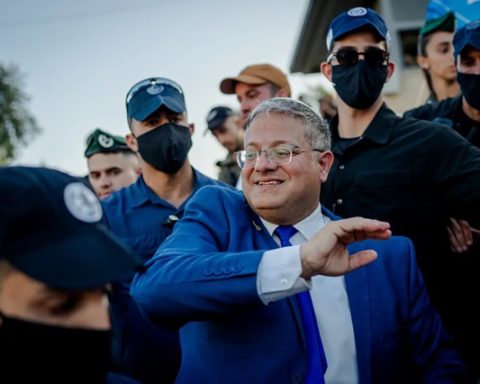

Colonel Miri Eisin, a retired IDF officer and internationally recognized expert on intelligence, security, and Middle East geopolitics, offered her insights on the ongoing conflict between Israel and Hamas in an exclusive interview. Eisin, who served in high-profile intelligence and operational roles including as Deputy Head of the Combat Intelligence Corps and as foreign media adviser to former Prime Minister Ehud Olmert, emphasized that the war Hamas initiated on October 7th is far from over.
Addressing questions about the underground tunnel network used by Hamas, Eisin explained that while the IDF had known of the tunnels, their strategic approach had been to avoid direct confrontation underground. “The capability was not underestimated, rather the best way to contend with it was to avoid it,” she said. Eisin noted that Hamas largely relied on above-ground and coastal access during their October 7th attack, highlighting the complex challenge posed by the terror group’s decades-long preparation.
Regarding Israel’s military actions in central Gaza, Eisin acknowledged that while the IDF had achieved operational success, Hamas had also leveraged the conflict to regain international attention. “The diplomatic international campaign was one of Hamas’s layers of defense. Their biggest success is in legitimizing a terror army,” she said, warning that the implications extend far beyond the Israeli-Palestinian arena.
Eisin was skeptical of international efforts to disarm Hamas, including peace proposals such as former President Trump’s plan. She argued that escalation and reconciliation are not equally achievable at this stage, noting that Hamas continues to call for Israel’s destruction. “I do not see the international community disarming Hamas. I do see them encouraging alternative leadership that may focus on the future of Gazans and Palestinians,” she said, emphasizing that reconciliation remains off the table.
The retired colonel also highlighted the wider global impact of the conflict, pointing to a surge in antisemitism and jihadist propaganda following the October 7th attack. “The last two years showed the effectiveness of disseminating horrific disinformation on behalf of a cause,” Eisin said. She stressed that the legitimization of Hamas has strengthened extremist narratives and dehumanizing rhetoric, affecting Jewish communities worldwide.
On the question of a two-state solution, Eisin urged a step-by-step approach rather than an instant political resolution. “The existence of Israel does not deny a Palestinian state, but trying to equalize it instantly under current circumstances will not bring viable steps forward,” she said. She added that most Israelis do not seek to rule over Palestinians, nor do they want to establish a state that threatens Israel’s existence under Hamas’s current leadership.
The interview, conducted by A. Jathindra of the Centre for Strategic Studies – Trincomalee, provides a perspective from a senior Israeli military strategist, highlighting the persistent complexity of the Israel-Hamas conflict and its far-reaching regional and global consequences.