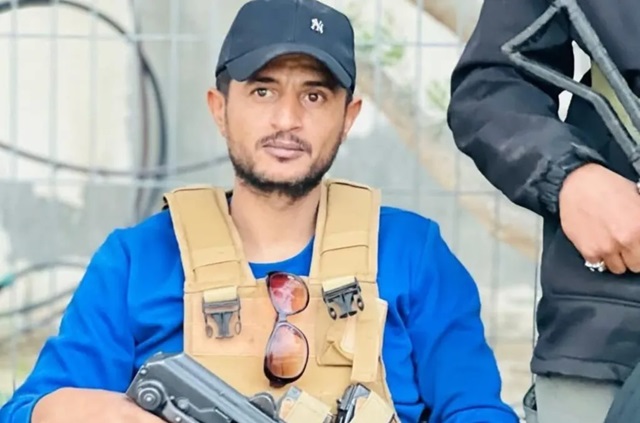
A former prisoner and alleged criminal, Yasser Abu Shabab, has emerged as a controversial figure in Israel’s covert strategy to destabilise Hamas in the besieged Gaza Strip, The Times UK has reported.
Once jailed for drug trafficking by Hamas authorities, the 31-year-old Bedouin from the influential Tarabin tribe reportedly escaped during an Israeli airstrike on a prison and has since resurfaced at the helm of a self-styled militia called the “Popular Forces” or “Anti-Terror Service”. Operating in eastern Rafah, Abu Shabab and his group are now securing aid distribution systems in an area devastated by months of conflict and humanitarian collapse.
Although Abu Shabab denies any direct connection with Israeli forces, insisting his group has “never met any Israeli officer”, Israeli Prime Minister Benjamin Netanyahu appeared to confirm state-level engagement with groups opposing Hamas. “We made use of clans in Gaza that are opposed to Hamas… What’s wrong with that? It saves the lives of IDF soldiers,” Netanyahu stated on Thursday.
The admission drew sharp condemnation from opposition leader Yair Lapid, who accused Netanyahu of arming factions “close to Isis” without any long-term strategic planning. “After Netanyahu stopped giving millions of dollars to Hamas, he moved on to giving weapons to organisations close to Isis in Gaza… all leading to more disasters,” Lapid posted on X (formerly Twitter).
Abu Shabab’s militia, largely composed of clan members, mercenaries, and locals, reportedly oversees the distribution of aid from the Gaza Humanitarian Fund. However, The Times UK reports that the group has been implicated in alleged protection rackets involving aid convoys from Kerem Shalom and has faced accusations of commandeering humanitarian supplies under the guise of protecting them from Hamas looting.
His criminal past—extending to allegations of theft, drug trafficking, and illegal arms dealing—has further fuelled public suspicion. Hamas police records reportedly document multiple arrests, and although he was never formally tried, Abu Shabab was previously suspected of links to Islamic State elements during unrest in the Sinai region.
Despite his claims that his mission is purely humanitarian, Abu Shabab’s tribal and community leaders have publicly disavowed him. “He has sold himself as a soldier in an army that is exterminating his own nation,” read a statement from the National Coalition of Palestinian Tribes and Clans. “These gangs are destined for the dustbin of history… justice will eventually catch up with them.”
The situation in Rafah remains volatile. The collapse of civil infrastructure and the withdrawal of Hamas forces from eastern areas have left a vacuum, now occupied by irregular armed groups. Last week, as tens of thousands of desperate Palestinians gathered at newly opened aid distribution points, several dozen were killed in chaotic and sometimes violent scenes.
Among many Gazans, opinions on Abu Shabab remain muted—possibly out of fear, uncertainty, or sheer exhaustion. “He will be an experiment, just like the American aid experiment,” said Safwat Tamraz, a Khan Yunis resident. “Our people are like lab rats — everyone tries things out on them.”
With Israel’s military campaign continuing, international scrutiny is intensifying over its use of proxy militias and the long-term implications of such strategies. The emergence of figures like Abu Shabab, profiled extensively by The Times UK, highlights the murky alliances and deepening fragmentation of Gaza’s already fragile social fabric.