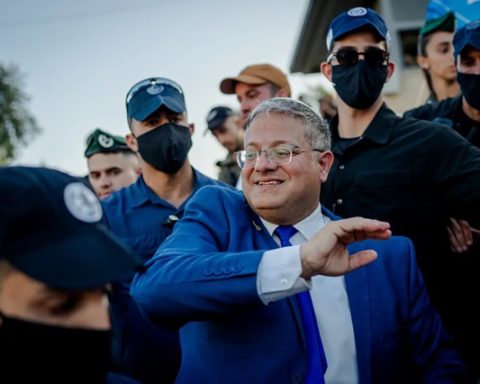
In September 2025, The Sea (El mar), the story of a Palestinian boy who crosses checkpoints in an attempt to reach Tel Aviv and see the Mediterranean for the first time, became the most awarded film at Israel’s Ophir Awards, the country’s equivalent of the Goya Awards. The film does not delve deeply into the daily violence and grim realities of the Israeli occupation, yet its success was enough to provoke the anger of Culture Minister Miki Zohar, who said he would not allow a “group of extremist left-wing thugs” to take control of the film industry.
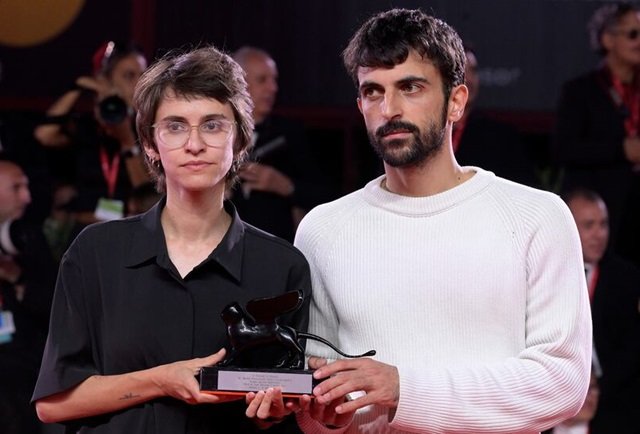
A year later, the confrontation has intensified. Zohar has called for the nationality of Yuval Abraham and Rachel Szor to be revoked, the directors of NAZA, a documentary awarded in Venice and due to be screened at the San Sebastián festival. The film has become the latest flashpoint in an increasingly bitter dispute over the boundaries of political criticism in Israeli culture. The hostility has extended beyond official criticism. According to Uri Rosenwaks, a filmmaker and former director of the Israeli Documentary Directors Forum, social media and some media outlets have carried calls for the two directors to be hanged or killed.
“We have had difficult years, but this is the first time I have witnessed attacks of such cruelty on social networks and even in some media,” Rosenwaks told El País. He argues that Israeli society lives in “a great bubble of denial” about what is happening in Gaza and that NAZA has punctured it.
The film features testimony from more than 20 soldiers and intelligence agents describing tools used to bombard Gaza and the sense of revenge that has permeated the offensive. Its criticism is directed squarely at the Israeli military, an institution widely regarded in Israel as a moral exemplar and something of a sacred cow. At the Venice Film Festival, the documentary received a 25-minute standing ovation. Yet that international reception has not translated into an Israeli release.
NAZA received no public money, has not been released in Israel and, according to the filmmakers interviewed, it is unclear whether any Israeli cinema would currently risk screening it. The controversy has also raised questions about whether Abraham and Szor will be able to return home in the medium term. “Before, only people on the radical right allowed themselves attacks like this against a film they had not even seen. But now the criticism is coming from everywhere: academics, more moderate figures… It is brutal,” Rosenwaks said.
The filmmakers interviewed for the report describe what they see as a decade-long process of constriction. They point to inadequate funding, cancelled screenings, festival rejection, official contempt, insults and threats on social media. Shai Carmeli-Pollak, director of The Sea, describes the situation more starkly: “It seems that we have reached the point where critical culture is considered an act of treason and is becoming something dangerous for those who create it.”
More than 200 Israeli filmmakers signed a statement of solidarity with Abraham and Szor last week. Their intervention comes amid what the report describes as increasingly explicit hostility towards critical cultural work, particularly since the beginning of Israel’s offensive against the Gaza Strip in 2023, following the attacks by the Palestinian Islamist movement Hamas.
The question now troubling many artists is what could happen if Prime Minister Benjamin Netanyahu remains in power after the legislative elections at the end of October. Noam Sheizaf, who co-directed H2: The Occupation Lab with Idit Avrahami, a film about the Palestinian city of Hebron presented as a microcosm of the occupation, says criticism of Netanyahu remains possible, but that challenging the army or discussing Palestinian rights has become increasingly risky. The consequences, he argues, may extend beyond professional careers to physical safety.
The pressure is not confined to filmmakers. Israeli writers, dancers, intellectuals and historians are also encountering suspicion or boycotts abroad. Rosenwaks says Israelis have become “toxic” in international cultural settings, where their presence at a conference, film festival or book fair can itself create difficulties. He also warns of the possibility of mass emigration if Netanyahu is re-elected, arguing that recent years have already placed enormous pressure on artists.
Behind the public confrontations lies a quieter mechanism: funding. Israeli filmmakers do not receive money directly from the Culture Ministry. Each year, the Government provides about 130 million shekels, slightly more than 37 million euros, to independent non-profit film funds, which decide which projects to support according to established criteria.
There are no formal rules governing the political or ideological content of films receiving support. But Nirit Anderman, a film journalist at Haaretz, says repeated attacks by authorities against critical films have created a deterrent effect. Organisations dependent on public money may conclude that financing a film critical of government policies towards Palestinians could damage their prospects of remaining among the cultural bodies eligible for funding.
The result, Anderman argues, is self-censorship. A filmmaker choosing between a family drama and a sharp political satire may opt for the former because its prospects of receiving funding appear greater.
The dispute surrounding The Sea illustrates the pressure. After its success at the 2025 Ophir Awards, Zohar threatened to withdraw funding from the awards, although he has not succeeded in doing so. He also announced government-backed alternative awards, held in December, which distributed substantial prizes. New rules for public film funding have also been under development, including proposals that awards received at foreign festivals should not count towards funding and that a dedicated funding stream should be created for films portraying the heroism of Israeli soldiers.
Zohar has previously targeted critical filmmakers. He described No Other Land, the Oscar-winning documentary co-directed by Abraham and Szor, as “an act of sabotage” against the State of Israel.
The latest Ophir Awards, held on 9 September, were dominated by Tell me everything, a family drama set in the 1980s against the backdrop of homophobia and AIDS, followed by Where To, which examines relationships between Israelis and Palestinians but is set in Berlin, away from the daily reality of the occupied territories.
For Carmeli-Pollak, the experience of The Sea has demonstrated both the possibilities and limits of critical cinema. His film eventually secured difficult-to-obtain financing with support from the Israeli Film Fund, an independent non-profit organisation, and a Palestinian production company. Yet screenings were cancelled following opposition from local residents.
Other filmmakers describe similar experiences. In 2022, Sheizaf and Avrahami saw several screenings of their Hebron documentary cancelled, while the film received little attention in Israel. Because it was co-produced with France Télévisions, however, it secured screenings abroad. Sheizaf says this mattered because he makes films for Israelis “so that they see and know” and believes the wider world has a role to play in ending the occupation.
Avi Mograbi, director of The First 54 Years: An Abbreviated Manual for Military Occupation, describes an even broader rejection. In 2022, months before the Hamas attacks, he said television channels that had previously screened his films, festivals and cultural institutions where he had once been welcomed all turned away from his work.
“Sometimes it is more painful to be ignored than to be criticised,” Mograbi said. For Israel’s critical filmmakers, that distinction increasingly captures the problem: the pressure is not only about what can be said, but whether audiences will be allowed to hear it at all.