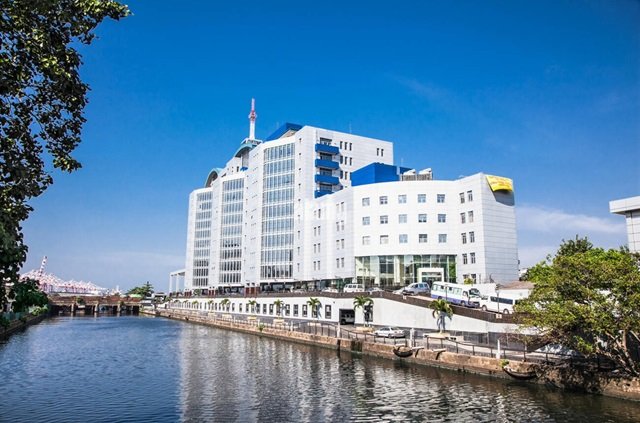
Sri Lanka Customs paid more than Rs41 million last year for day and night meals for customs officers at the port premises without following the prescribed procurement process, according to a newly released report by the National Audit Office.
The payments form part of a series of irregularities identified in the audit of Sri Lanka Customs, raising questions about adherence to established procedures in the administration of public expenditure. The National Audit Office recorded the matter under irregular transactions in its examination of the department’s activities.
The audit report also found that the canteen at the Sri Lanka Customs headquarters building had been operated without following a formal procurement process. The selected party had not entered into a valid agreement with Customs, according to the report.
Despite the absence of a formal procurement process and a valid agreement, the canteen had continued operating in this manner from 14 February 2024 to the time covered by the audit, the National Audit Office said. The finding places the canteen arrangement alongside the meal payments as matters requiring scrutiny over compliance with established administrative procedures.
The scale of the payments for meals is particularly significant because the expenditure involved public funds and was made outside the prescribed procurement process. The audit officials classified the matter as an irregular transaction in their report, rather than presenting it simply as a routine expenditure issue.
The audit also identified a separate problem involving the department’s response to questions raised during an audit examination concerning vehicle clearance activities. According to the report, the Director General of Customs had failed to provide a response to the audit inquiry for a period approaching six months.
The prolonged absence of a response meant that the audit examination remained without the requested clarification for a substantial period. The report records this alongside the findings concerning the meal payments and the operation of the headquarters canteen.
Taken together, the findings focus on two aspects of the Customs administration: the way public expenditure and service arrangements were handled, and the responsiveness of the institution to questions raised through the audit process. The report does not merely identify the payments themselves, but specifically draws attention to the failure to follow prescribed procurement procedures and the absence of a valid agreement with the selected party.
The canteen arrangement is also notable for its duration. According to the National Audit Office, it had continued from 14 February 2024 without the formal procurement process and valid agreement identified as requirements in the audit findings. The matter was therefore not limited to a single transaction but involved an arrangement that continued over time.
The findings come at a time when scrutiny of public institutions and the management of state funds remains central to the role of the audit process. In this case, the National Audit Office has documented payments exceeding Rs41 million for meals supplied to customs officers at the port, alongside an apparently separate canteen arrangement that lacked both formal procurement and a valid contract.
The information is contained in the audit report incorporated into the 2025 Annual Report of Sri Lanka Customs. The report provides the formal basis for the findings, including the classification of the transactions as irregular and the observation that the Director General of Customs had not responded to the vehicle-clearance audit inquiry for nearly six months.