


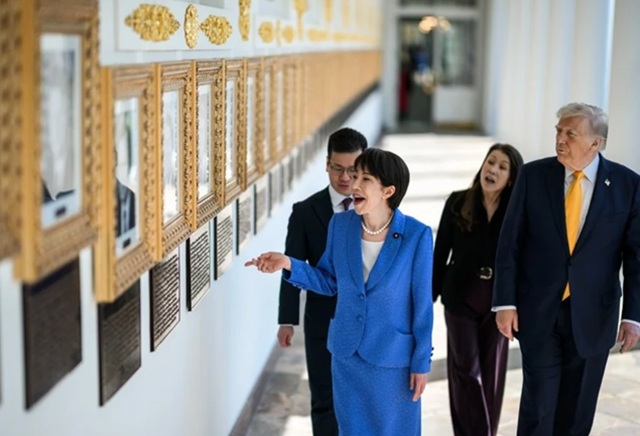
Japan is set to revise its description of relations with China in its 2026 Diplomatic Bluebook, reflecting a notable deterioration in bilateral ties, according to a draft reviewed by reporters. The annual report, expected to be approved next month by Prime Minister Sanae Takaichi’s government, will describe China as an important neighbor rather than “one of its most important” and frame the relationship as “strategic” and “mutually beneficial.” The adjustment highlights growing friction between Tokyo and Beijing over security, trade, and regional influence.
The draft cites several confrontations over the past year, including Chinese export controls on rare earths, radar lock-ons targeting Japanese military aircraft, and increasing pressure surrounding Taiwan. Takaichi’s remarks in November that Japan might deploy its military if a Chinese move against Taiwan threatened Japanese territory sparked Beijing’s retaliatory measures, including seafood import restrictions, travel advisories, and curbs on critical minerals used in electronics. Takaichi defended her stance as consistent with a decade-old Japanese security law, while a recent U.S. intelligence report suggested a sharp departure from prior Japanese rhetoric, a claim her government rejected.
In a parliamentary speech last month, Takaichi warned of Chinese “coercion” and growing economic and security threats from Beijing and its regional partners, including Russia and North Korea. During her meeting with U.S. President Donald Trump at the White House, Japan and the U.S. unveiled a joint action plan to develop alternatives to Chinese supply chains for rare earths and other critical minerals, underscoring the strategic pivot Tokyo is undertaking.
Meanwhile, tensions between the allies over Middle East commitments have emerged. U.S. Ambassador to the United Nations Mike Waltz suggested that Japan had agreed to provide naval support in the Strait of Hormuz amid the ongoing U.S.-Israeli conflict with Iran. Japan’s Defense Minister Shinjiro Koizumi, however, reiterated that Tokyo had made no formal commitments and conveyed the limits imposed by domestic law during discussions with Trump. Chief Cabinet Secretary Minoru Kihara also dismissed claims of promises, highlighting a gap in expectations between Washington and Tokyo.
Japan’s Foreign Minister Toshimitsu Motegi noted that the Maritime Self-Defense Force could hypothetically be deployed for minesweeping in the strait, but only under a ceasefire scenario. Historical precedent exists, as MSDF vessels conducted minesweeping operations in the Persian Gulf following the 1991 Gulf War ceasefire. Japan’s navy is widely regarded as possessing some of the world’s most capable minesweeping forces, a factor that may influence future cooperation if regional conditions demand it.
The Bluebook revision and ongoing strategic discussions signal that Japan is navigating a delicate balance between managing an increasingly assertive China, maintaining strong U.S. ties, and securing critical supply chains and maritime routes essential to its national interests.









