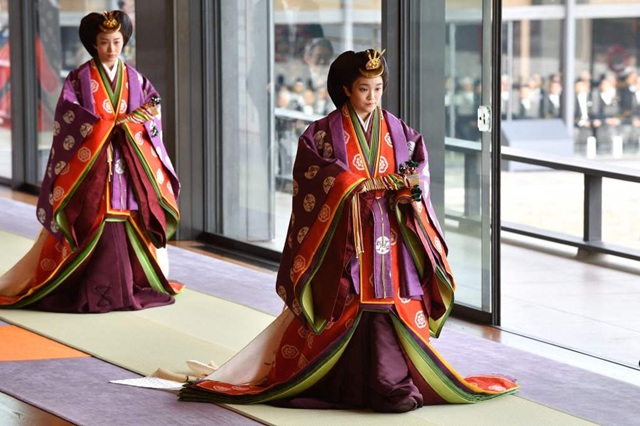
Japan has announced it will freeze its funding to the United Nations Committee on the Elimination of Discrimination against Women (CEDAW) following the body’s criticism of the country’s Imperial Household Law, which bars female members of the imperial family from succeeding to the Chrysanthemum Throne. The move comes in response to CEDAW’s recent recommendation that Japan amend the law to allow gender equality in the succession process. The report, which was highlighted by Times UK, suggested Japan “look at good practices of other states’ parties that have reformed their succession laws to ensure equality of women and men,” and called for changes to guarantee women could ascend the throne.
For over two millennia, Japan’s imperial family has adhered to male primogeniture, allowing only men to inherit the throne. This tradition has come under increasing scrutiny, especially as Japan faces a crisis of male heirs. The criticism from CEDAW has sparked outrage among conservative factions in Japan, leading the government to halt its funding of the committee. Kitamura Toshihiro, a spokesman for Japan’s Ministry of Foreign Affairs, responded to the report by asserting that eligibility to ascend the throne is “not part of basic human rights.”
The issue is further complicated by the ongoing debate within Japan about the future of the imperial family. Emperor Naruhito, who is 65, has one daughter, Princess Aiko, but no male heirs. His younger brother, Crown Prince Fumihito, has an 18-year-old son, Hisahito, but beyond these two, the number of male heirs dwindles. Despite strong public support—90% of the Japanese public reportedly backs the idea of a female emperor, according to Times UK—many influential politicians remain opposed to changing the law, insisting that imperial descent must be through the male line.
In response to the ongoing crisis, Japan’s parliament has been considering alternatives, such as allowing princesses to remain within the imperial family after marriage or allowing the adoption of male heirs from former cadet branches of the royal family. However, none of these options would directly address the issue of female succession.