


When Israeli forces withdrew from southern Lebanon in 2000 after 18 years of occupation, the departure became a symbol of a campaign many Israelis had come to view as costly and unresolved. Among the most powerful images was Beaufort, a medieval Crusader castle that had served as a military position and later became the setting for one of Israel’s most acclaimed films.
Nearly three decades later, the same location has returned to the center of Israeli public debate. In May, Israeli troops reoccupied Beaufort, this time after fighting Hezbollah, the Shiite armed group that emerged during the previous occupation. Prime Minister Benjamin Netanyahu described the move as a return carried out under different circumstances, while some Israelis viewed it as correcting the withdrawal of 2000.
For filmmaker Joseph Cedar, however, the moment carries a different meaning. The director, whose 2007 film Beaufort transformed the final days of Israel’s presence in Lebanon into a tense and introspective war drama, sees the return to the site as a warning sign rather than a victory.
“I feel that deep down we are aware that if we have returned to Beaufort, something is wrong, that we are going down the wrong path,” Cedar said in an interview with El País. “It is one of those rare moments when the truth is stronger than the political discourse.”
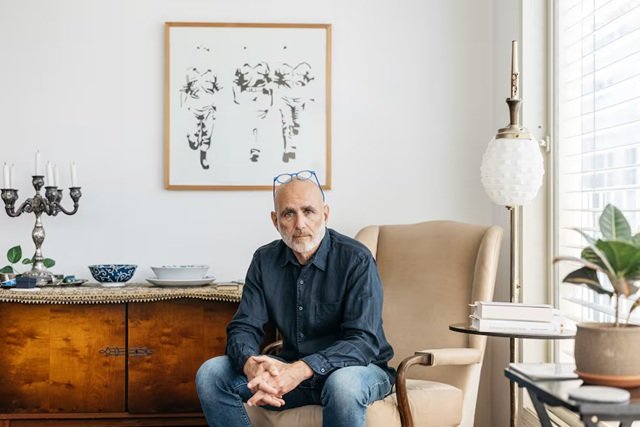
Cedar, 57, spoke from his home in Tel Aviv after nearly three years of conflicts across the Middle East affected several of his film projects in Hollywood. He agreed to the conversation because he wanted to address what he described as a dramatic moment for Israel, while also facing a personal connection to the country’s military reality: his son serves in an army that the government of Prime Minister Benjamin Netanyahu has directed through what Cedar calls an “endless war.”
The filmmaker argues that Israel currently lacks influential public voices calling for alternatives to continued confrontation. He said many Israelis understand the fear of appearing weak but believes that discussions about diplomacy require confidence rather than a constant search for military dominance.
“Anyone who has the opportunity to speak should say: Give us hope. Give us something that is not an endless war,” he said.
Cedar, who served as a medical paratrooper when he was young, believes Israel must recognize the limits of military power. He argues that the country has reached a point where military solutions cannot resolve the broader conflicts surrounding it.
“There is a limit to our power, and apparently there is no limit to how much our enemies are willing to suffer,” he said. “We have to understand the limitations of our power and accept that there is no military solution to this chaos.”
The director also connects this debate to Israel’s identity as the world’s only Jewish state. In his view, the country’s responsibilities require political intelligence, alliances and restraint rather than relying primarily on force.
“We have become the Romans,” Cedar said. “We are only bulldozers and air power. In our minds, we are still that small country fighting for its existence. But in reality, we have become an empire.”
Cedar’s perspective is shaped by both his religious upbringing and his filmmaking career. Raised in an Orthodox Jewish environment in New York, he has incorporated religious themes and Israeli society into his work without avoiding difficult questions. His television series Our Boys, which examined the 2014 killing of a Palestinian teenager and the events surrounding it, was based on real events and drew criticism from Netanyahu, who called for a boycott of the production and accused it of antisemitism.
His own career has also been affected by the current regional tensions. Two major Hollywood projects have stalled since 2023. One is a new film about the SS Exodus, the ship that carried Holocaust survivors from France toward Palestine and later became the subject of a famous film starring Paul Newman. Cedar said his version would have included Palestinian perspectives, internal divisions among Jewish leaders and differing views of British rule.
The project has not been officially canceled, but Cedar said it has become difficult to move forward with such a politically sensitive story.
Another production, Useful Idiots, a thriller set in New York starring Meryl Streep and involving Sigourney Weaver, was also frozen during pre-production. Cedar said he does not know the reason but described the project as fascinating and still alive.
The uncertainty surrounding his work has brought Cedar into the wider debate over cultural boycotts of Israel. The discussion intensified after Israeli filmmaker Nadav Lapid was removed from a film festival in Marseille following protests over the inclusion of his film Policía en Israel and objections to its Israeli state funding. More than 350 figures from the film industry signed a letter criticizing the decision.
Cedar described the situation as “a parody,” arguing that Lapid, who is known as one of Israel’s strongest critics within cinema, was targeted because of his nationality despite his political positions.
For Cedar, cultural boycotts raise complicated questions because artists and institutions cannot always be judged in the same way as governments or industries.
“Every story is different, every artist is different and every situation must be evaluated for what it is,” he said. “I am not a wine producer, nor do I manufacture weapons. I tell a story.”
At the same time, Cedar said he has personally chosen not to accept Israeli state funding for his films while Netanyahu’s government remains in power. He emphasized that the decision belongs to artists themselves rather than being imposed through external pressure.
“While this government is in power, accepting Israeli funding is problematic,” he said. “Not from any government. From this one. But it must be our decision, not anyone else’s.”
As Beaufort once again becomes a military symbol, Cedar’s reflections return to the central question that shaped his acclaimed film nearly two decades ago: what remains after a conflict that continues without a clear end.









