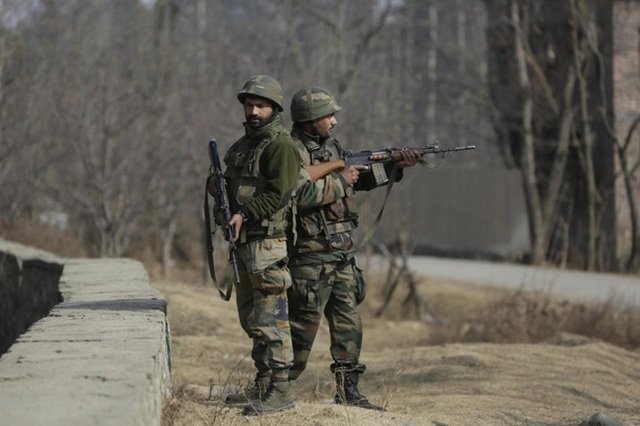
On July 31, 2026, terrorists opened fire on two migrant labourers, Deepak Ratray (24) and Bhupinder (28), from Chhattisgarh, who were working at a brick kiln in the Kulgam District of Jammu and Kashmir (J&K). The Resistance Front (TRF), a shadow outfit of Lashkar-e-Toiba (LeT), claimed responsibility for the attack and warned of more attacks on non-locals. This was the first attack on migrant workers in about 21 months. Earlier, on February 7, 2024, two workers from Punjab, Amritpal Singh and Rohit Masih, were killed in the Shaheed Gunj area of Srinagar.
On July 22, 2026, in the first terrorist attack of the year targeting J&K Police personnel, a lone terrorist shot dead Head Constable Ashiq Hussain, who was deployed for ongoing Amarnath Yatra security duty at Lal Chowk in Anantnag District. TRF claimed responsibility for the attack through a social media post.
These two attacks, within a span of 10 days and resulting in three fatalities, are the only TRF-claimed terrorist incidents recorded in 2026 till August 2, 2026. Reports link them to hybrid/local recruits using small-calibre weapons, with possible involvement of LeT figures and associates in the Kulgam case.
Significantly, TRF’s parent organisation, LeT, remains an active terrorist group in J&K and continues to operate through proxy outfits and Over Ground Workers (OGWs) in the region. A central element of LeT’s current strategy is its backing of TRF, a group that was established around 2019 following the abrogation of Article 370. TRF seeks to project an image of indigenous resistance through its social media propaganda and decentralised operations, employing hybrid tactics such as targeted killings, drone-assisted logistics, and local recruitment to mask its external direction. Indian and US authorities designate TRF as a LeT proxy. This structure enables LeT to sustain militancy while masking attribution.
Despite international proscriptions, leadership pressures, and periodic disruptions, LeT maintains footprints in India by blending foreign-trained infiltrators with local OGWs, providing forged documents, sleeper cells, and logistical support in several states. Since the beginning of 2026, three LeT terrorists have been killed (till Aug 2, 2026), including:
On July 8, 2026, Security Forces (SFs) eliminated a top-ranked LeT commander, Zakir Ganai, an A++ category terrorist, in Shopian District. Ganai, who had joined LeT in 2024, was one of two militants initially detected by Army surveillance cameras on July 3 in the Meemandar area. His body was recovered following the encounter, while operations were ongoing to track down the second operative, Latif Bhatt, who had joined the outfit in 2025 and remained absconding.
On May 12, 2026, Army troops foiled an infiltration attempt and killed an unidentified LeT operative from Pakistan-occupied Jammu and Kashmir (PoJK) in the Mankote area of the Krishna Ghati sector along the Line of Control (LoC) in Poonch District.
On March 10, 2026, SFs killed a senior LeT operative, Hamza Yousaf, along the LoC in Rajouri District as he attempted to infiltrate into Indian Territory along with an associate. Yousaf was a key figure in LeT’s launchpad module responsible for facilitating the cross-border movement of armed terrorists.
These operations indicate that, despite sustained counter-terrorism pressure, LeT/TRF retain limited operational capabilities in J&K.
According to partial data compiled by the South Asia Terrorism Portal (SATP) till August 2, 2025, 12 LeT terrorists were killed and while two terrorists were eliminated during remaining period of the year. Eight LeT terrorists were killed in 2024, 19 in 2023, 78 in 2022, 68 in 2021, and 48 in 2020. Significantly, 2001 remains the year with the highest number of fatalities linked to LeT operations, recording 423 fatalities, including 86 civilians, 114 SF personnel, and 243 terrorists, the highest number of LeT terrorist fatalities in a single year. The declining number of LeT fatalities compared to previous years reflects the changing nature of the threat, as OGW consolidate their dominance on the ground and the terrorists rely increasingly on covert networks, hybrid operatives, and support structures, rather than large-scale militant presence.
Meanwhile, Police identified 310 persons, originally from Poonch District, who are currently operating from Pakistan and PoJK. Most of these persons hail from the Mendhar, Surankote, and Sabjian areas and had crossed the LoC over the past three decades. Investigations have revealed their extensive involvement in facilitating infiltration attempts, narcotics smuggling, radicalisation of local youth, and other unlawful activities affecting Poonch and the adjacent Rajouri District. A number of them are active terrorists affiliated with LeT, Jaish-e-Mohammed (JeM), and Hizbul Mujahideen (HM).
The identification of these Pakistan/PoJK-based operatives highlights the continued relevance of LeT’s cross-border infrastructure, which has historically relied on external handlers and local facilitators to sustain militancy in J&K. This operational model reflects the organisation’s broader evolution from conventional militant formations towards decentralised and adaptable proxy networks.
LeT continues to demonstrate its resilience as one of Pakistan’s most capable proxy terrorist organisations, extending its influence beyond traditional operations through adaptable networks and front entities across India. Emerging in late 1980s-early 1990s as the militant wing of Markaz-ud-Dawa-wal-Irshad (MDI) during the Soviet-Afghan War, LeT was founded by Hafiz Muhammad Saeed and his associates, with deep roots in the Ahl-e-Hadith ideology. Headquartered near Muridke in Lahore, Pakistan, the group has historically enjoyed patronage from elements within Pakistan’s Inter-Services Intelligence (ISI), which has facilitated recruitment, training camps, and infiltration across the LoC. Saeed remains the Amir, with operational commanders such as Zaki-ur-Rehman Lakhvi and Sajid Mir aka Saifullah Sajid Jutt aka Sajid Langda linked to the 2008 Mumbai attacks playing key roles; other senior commanders include Mohammad Yahya Mujahid (Head of LeT’s media department and a spokesman, managing propaganda and public messaging), Haji Mohammad Ashraf (Chief of Finance, responsible for fundraising and financial logistics, Arif Qasmani (Chief coordinator for external dealings, facilitating ties with other terrorist groups such as Al-Qaeda), Zafar Iqbal (co-founder) and Talha Saeed (son of Hafiz Saeed). Mid-Level Commanders and operatives include Adil Thokar (a local terrorist trained in Pakistan, who was implicated in the Pahalgam attack). To circumvent bans imposed after 2002, LeT has operated through rebranded fronts like Jamaat-ud-Dawa (JuD), Falah-e-Insaniyat Foundation (FIF), Al Madina, Aiser Foundation, and the Milli Muslim League (MML), leveraging charitable networks – schools, hospitals, and seminaries – for radicalisation, funding, and plausible deniability. The group has restructured internal commands, reassigned leaders, and explored evolving tactics, including hybrid methods and advanced technologies.
Despite severe reverses faced in J&K, international assessments continue to highlight concerns regarding the Pakistan-based terrorist infrastructure targeting India. A U.S. National Counterterrorism Centre (NCTC) assessment describes LeT as a Pakistan-based terrorist organisation that maintains operational focus on India, particularly J&K, while sustaining financial and organisational networks through affiliated fronts. Similarly, a report titled Terrorist and Other Militant Groups in Pakistan, tabled in the US Congress and released on March 25, 2026, noted that Pakistan continues to provide an environment in which terrorist organisations operate, including groups targeting J&K.
Intelligence assessments indicate a possible tactical shift in militant operations in J&K, with LeT cadres allegedly being encouraged to use Islamic State Khorasan Province (ISKP)-linked networks to create operational deniability and complicate attribution of attacks. The strategy reportedly aims to revive militant activities in the region. Following the destruction of LeT’s Muridke facility during Operation Sindoor in 2025, reports suggest that the group is relocating parts of its training infrastructure towards areas near the Pakistan-Afghanistan border, with alleged support from Pakistani intelligence.
Indian security agencies have simultaneously intensified efforts to dismantle the organisation’s support infrastructure inside J&K. Authorities arrested 10 LeT-linked persons, including eight terrorists and two sympathisers, during the first half of 2026 (data till August 2, 2026), including:
- On July 21, Police arrested an LeT sympathiser, identified as mosque cleric Mohammad Rafiq Naik, for allegedly providing shelter, food, logistical assistance, and coordination to LeT terrorists in Kishtwar District. Naik reportedly served as a key ground handler for a module led by Saifullah, enabling the group to operate in the Chatroo Forest for nearly two years, until Saifullah and associates were neutralised earlier in 2026.
- On June 29, Police arrested suspected terrorist facilitator Haji Latief in Kathua District.
- On May 17, Police arrested Pakistani LeT terrorist Mohammed Usman Jatt aka ‘Chinese’, a resident of Lahore, along with Abdullah aka Abu Hureira – described as one of the longest-surviving LeT operatives in Srinagar District. The duo had infiltrated to execute attacks in north and central Kashmir and establish sleeper bases outside J&K.
- On May 11, Police arrested Faisal Ahmad Bhat and Faisal Ahmad Guroo during a naka check in the Baba Dem area of Srinagar, and recovered arms, ammunition, and LeT posters.
- On April 8, 2026, authorities arrested five suspected LeT operatives, including two high-value Pakistani nationals – Abdullah aka Abu Hureira (wanted for 16 years and instrumental in establishing external support bases, particularly in Punjab) and Usman aka Khubaib – along with three local Srinagar residents: Muhammad Naqeeb Bhat, Adil Rashid Bhat, and Ghulam Mohammad Mir aka Mama.
These arrests demonstrate the multi-layered nature of LeT’s operational ecosystem. Despite these disruptions, the latest LeT-led attack on April 22, 2025, at Baisaran in Pahalgam in Anantnag District, remains a significant indicator of LeT’s continued intent. In this incident, terrorists killed 26 civilians – primarily Hindu tourists and one local pony operator – demonstrating the lethality of LeT’s proxy model. TRF initially claimed responsibility for the massacre, before retracting its statement. NIA has directly linked the operation to LeT/TRF handlers in Pakistan. However, NIA has filed two chargesheets in the case so far: the main chargesheet on December 15, 2025, naming Pakistani handler Sajid Jatt aka Saifullah aka Habibullah Malik and three Pakistani terrorists (later neutralised in Operation Mahadev); and a supplementary chargesheet on July 6, 2026, naming Hafiz Muhammad Saeed. On July 14, 2026, NIA issued a non-bailable warrant against Saeed. The chargesheets allege that Sajid Jatt, operating from Lahore, served as the key handler, coordinating real-time communication, logistical support, and targeting instructions. The investigation also uncovered the use of multiple Pakistan-based Telegram channels for cross-border digital coordination. NIA has further sought to probe possible links between LeT, TRF, the Gaza-based Hamas, and Al Qaeda-affiliated groups.
Earlier on March 11, 2026, NIA sought life imprisonment for separatist leader and Dukhtaran-e-Millat (DeM) chief Asiya Andrabi, along with her associates Sofi Fehmeeda and Nahida Nasreen, following their conviction in a terror-related case. The NIA stated that the accused used the banned DeM and social media platforms to promote secessionist propaganda and maintain links with Pakistan-based terrorist entities, including Hafiz Saeed.
Alongside investigations into major attacks, authorities have also expanded scrutiny of institutional and administrative vulnerabilities by identifying individuals accused of providing support to terrorist organisations. Such measures reflect a broader strategy aimed at preventing the penetration of extremist networks into civilian structures. On April 8, 2026, two government employees – Farhat Ali Khanday, a key HM facilitator, and Muhammad Shafi Dar, an active LeT associate – were terminated over alleged links with terrorist organisations. Similarly, on January 14, 2026, the J&K administration terminated five government employees for suspected links with HM and LeT.
Beyond conventional logistical support, LeT-linked networks have increasingly diversified their methods of financing and sustaining operations. Among these emerging trends, the use of narcotics trafficking as a source of terrorist funding has become a significant security concern in J&K. On July 16, 2026, NIA framed charges against 10 accused – Rubeena Nazir Malik, Ishfaq Ahmad Mir, Mudasir Ahmed Poswal, Safeer Ahmad Mughal, Mohammad Rashid Thakkar, Mohammad Rayaz Lohar, Javid Iqbal Thakkar aka Raja Thakkar, Abdul Rashid Mir, Abdul Rashid Bhat, and Basharat Ali Poswal – in a LeT narco-terrorism syndicate case. The accused allegedly financed terrorist activities in J&K through proceeds generated from narcotics smuggling. State Investigation Agency (SIA) identified 16 accused in the case, including four PoJK-based LeT terrorist handlers. 11 accused have been arrested, while Sageer Ahmad Poswal from Kupwara District remains absconding. The other four absconding accused, based in Pakistan/PoJK, are Tariq Ahmad Malik Dilawar, Alif-ud-Din Badana, Mushtaq Ahmad Naik, and Firdous Ahmad Dar. One accused, Mushtaq Ahmad Malik aka Rahee, was killed in Kashmir. SIA registered the case in October 2022 based on intelligence inputs regarding a cross-border conspiracy involving LeT handlers based in PoJK. The agency stated that the syndicate used illicit proceeds to finance terrorism, sustain terrorist infrastructure, and strengthen the terrorist ecosystem in the Union Territory.
Despite sustained counter-terrorism successes, LeT has adapted, even as it has diminished, relying on proxy outfits, hybrid militants, cross-border facilitators, and diversified financing to sustain violence in J&K. Lasting gains will depend on dismantling its support ecosystem, disrupting external sponsorship, and strengthening intelligence-led operations against evolving terrorist networks.