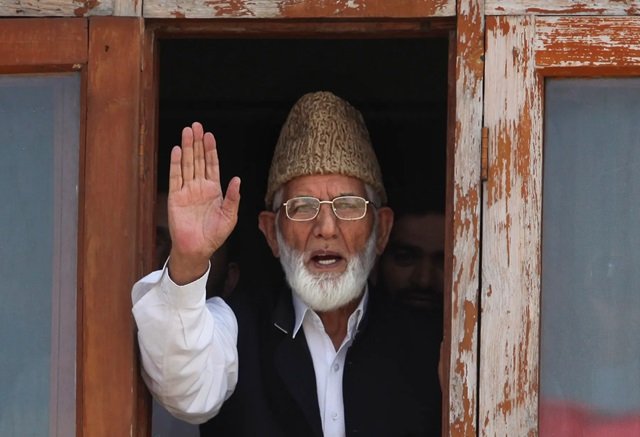
September 1 marks the anniversary of the death of Syed Ali Shah Geelani (1929–2021), a prominent figure in the Kashmiri movement advocating for legitimate self-determination. Geelani began his political journey with Jamaat-e-Islami in 1952, initially participating in electoral politics and serving in the state assembly before becoming a steadfast symbol of resistance. He was arrested in 1962 for advocating for Kashmiri rights and spent over twelve years in prison, followed by decades under house arrest. A vocal critic of the repressive Public Safety Act, Geelani condemned preventive detention as a systematic tool used to silence dissent. This stance was further solidified by the alleged mass rigging of the 1987 elections.
The disputed elections of 1987 marked a critical turning point in Kashmir, leading Syed Ali Shah Geelani to intensify his opposition to Indian rule and to advocate strongly for the right to self-determination. Moving away from institutional politics, he became a key figure in the All Parties Hurriyat Conference, which was formed in 1992. To further institutionalize his political vision, Geelani co-founded Tehreek-e-Hurriyat in 2004, alongside Muhammad Ashraf Sehrai. Between 2008 and 2010, he led significant public protest campaigns, mobilizing popular resistance while demanding complete demilitarization and accountability for alleged human rights abuses committed by Indian security forces in the region.
Syed Ali Shah Geelani demanded strict accountability for the 2010 Machil fake encounter, in which security forces killed three civilians and falsely labeled them as militants. This incident ultimately led to military convictions. After the 2016 killing of Burhan Wani, Geelani spearheaded widespread protests against harsh state crackdowns, curfews, and communication blackouts. He strongly opposed the abrogation of Articles 370 and 35A in August 2019, rejecting New Delhi’s unilateral decision to revoke Kashmir’s special status. Geelani was placed under strict house arrest until his death on September 1, 2021. His passing resulted in extensive state restrictions, with his family claiming that authorities forcibly seized his body for a nighttime burial.
Syed Ali Shah Geelani dedicated decades to opposing the Indian administration in Jammu and Kashmir, serving as a steadfast symbol of political resistance and the right to self-determination. Despite facing over twelve years of imprisonment, frequent house arrests, and severe governmental restrictions, his commitment to his ideology remained unwavering. Through organized political platforms and civil mobilization, Geelani consistently challenged state policies, enduring ongoing pressure from authorities while demanding international acknowledgment of the political rights of the Kashmiri people. His lifelong struggle ultimately cemented his legacy as a central figure in the modern political history of Kashmir.
The region is significantly impacted by a strong military presence, which has resulted in one of the highest soldier-to-civilian ratios in the world. Frequent curfews, strict law enforcement crackdowns, and occasional communications blackouts have become standard practices to maintain governmental control. Legally protected by special security laws, this extensive military presence severely disrupts civilian life, restricts public movement, and contributes to ongoing instability in the region.
Resolving the Kashmir dispute requires moving from militarization to a sustainable framework focused on self-determination. The South Asian security situation is fragile, marked by wars, border skirmishes, and human rights issues from lengthy incarcerations. A viable solution must involve dialogue among regional leaders and true representatives of Kashmir, with international mediation. Sustainable peace demands the repeal of harsh detention laws, the release of political prisoners, restoration of civil spaces, and adherence to relevant UN Security Council resolutions. Addressing human rights and fostering diplomacy are essential to breaking the cycle of conflict in South Asia.
Decades of conflict in Jammu and Kashmir have resulted in the loss of tens of thousands of lives, including civilians, political activists, and security personnel, leading to a severe humanitarian crisis. Prominent Kashmiri leaders often face prolonged incarcerations, house arrests, and restrictions on their movement under preventive detention laws designed to suppress political dissent. These systematic detentions have effectively stifled local political organization, leaving leadership structures severely limited and the population without accessible political avenues.