After decades of living with an unexplained anxiety disorder, German journalist Andreas Bönte uncovered a hidden family history linking his grandfather to Nazi crimes and suicide. His investigation traces how silence, authoritarian upbringing, and unresolved trauma may echo across generations, offering a deeply personal perspective on the enduring psychological legacy of the Third Reich.
When anxiety first overwhelmed Andreas Bönte in his mid-thirties, he had little reason to suspect that the origins of his suffering might extend far beyond his own lifetime. A successful television journalist, he suddenly found himself struggling with insomnia, obsessive thoughts, constant inner restlessness and, eventually, debilitating panic attacks. After months of treatment in a psychiatric clinic, his condition began to improve, but it was a conversation at a family gathering that transformed his understanding of what he had experienced.
As reported by Die Zeit, Bönte’s uncle remarked that his mother would never have sought therapy because doing so would have forced her to confront the suicide of her own father. Until that moment, Bönte had not known that his grandfather had taken his own life. Nor had he known that the man had participated in one of the darkest episodes of Nazi Germany: the November 1938 pogroms.
The revelation marked the beginning of a years-long investigation into his family’s past and the lasting consequences of National Socialist ideology. That research ultimately became the foundation of his book Die Vergangenheit in mir and, Bönte says, played a significant role in helping him understand and manage his own psychological illness.
His experience reflects what specialists describe as transgenerational trauma—the transmission of the psychological consequences of deeply traumatic experiences from parents and grandparents to later generations. Researchers first recognised the phenomenon through studies of Holocaust survivors and their children. Those studies found that the children of survivors continued to display symptoms associated with post-traumatic stress disorder decades later, despite having been born only after the end of the Second World War.
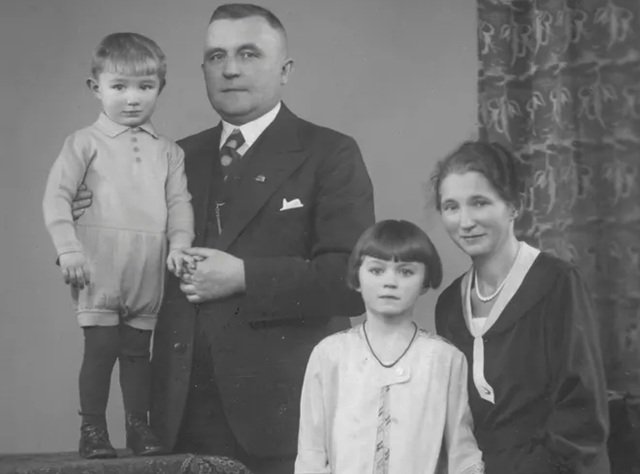
For Bönte, the search for answers led directly to his grandfather, Peter Wiborg, an SA-Sturmführer. Drawing on historical documents and court records, he reconstructed the life of a man who had served as a frontline soldier during the First World War before becoming an outspoken opponent of democracy and an ardent supporter of Adolf Hitler. On 8 November 1938, Wiborg led the pogroms in his hometown of Rheine. According to Bönte’s research, he forced open the doors of the synagogue, set the building alight with petrol and later led a group that attacked and looted Jewish homes and businesses.
Both Peter Wiborg and his wife were members of the Nazi Party. Their son belonged to the Hitler Youth, while their daughter—Bönte’s mother—was a member of the Bund Deutscher Mädel. At the age of seventeen, she discovered her father’s body after he took his own life as Allied forces advanced towards Germany during the closing stages of the war.
Bönte now believes that his mother’s lifelong hypochondria, which he says later affected him as well, and his own sudden anxiety disorder were connected to this family history. He points to an upbringing shaped by expectations of performance, emotional hardness and silence, combined with his mother’s struggle to raise three sons while carrying unresolved trauma and his father’s refusal to discuss his experiences as both a soldier and a prisoner of war. Equally significant, he believes, was the family’s collective silence about the role its members had played during the Third Reich.
Meaningful confrontation with that history did not begin until many years later, after the deaths of his parents and uncle. Two decades had already passed since he first learned of his grandfather’s suicide. His uncle had preserved many of Peter Wiborg’s possessions, including a marble Reich eagle. Initially, Bönte focused solely on historical research. Only after hearing about transgenerational trauma, discussing the concept with his therapist and consulting specialists did he begin to connect his mother’s experiences with his own mental health. The realisation, he recalls, came suddenly.
For much of his life, Bönte felt rootless, convinced that an important part of his identity was missing. Looking only at his own childhood had never produced an explanation that fully accounted for his emotional struggles. Connecting his mother’s trauma with his own experiences proved deeply painful, but it also offered a framework that finally made sense of feelings he had carried for decades.
Die Zeit’s reporting places Bönte’s story within a wider scientific discussion about how trauma may be transmitted between generations. Hanna Christiansen, a child and adolescent psychologist at the University of Marburg, explains that the most widely accepted theory centres on social interaction rather than inherited memory alone. Parents suffering from psychological illness inevitably relate differently to their children. Chronic depression, emotional suppression or persistent anxiety can all influence how children experience stress, potentially affecting the regulation of cortisol, the body’s principal stress hormone. Whether those experiences later develop into mental illness depends upon many additional influences, including genetics and the broader environment in which a child grows up.
Research has also examined the long-term consequences of suicide within families. Danish population studies cited by Die Zeit indicate that children whose parents died by suicide were more likely later to self-harm or die by suicide themselves. Particularly striking, Christiansen notes, is that this elevated risk also appears among children who were very young when the parental suicide occurred, suggesting that the emotional reactions of surviving caregivers alone may leave lasting psychological effects.
Scientists are also investigating whether epigenetic changes—chemical modifications that influence how genes are expressed without altering DNA itself—might contribute to the transmission of trauma across generations. Although research continues, these mechanisms may help explain differences in how individuals respond to stress.
Bönte also came to view his family’s emotional distance through the lens of the educational ideals promoted during the Nazi period. He points to Johanna Haarer’s influential 1934 childcare manual Die deutsche Mutter und ihr erstes Kind, which encouraged mothers to discipline children through emotional detachment and insisted that children should suppress emotion and learn obedience. His mother had read the book and, he believes, had herself been raised according to similar principles marked by humiliation and emotional coldness.
Historians nevertheless urge caution against simplistic conclusions. Sonja Levsen of the University of Tübingen notes that while authoritarian child-rearing was undoubtedly more widespread during that period, harsh educational practices and allowing babies to cry unattended were not exclusive to National Socialist Germany. Families interpreted such advice differently, making the historical picture more complex than it is sometimes portrayed.
Even so, Bönte believes understanding those educational traditions helped him better understand his mother’s inability to express affection. After losing her father, she withdrew emotionally, assumed responsibility for her younger brother and entered the workforce to support his education. In Bönte’s view, the greatest tragedy was that she never learned how to deal with emotions herself because she had never experienced emotionally secure relationships during childhood.
Research increasingly suggests that whether trauma affects later generations depends in part on how openly it is addressed. Christiansen argues that therapy can be valuable, but equally important is honest communication within families. Children often recognise when parents are distressed. If no explanation is provided, they may conclude that they themselves are somehow responsible, creating lasting emotional stress. Studies involving Holocaust survivors and individuals living with mental illness likewise indicate that the more effectively parents process trauma, the better the outcomes tend to be for their children.
For Andreas Bönte, the combination of psychotherapy and historical investigation ultimately proved transformative. Although writing about his family temporarily intensified his distress, he says he has since become noticeably calmer. Throughout his life he regarded himself as someone constantly driven by inner pressure, yet after completing his book he found a greater sense of peace.
Reflecting on his journey, Bönte believes many people may unknowingly carry the psychological consequences of unresolved family histories. Mental illness, he suggests, may sometimes have roots that individuals struggle to identify because those stories were never spoken aloud. His own search eventually brought him back to Rheine, where he reconnected with cousins and an aunt he had not seen for more than fifty years. The discoveries were painful, but they also restored a sense of belonging. Looking back, Bönte offers a simple message to others willing to confront difficult family histories: understanding even the darkest chapters of the past can provide unexpected clarity about the present.