As the world generates ever more digital information, the limitations of conventional storage media are becoming increasingly clear. Hard drives and magnetic tapes degrade within a decade, leaving critical scientific, cultural, and historical data at risk. Now, researchers at Microsoft have unveiled a glass-based storage system capable of preserving information for at least 10,000 years, with the potential to endure far longer at ambient temperatures. Published in Nature on 18 February, the work demonstrates a fully deployable archival system that could revolutionize long-term data preservation.
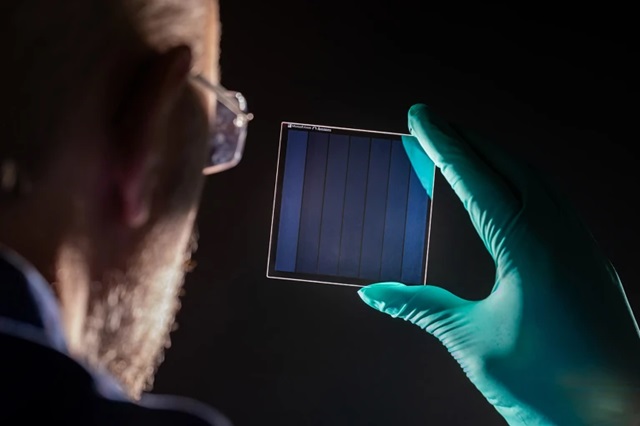
The Microsoft team encoded data using high-energy laser bursts to create nanoscale deformations in borosilicate glass, a material commonly used in ovenware. Each microscopic deformation stores information, which can be read using a microscope. A 12-centimetre square, 2-millimetre-thick piece of glass can hold up to 4.8 terabytes—the equivalent of roughly two million printed books. While reading and writing this data requires specialized equipment, the medium is exceptionally durable: tests indicate it would survive temperatures of 290 ºC for 10,000 years, with potentially far greater longevity under standard conditions.
“Once it’s written, it’s immutable. You’re done,” says Richard Black, a computer scientist leading Project Silica at Microsoft Research in Cambridge, UK. Unlike magnetic storage, which requires periodic rewriting to maintain integrity, glass storage is maintenance-free and immune to the gradual loss of magnetization that plagues traditional media. Mark Bathe, a biological engineer at Massachusetts Institute of Technology, describes the development as “impressive,” noting its potential as near-permanent backup for critical information.
The technology relies on “plasma-induced nano explosions.” Ultrafast laser pulses lasting mere quadrillionths of a second locally deform the glass, altering how light passes through each point. By stacking as many as 300 layers of these data points, the system achieves extraordinary storage density. A machine-learning algorithm helps decode the information by filtering out interference between adjacent layers, allowing reliable reading of complex datasets.
This approach represents a practical evolution of earlier work on fused silica glass storage by Peter Kazansky and colleagues, who hold the Guinness World Record for the most durable digital medium. Microsoft’s team optimized the process for speed, reliability, and cost-effectiveness, using borosilicate glass rather than fused silica and refining the laser-writing and decoding techniques.
While the technology is not suitable for frequently accessed data, it excels in archiving information for decades, centuries, or even millennia. Applications include scientific datasets, cultural heritage records, and repositories for natural-disaster information. Microsoft is exploring projects such as a glass plate storing essential information about life on Earth, inspired by NASA’s Voyager Golden Record.
The method is also cost-efficient over the long term, as maintaining the stored data requires no energy or ongoing intervention once it has been written. “There is often no budget left to maintain data after a grant ends,” Black notes, highlighting the potential for glass storage to preserve research outputs that might otherwise be lost.
Although chemical corrosion or physical fracture could pose future challenges, the system provides a glimpse of how humanity might safeguard its most valuable digital assets against time, environmental hazards, and technological obsolescence. By combining advanced optics, machine learning, and durable materials, Microsoft has brought what was once a materials experiment into a form that could fundamentally transform data preservation.
As data generation continues to accelerate, such innovations may become crucial for ensuring that the collective knowledge, culture, and scientific achievements of our era remain accessible for millennia.